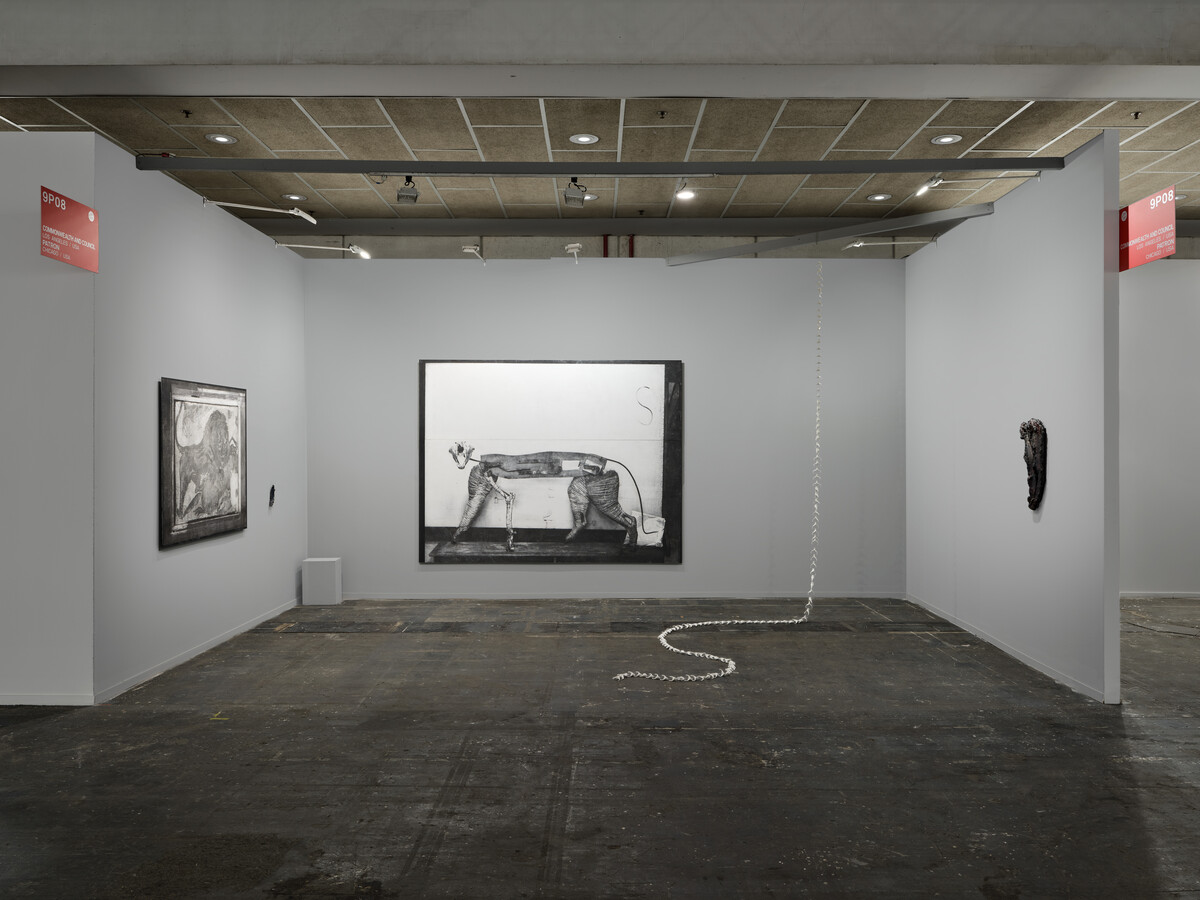
Commonwealth and Council and PATRON announce a co-presentation of new work by Los Angeles based artist Harold Mendez as part of Profiles | Latin American Art at ARCO Madrid 2026, curated by José Esparza Chong Cuy. In his interdisciplinary practice, Mendez draws on archival materials from and about the Americas. Composed of materials and imagery that register the ineffable, affective, and the indeterminate, his work examines the shaping of transnational experience through visible and obscured geographies, rituals, and histories. Extending Mendez’s career-long investigation into themes of embodiment and loss, the presentation debuts works recently developed from Mendez’s research at the Smithsonian Museums in Washington D.C., and a group of ceramic sculptures created over the past two years.
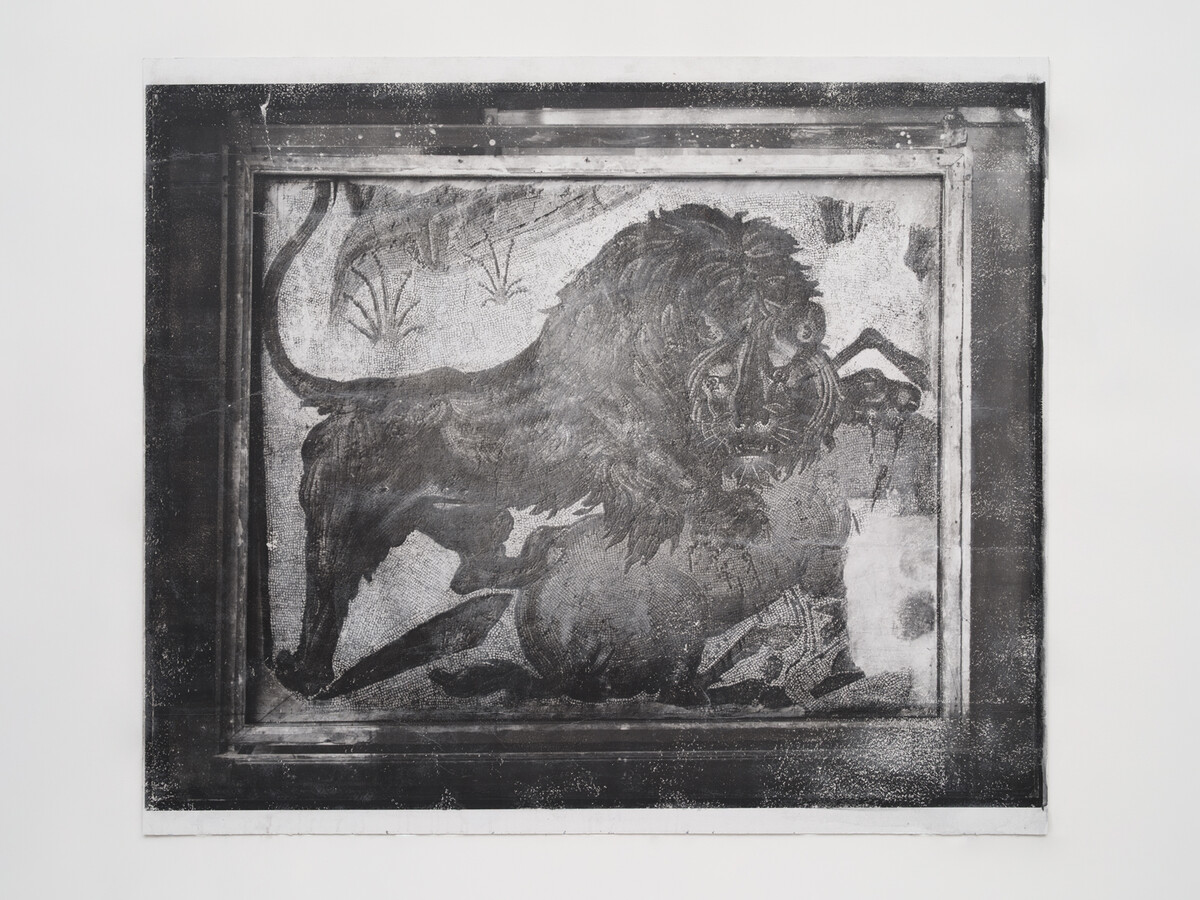
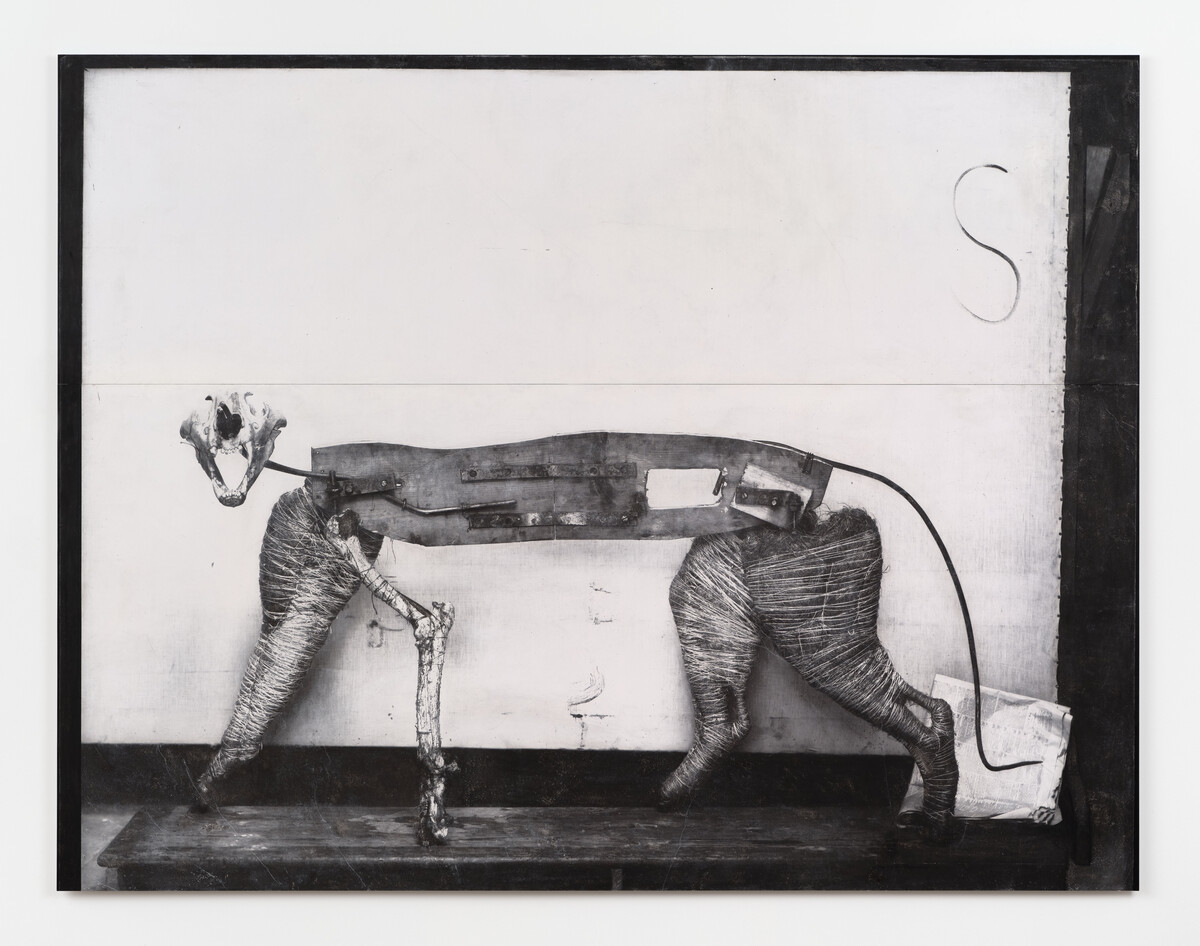
Two photographic image-based transfers, Notes on embodiment (2026) and Tongue in hand (2026), derive from archival photographs of objects in the Smithsonian Collections. Mendez employs a labor-intensive large-format painting process in which archival negatives are scaled up to a human scale and are transferred onto aluminum sheets, then built up and partially erased through layers of graphite, charcoal, and paper pulp. Continuing Mendez’s examination of how history is transcribed onto and held within bodies, both works deconstruct representations of the lion as a symbol of imperial power, triangulating the visual cultures and myths that have upheld and shaped transnational routes of empire.
Tongue in hand reproduces an image of a 3rd century Carthaginian mosaic, first discovered by Europeans in Tunisia in 1873 and subsequently displayed at the American Centennial Exposition in Philadelphia in 1876, prior to its donation to the National Gallery. Depicting a North African lion attacking in a bloody act of killing its prey, the image functions as a mythological prologue to the centuries of violent domination that would shape the histories of the Mediterranean, and subsequently, the Americas. Notes on embodiment originates from a 20th century photograph taken by museum staff of a partially taxidermied lion staged in the museum’s storage area. The animal’s skull displayed on a rough assemblage of wood and wire, and staged before a photographic backdrop, Mendez’s work calls attention to the series of decisions touching on ideas of fact and fiction. Tracing how power is articulated and propagated, Mendez presents both archival images as unstable constructs. Mendez re-contextualizes the archival images as objects of power, originally produced in service of metaphorical representations of the violence that created the Americas and continues to foster its myths.
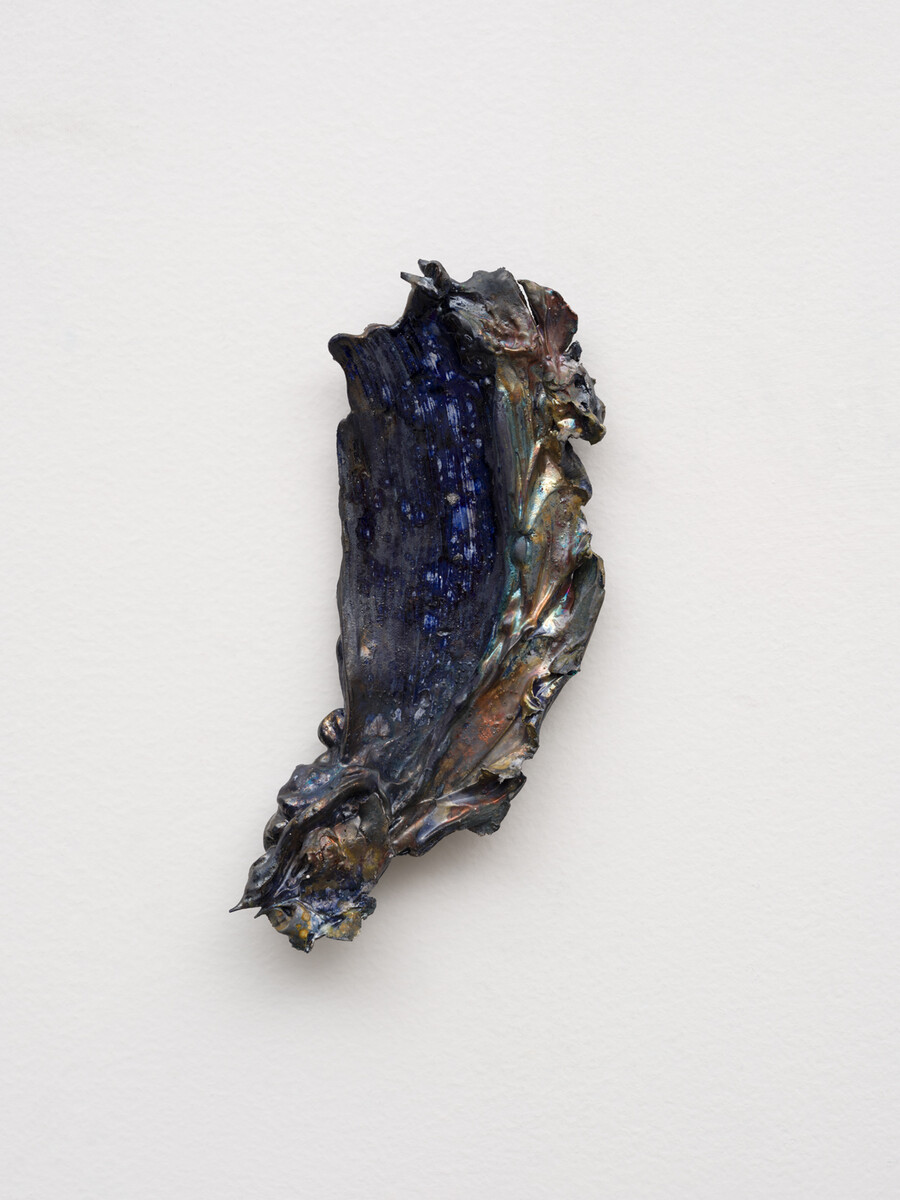
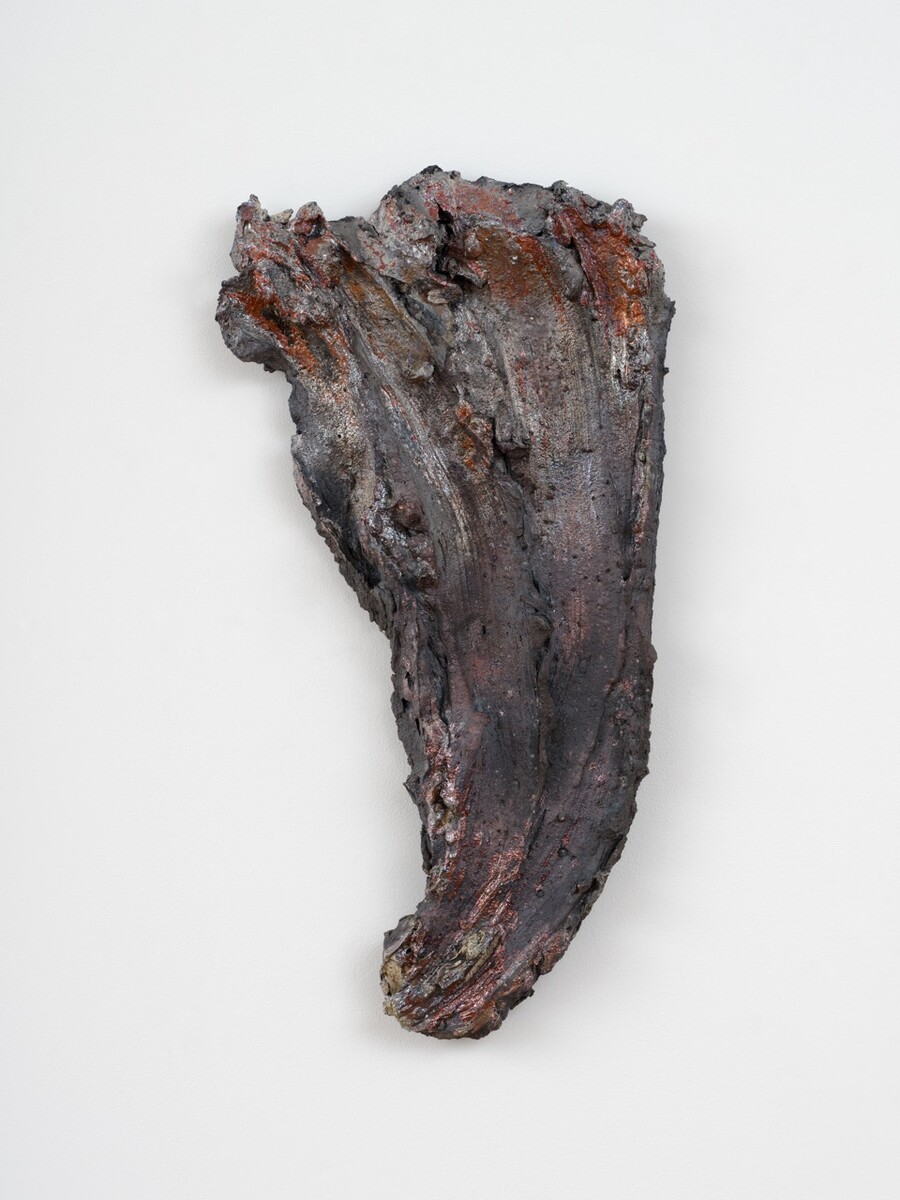
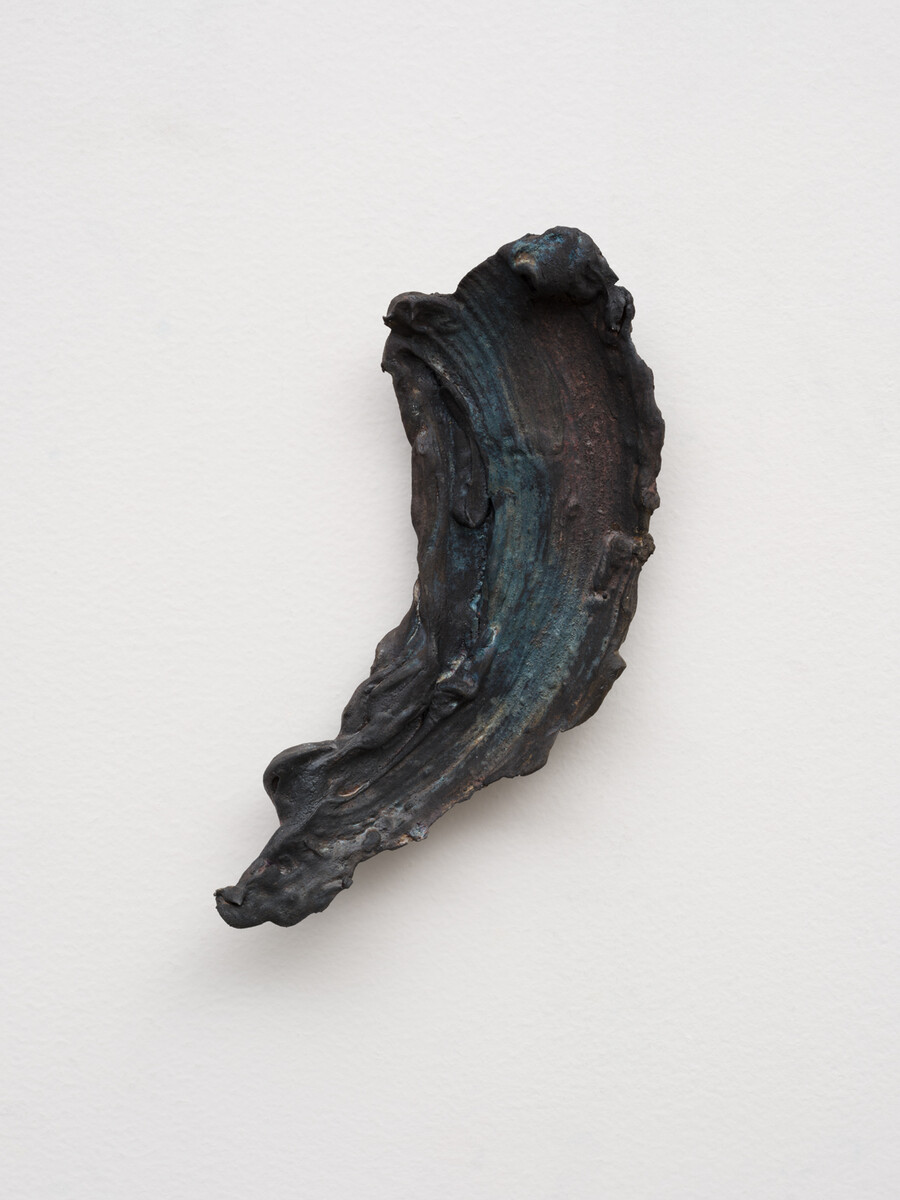
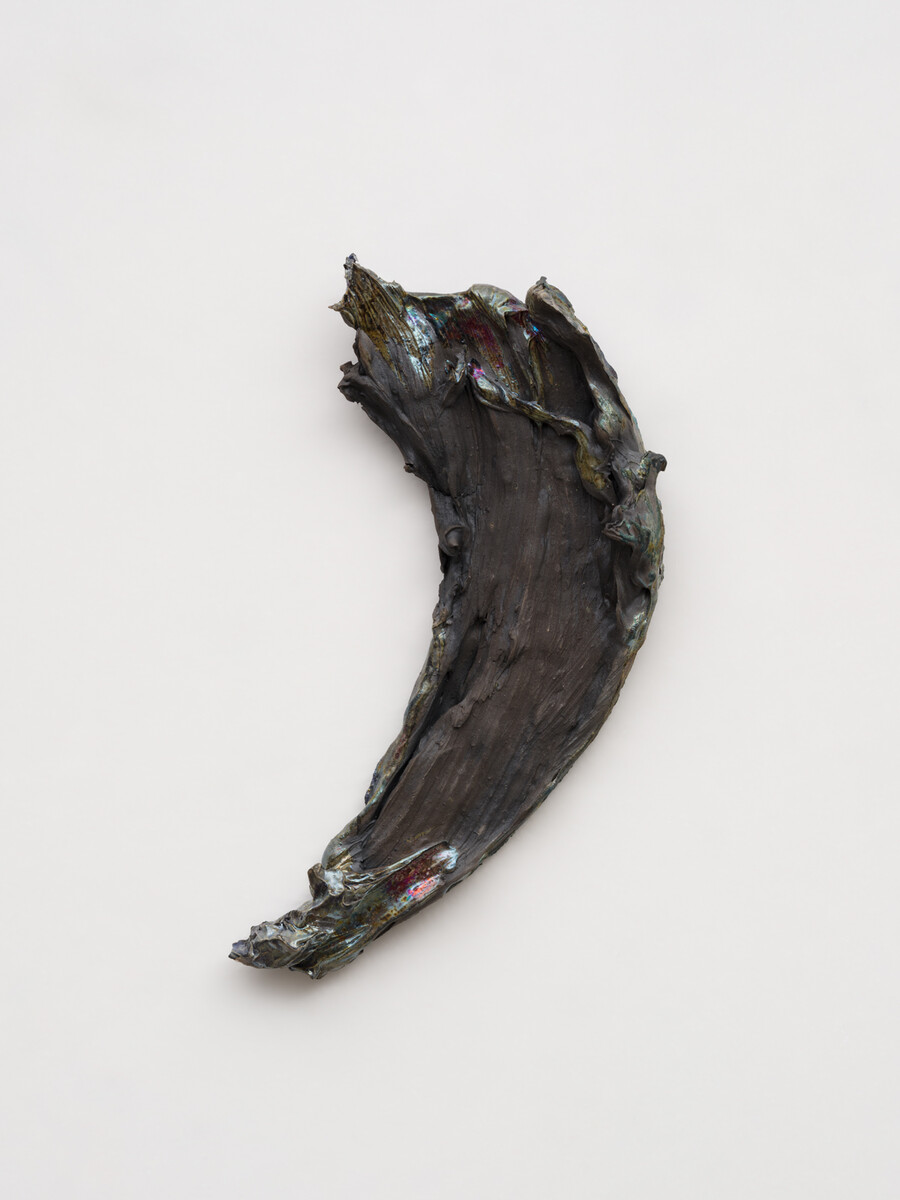
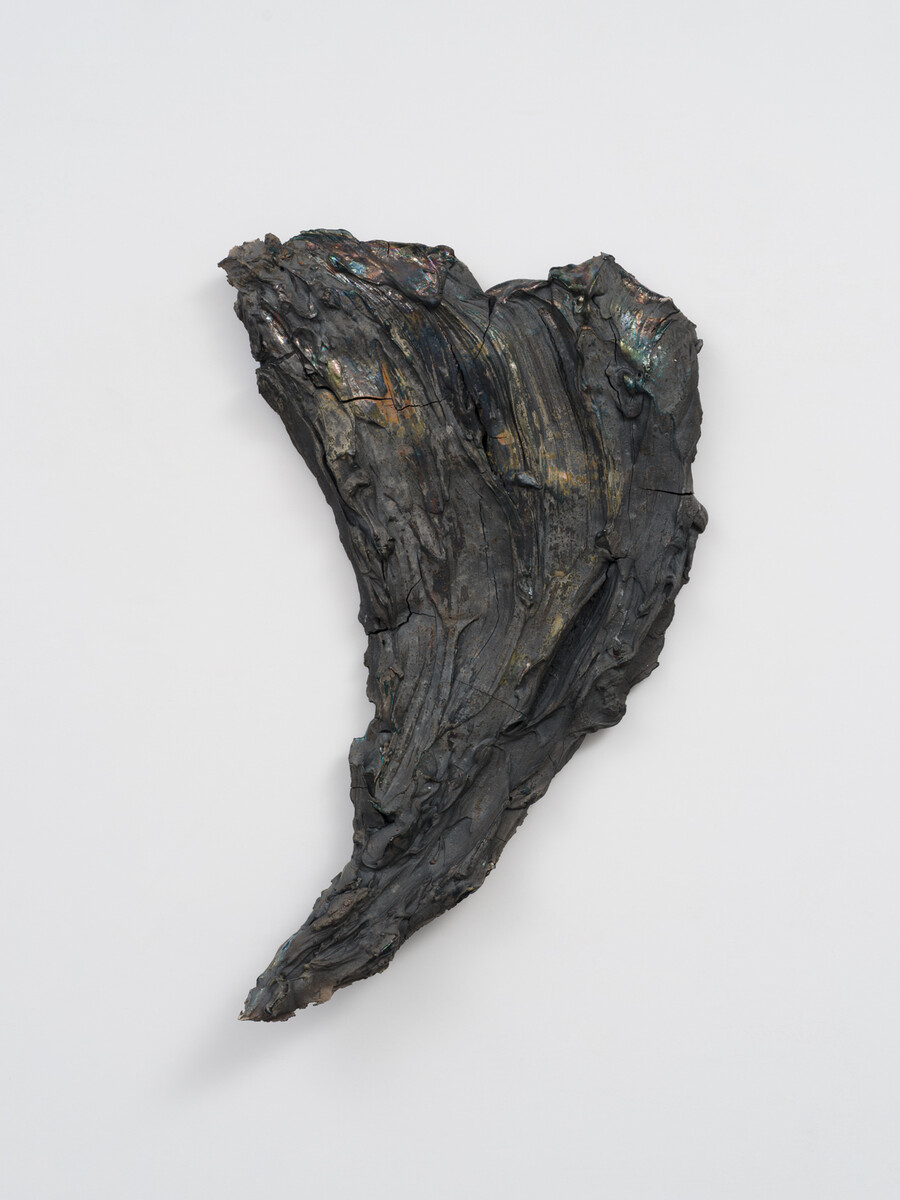
Our presentation debuts Mendez’s Comma wall ceramic sculptures. Produced utilizing raku, a Japanese ceramic technique of fast firing at high temperatures before submerging the fired clay into combustible materials, Mendez’s unique Commas each bear the iridescent residue of their transformative origins. The sculptures continue Mendez’s decade-long investigation into the linguistic mark of the comma, a visual and poetic indication of a pause, or connection between two or more things.Within the context of Mendez’s practice, the works punctuate and collapse time, as gestural markings, traces of a now-altered body. Here, the abstract material experimentations act like impasto swaths, visually repeating the sharp curvatures of the Carthaginian lion’s paw in the act of drawing blood and pointing directly at moments of violence.
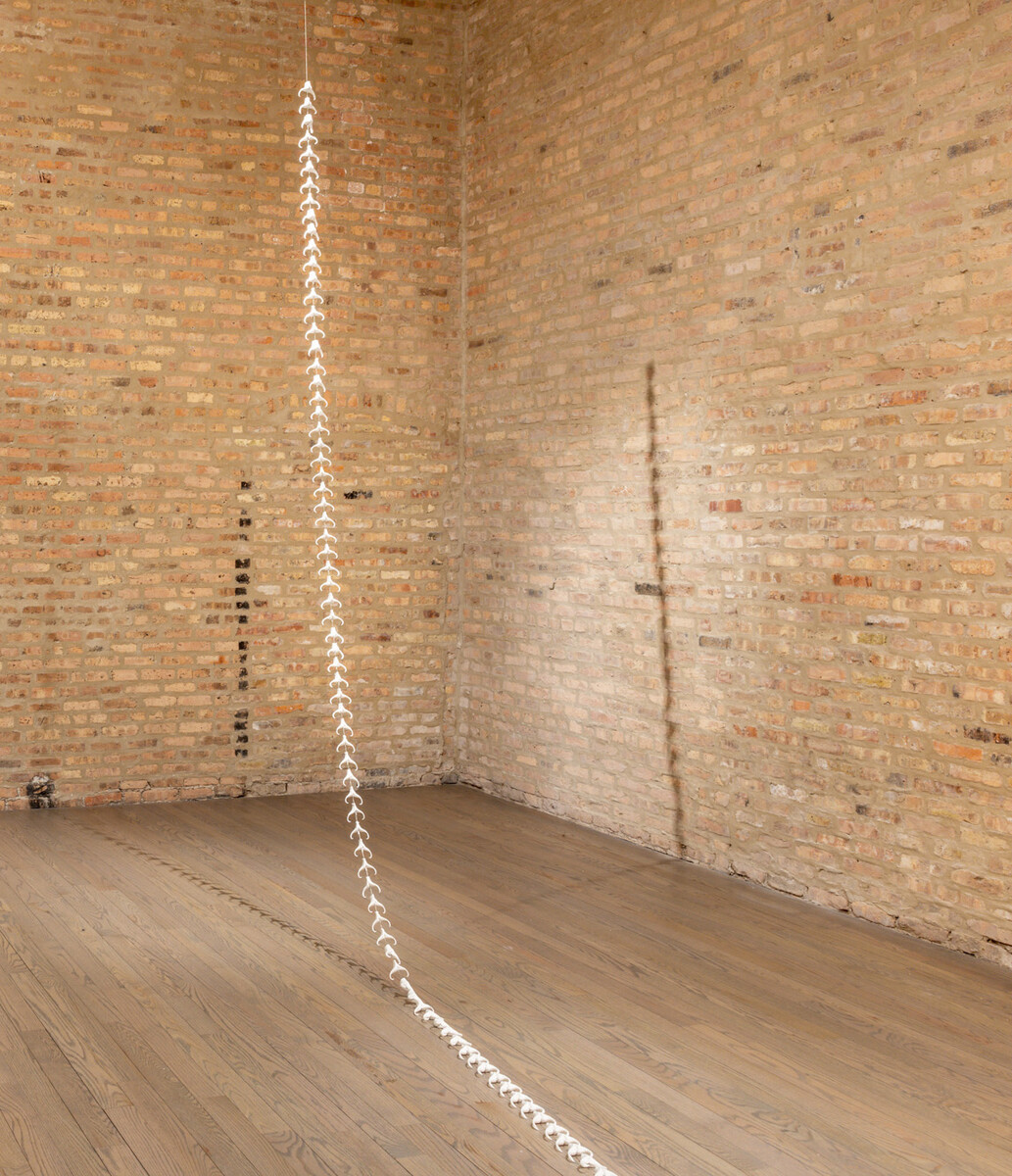
The presentation encircles Ain’t I Épistémè? (2024), a porcelain sculpture created during Mendez’s residency at Kohler Arts + Industry. Cast from the spine of massive pinecones found in California, Ain’t I Épistémè? places the body—present and absent—at the heart of the presentation. Mendez constructed the installation by assembling cast pinecone spines, which in nature form a type of exoskeleton to protect the plant’s seeds, into the likeness of a spinal vertebrae. The bodily remains of a massive, mythic being, the sculpture snakes through time from Paleolithic to the present, situating the viewer at the foot of compounded layers of history.
Profiles | Latin American Art
Curated by José Esparza Chong Cuy
This selection of artists offers an approach to practices that, although from different contexts, generations and languages, share a precise attention to how art is produced in relation to society, material and experiences. Conceived as a section of individual presentations, Perfiles (“Profiles”) invites visitors to pause and carefully study the work of each artist, given that the single booth is a space for concentration and expanded reading within the framework of the fair.
Bringing together emerging and consolidated trajectories, as well as individual and collaborative practices, the artists presented here are not grouped by style or discourse but by a common sensitivity to the contexts in which they operate. Their works dialogue with local stories, shared memories and specific political tensions, questioning national borders and activating resonances that allow us to think of Latin American art as a multi-faceted, established and constantly changing field.