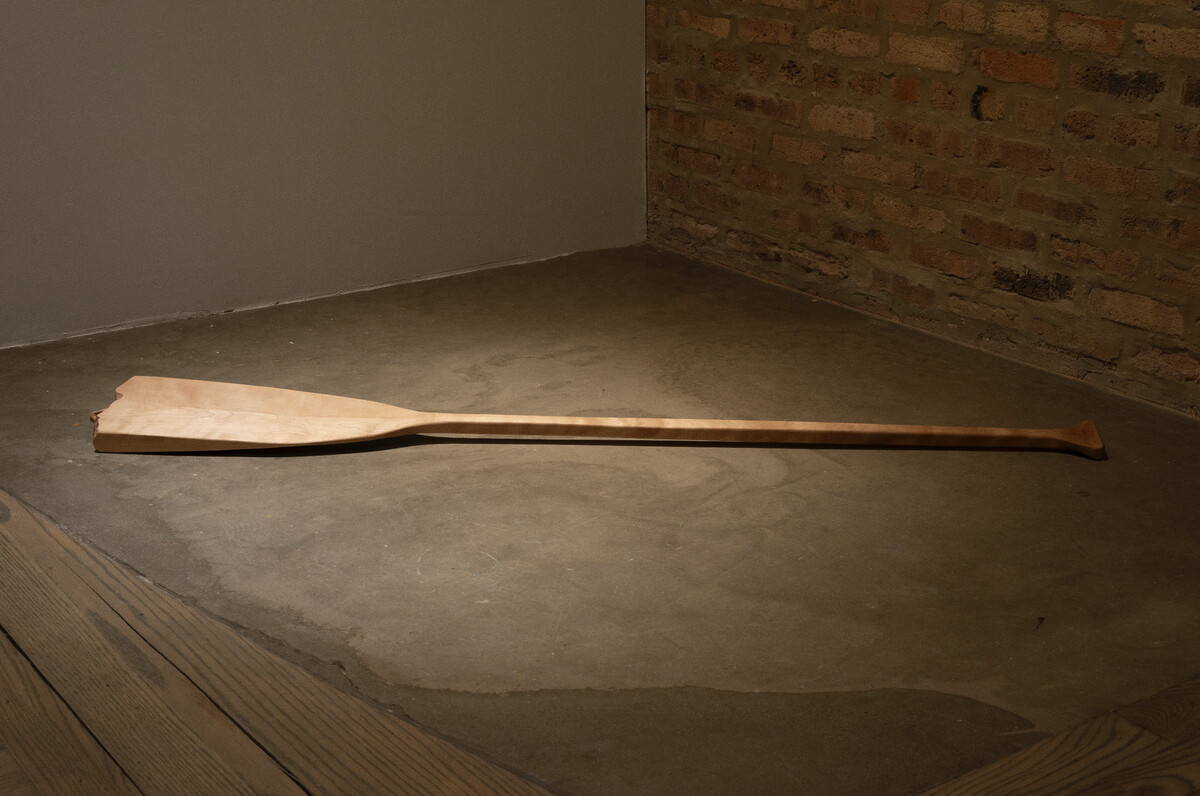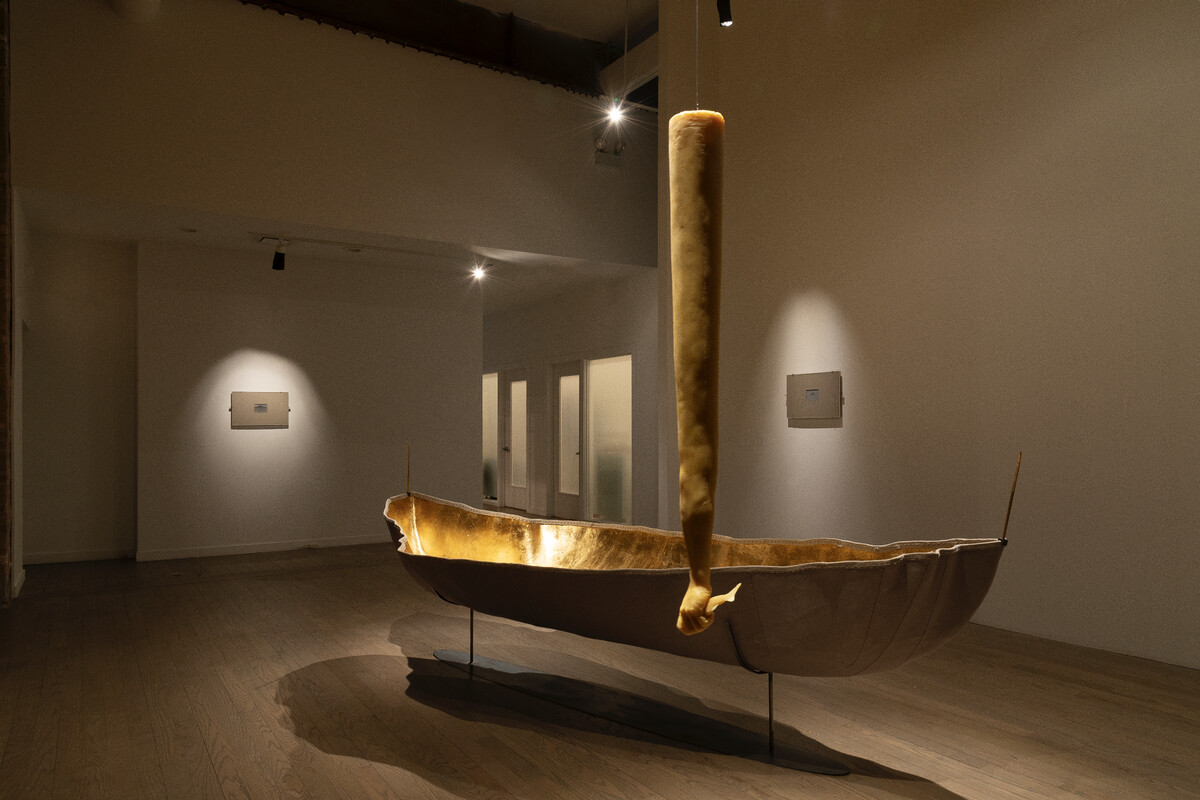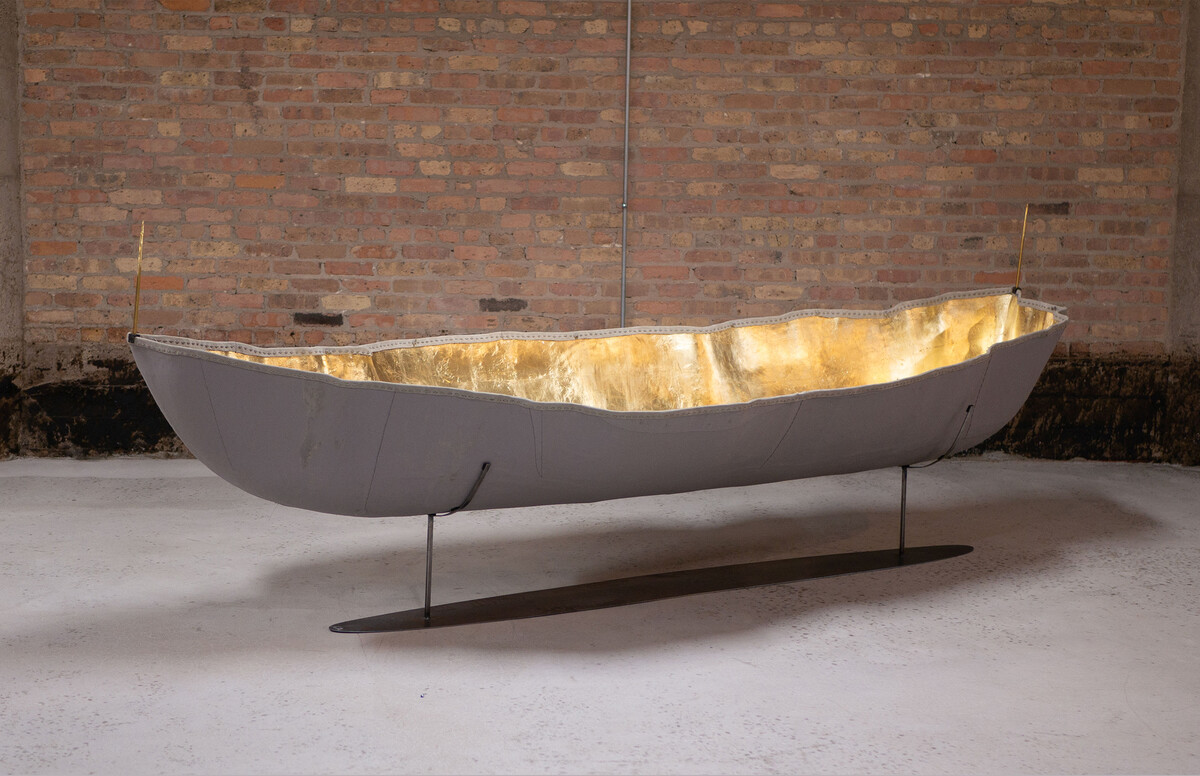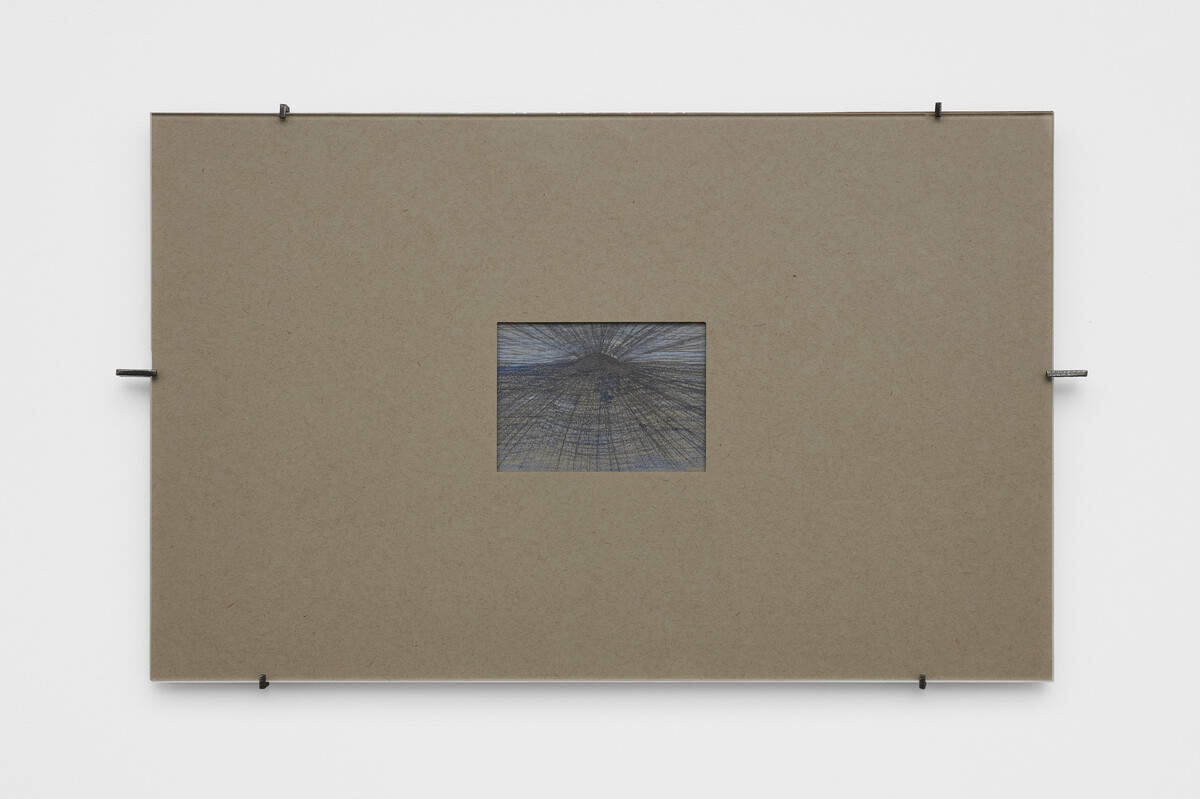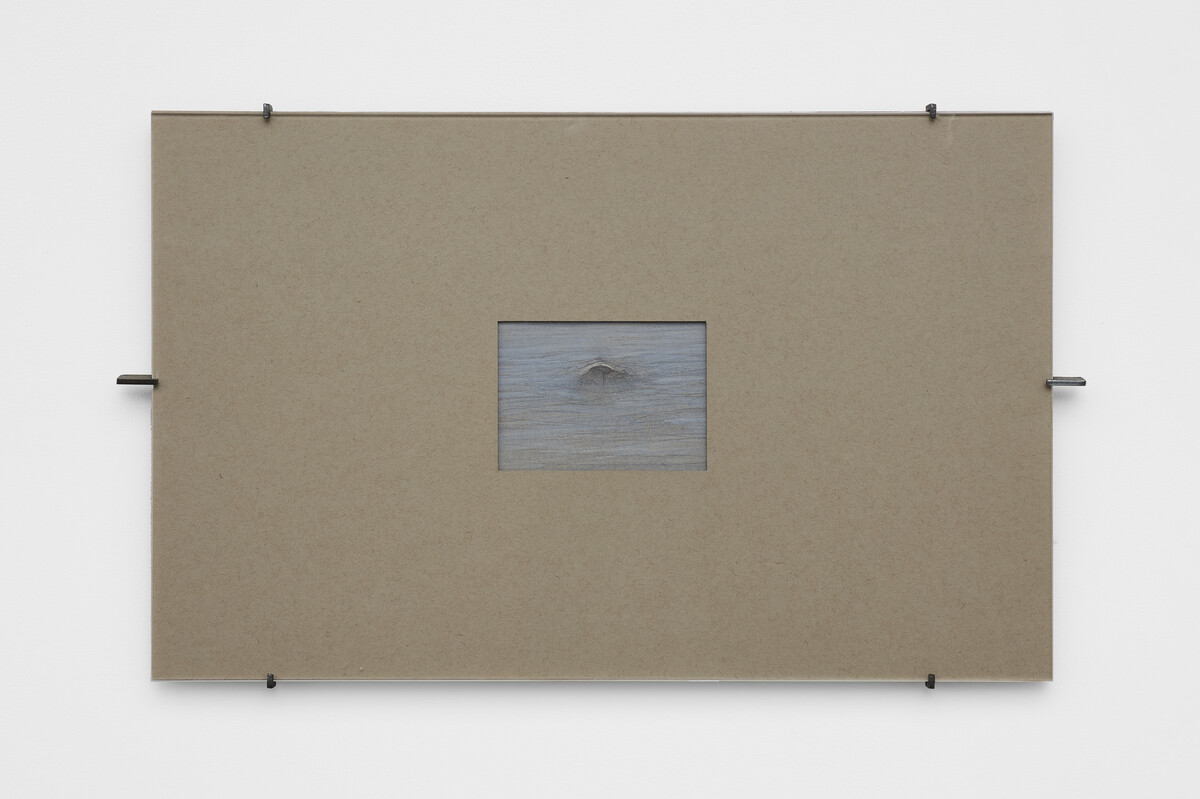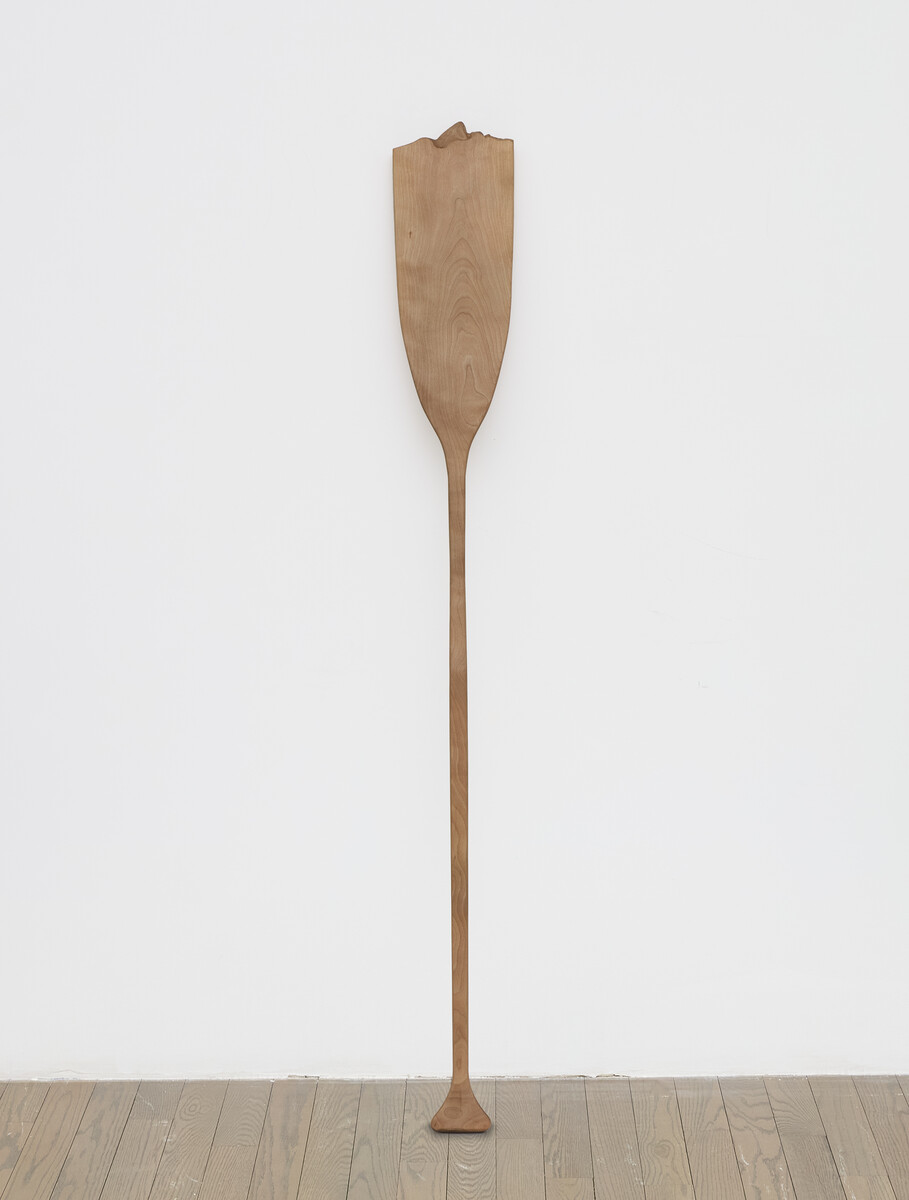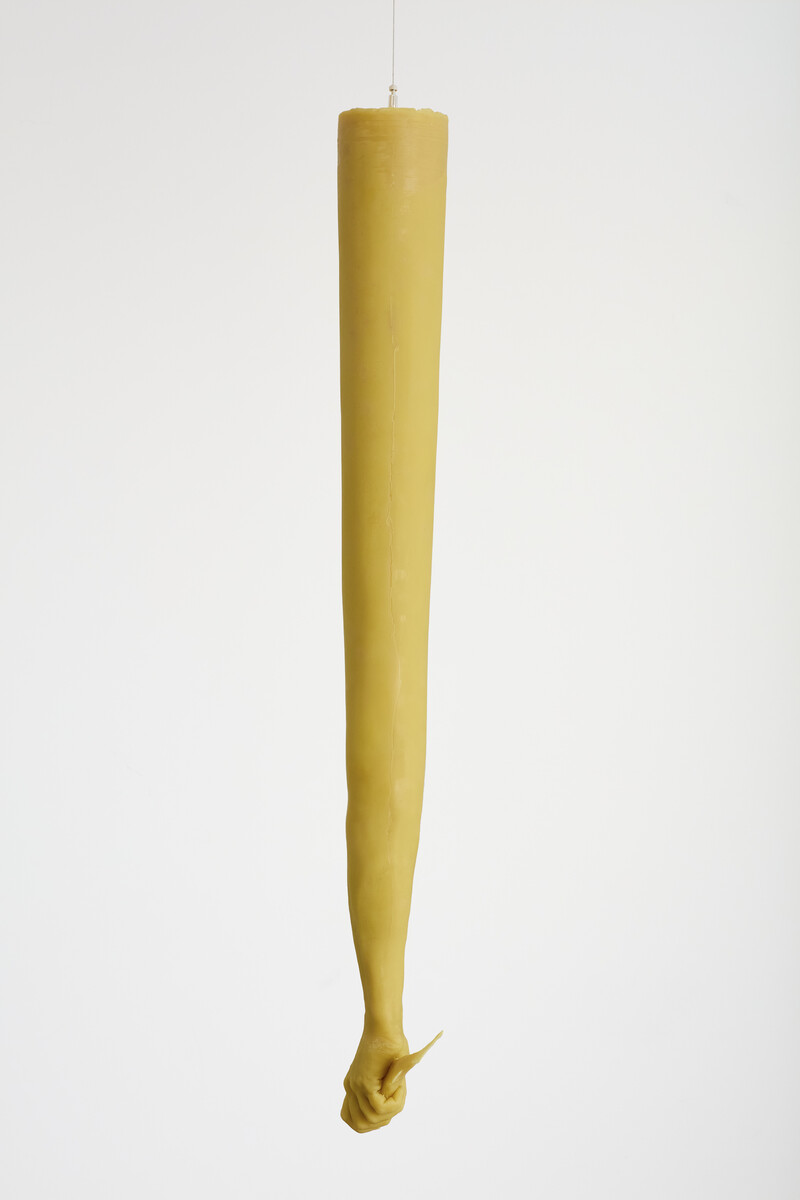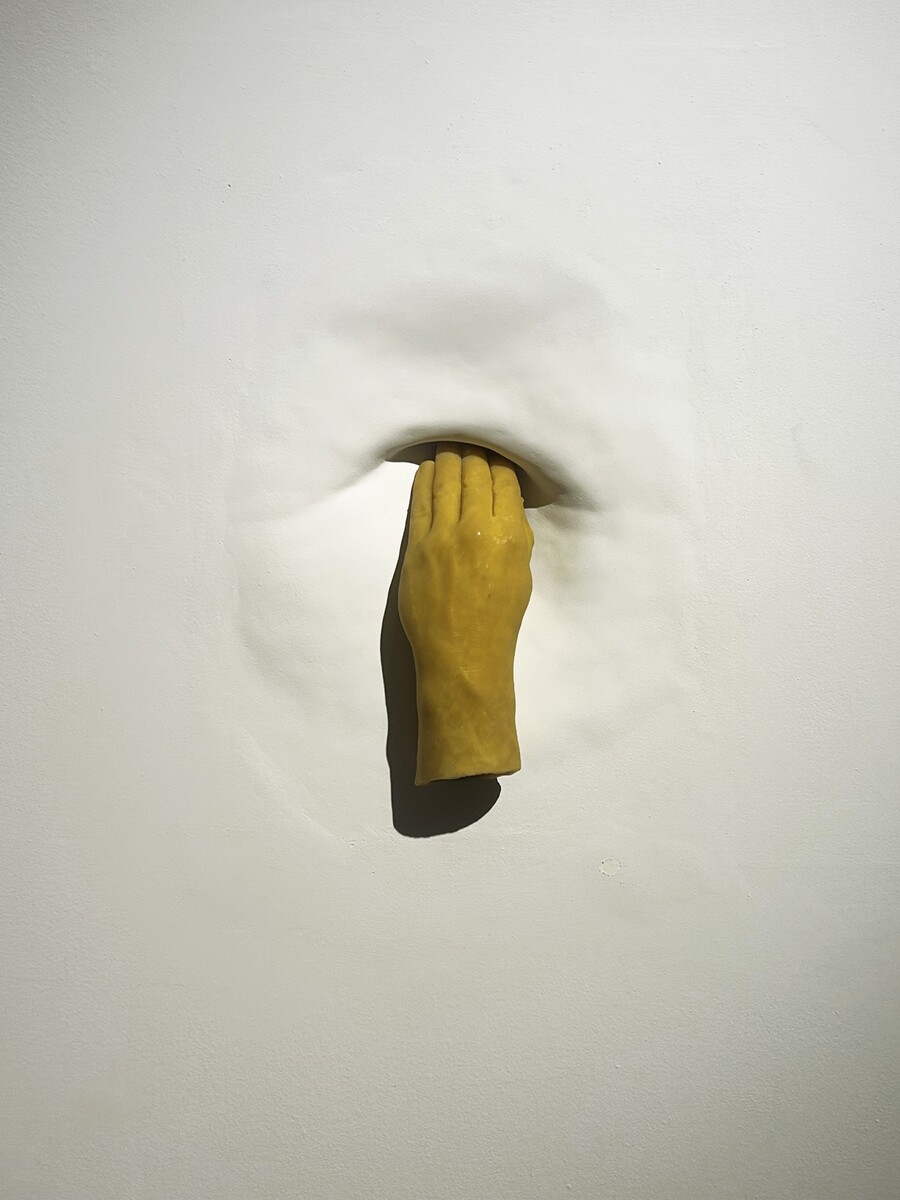
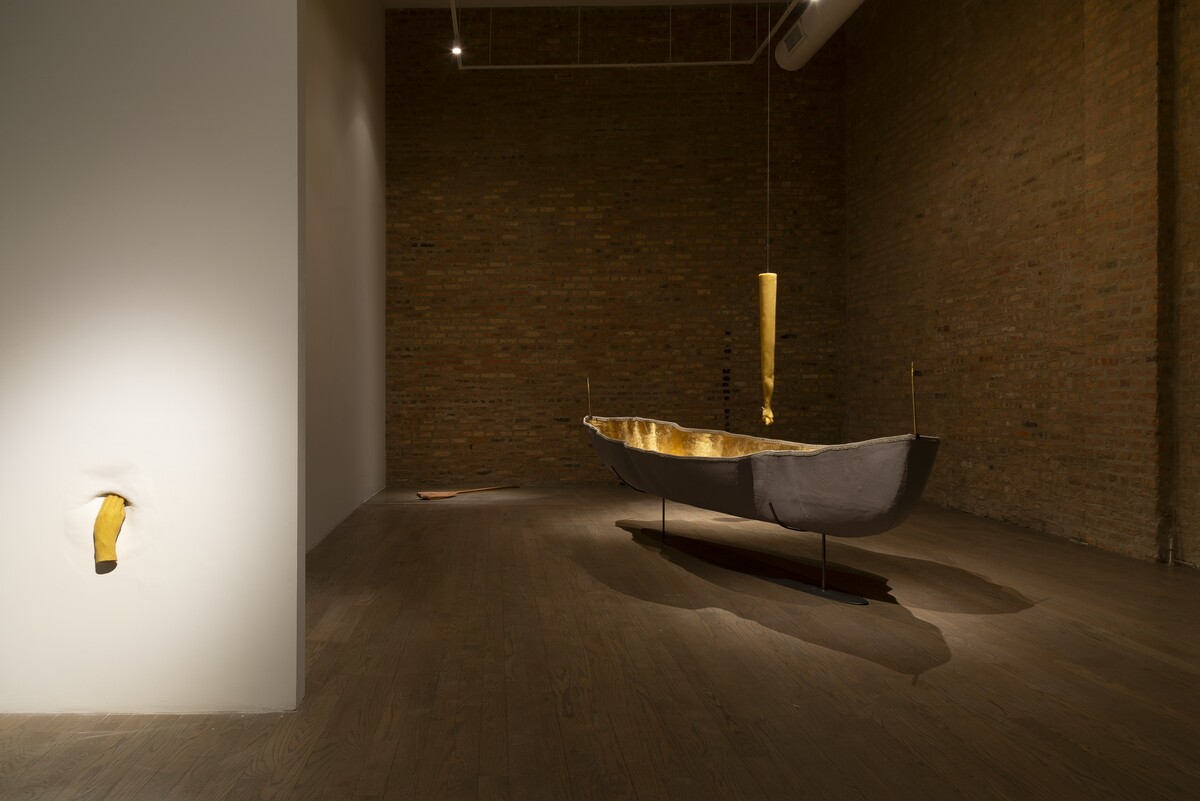
PATRON announces Margin, our third solo exhibition with Chicago-based artist Daniel G. Baird. Uniting a series of sculptures developed over the past two years, each of which materializes the fleeting, liminal moments of conjunction between our bodies and deep time.
“…. I wanted to make something that brought me as close as possible to the horizon, to embody it in some way. I thought that to achieve this I’d have to orient my body horizontally, and float on the surface of the water, being both slightly submerged and in the open air. I’ve seen the horizon as a threshold between two states, whether between past and future, or the spatial experience of emerging from a subterranean space into the light. That point of convergence is the movement. To journey to the horizon is to anticipate death, and you need a vehicle for that.
It struck me once that there is a scar on every human body that remembers water. We were all, once, aquatic — and the navel is where that ruptured–this surreal object on us all.
On the western slope of a mountain in Jordan is a Byzantine church overlooking Jerusalem and the surrounding landscape. Fragments of a mosaic map cover the floor, charting landmarks and sacred events. One section of the map depicts two fish, facing one another. One swims downstream the Jordan River and the other, emerges, impossibly, from the Dead Sea.
It lodged in me. The mind has its own gravitational pulls — images, moments, exert their force from years back, bending the present toward them whether you cooperate or not. Trout do it with their whole bodies. We do it in memory, which is maybe the same thing.
It’s as though we’re all trying to get as far away from the place we’ve come from, like walking in a straight line around the globe only to meet ourselves exactly where we were…”
–Daniel G. Baird