
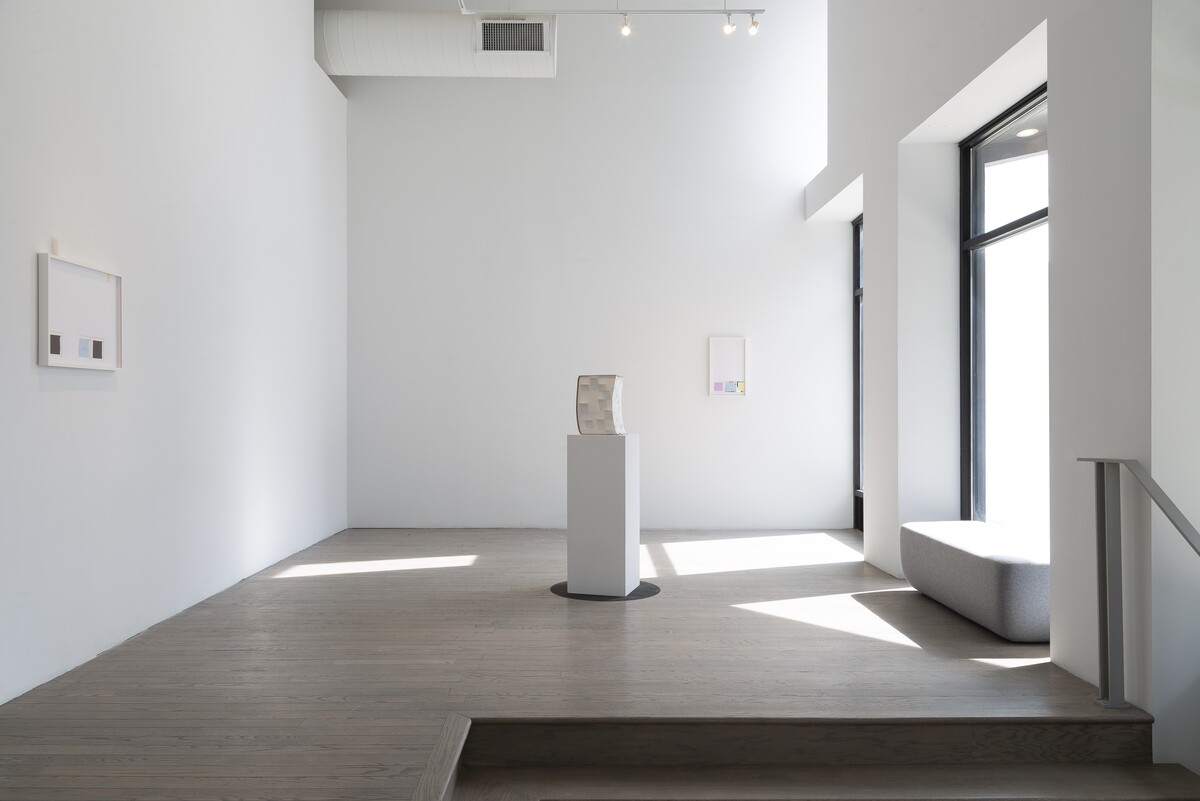
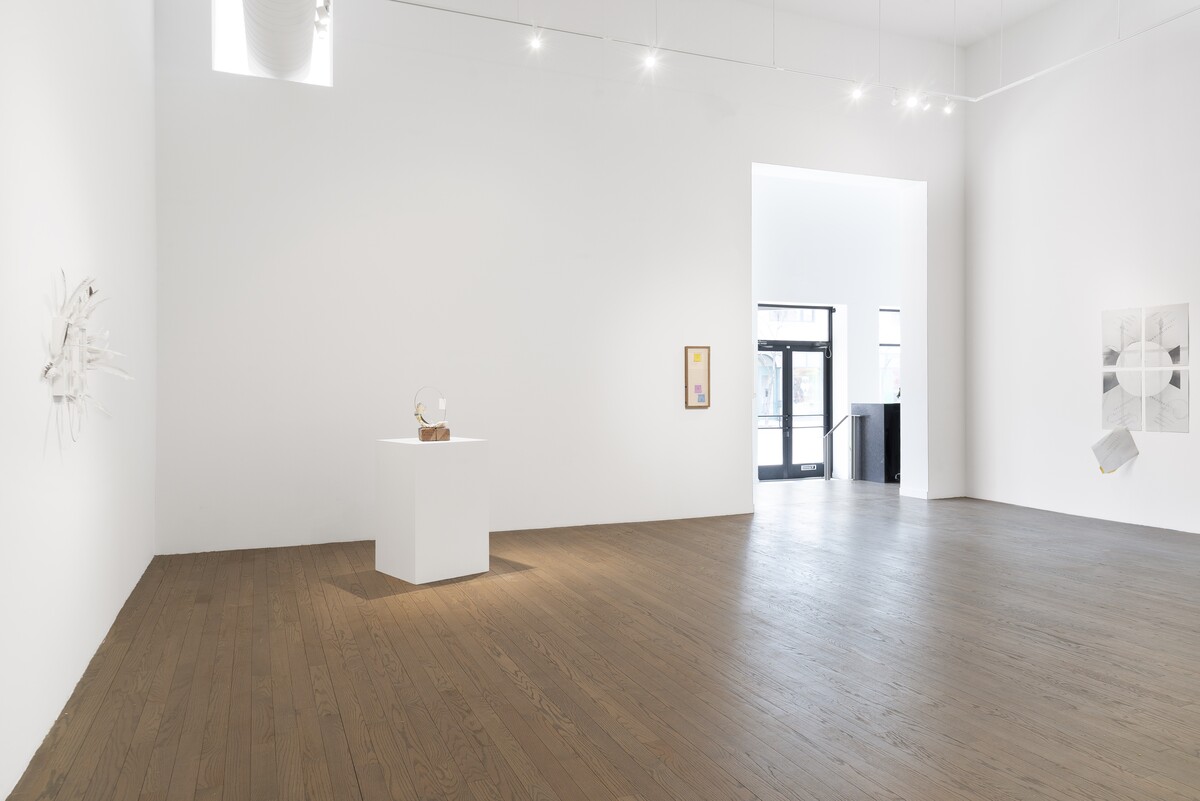
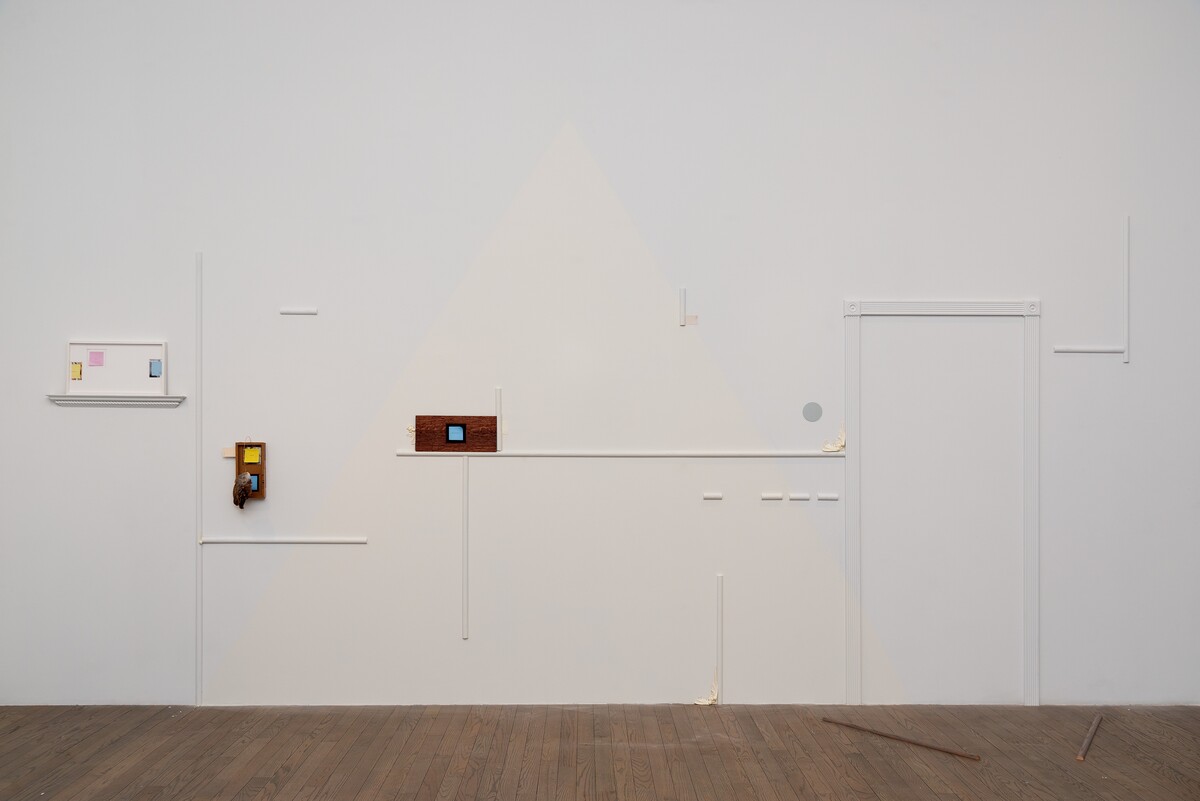
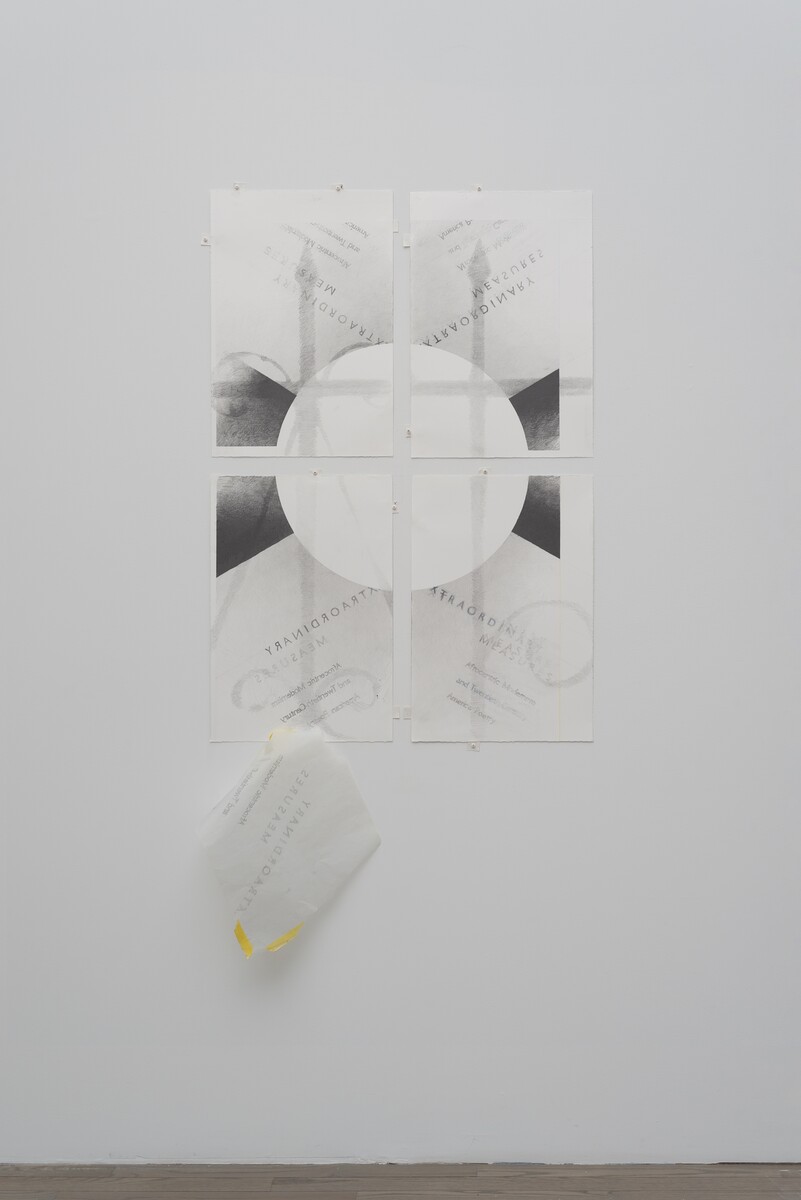
PATRON is pleased to announce Nyeema Morgan’s take my wife…PLEASE!, the artist’s second exhibition with the gallery following 2022’s The Set-up. Across a body of work including sculptures, drawings, and print media, Morgan apprehends narrative structures as scaffolding for systems of power. take my wife…PLEASE! unfolds through inquisitive framing devices, mechanisms, and studies. With reflections and deflections, subtle set-ups, and alterations of the gallery space, Morgan’s works catalyze the inherent vulnerability and tension in our relationship with images, words, objects and architecture.
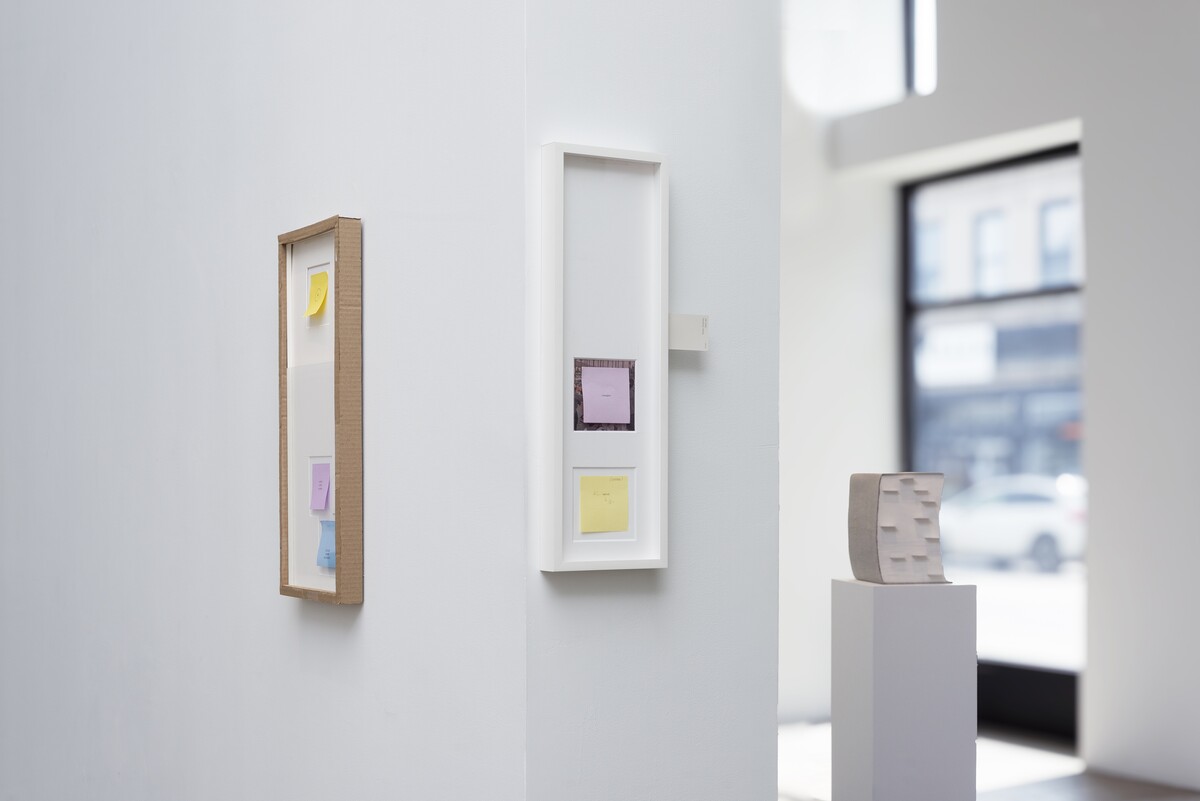
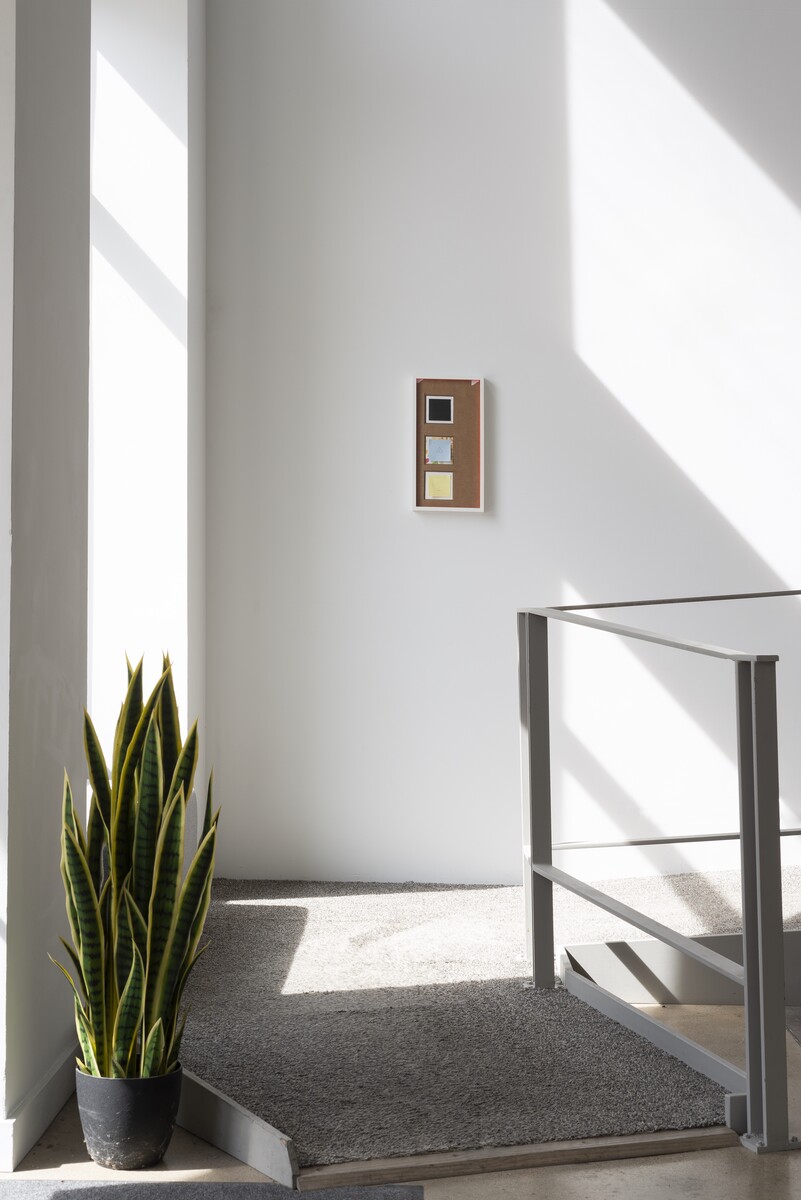
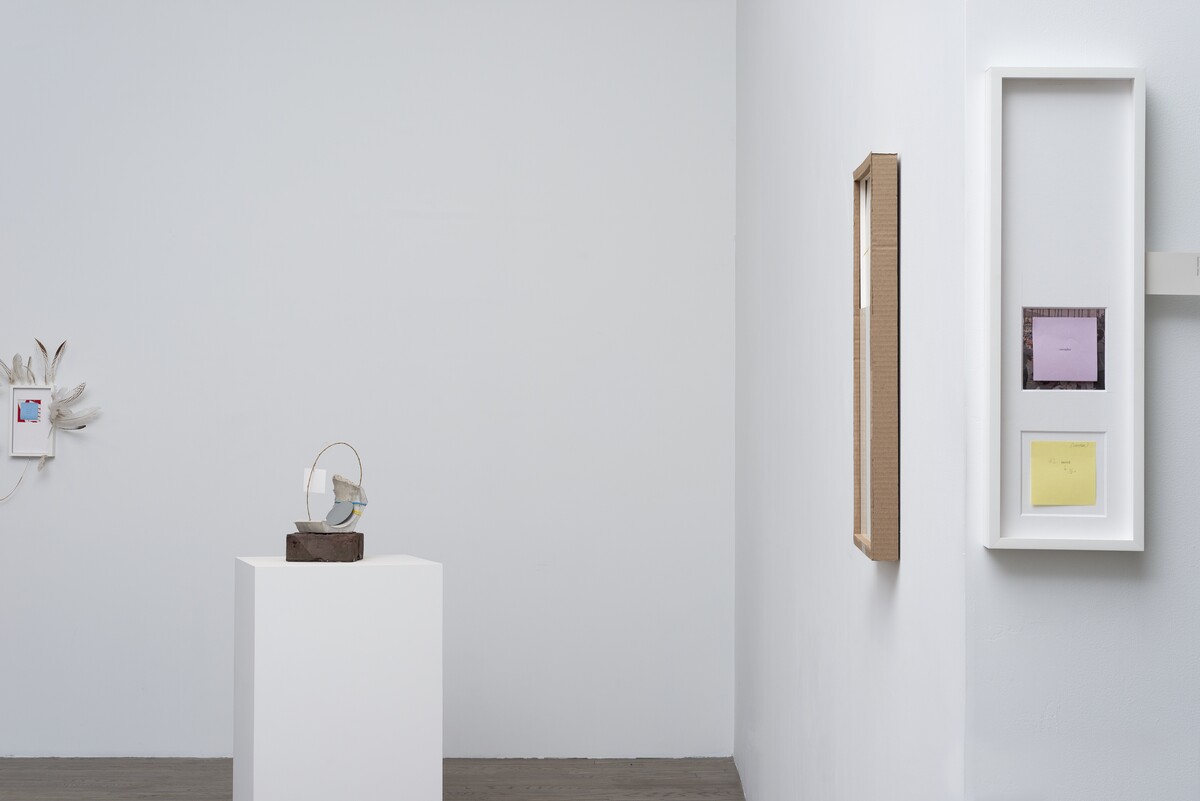
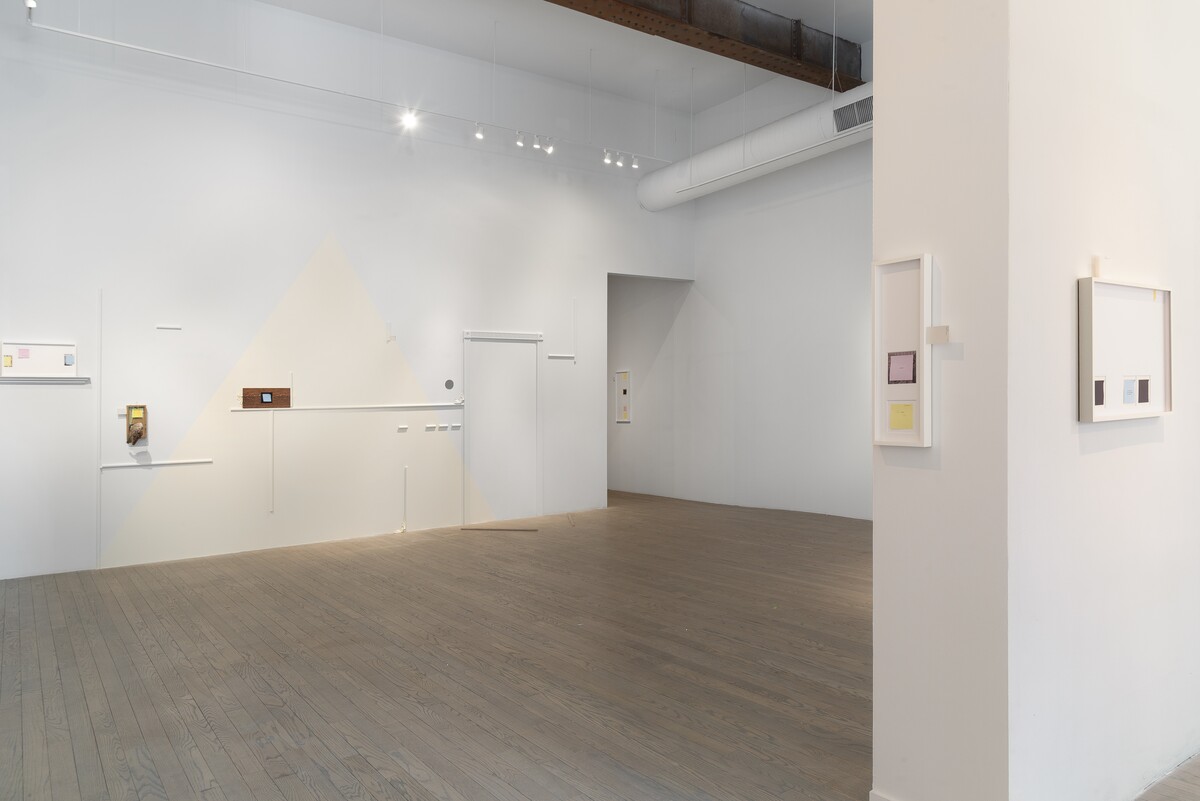
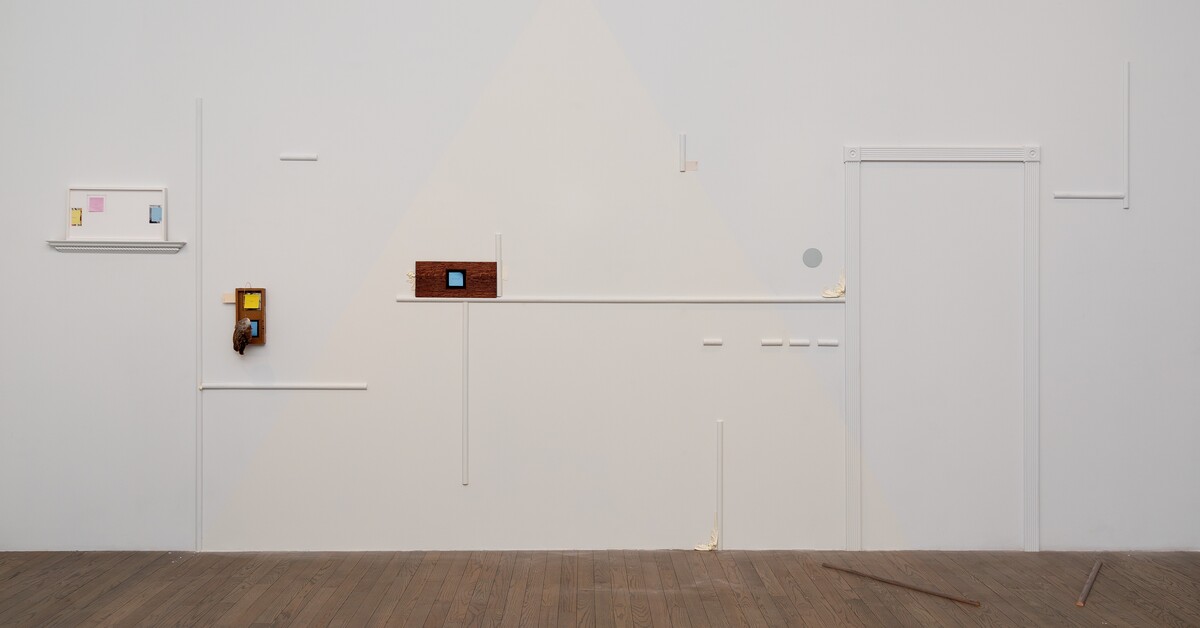
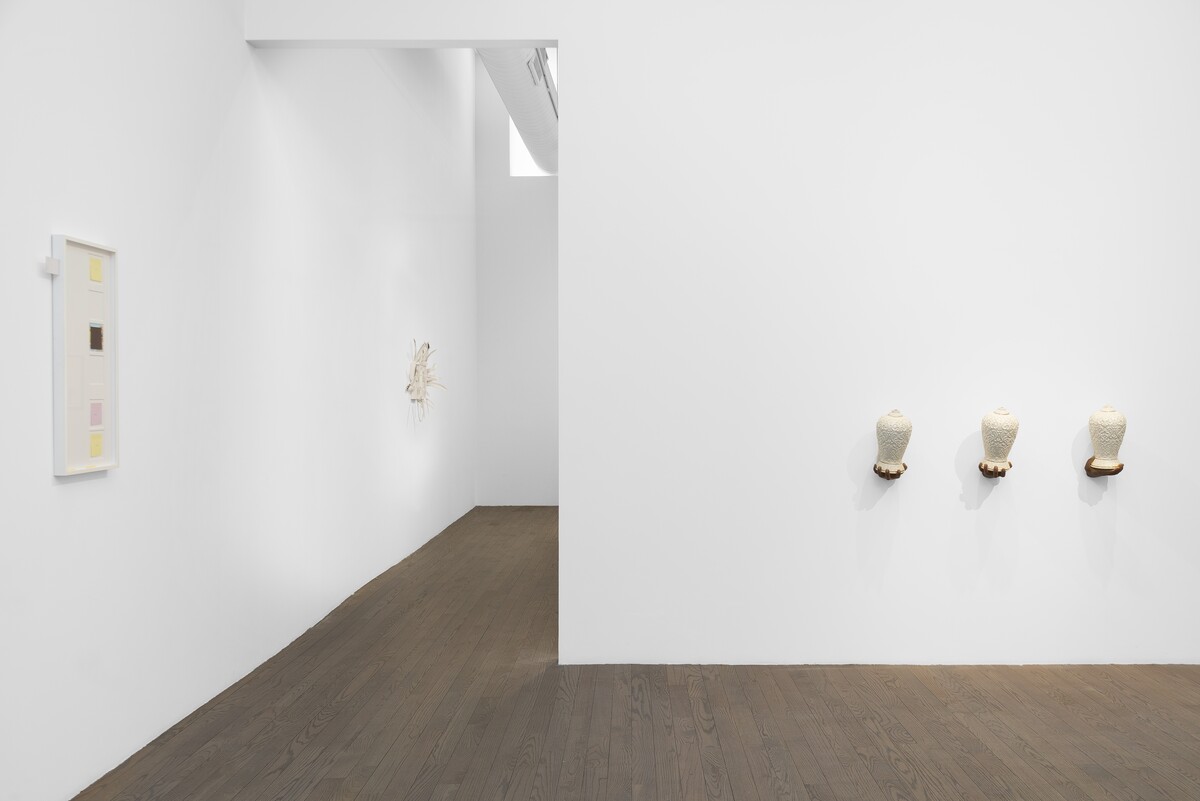
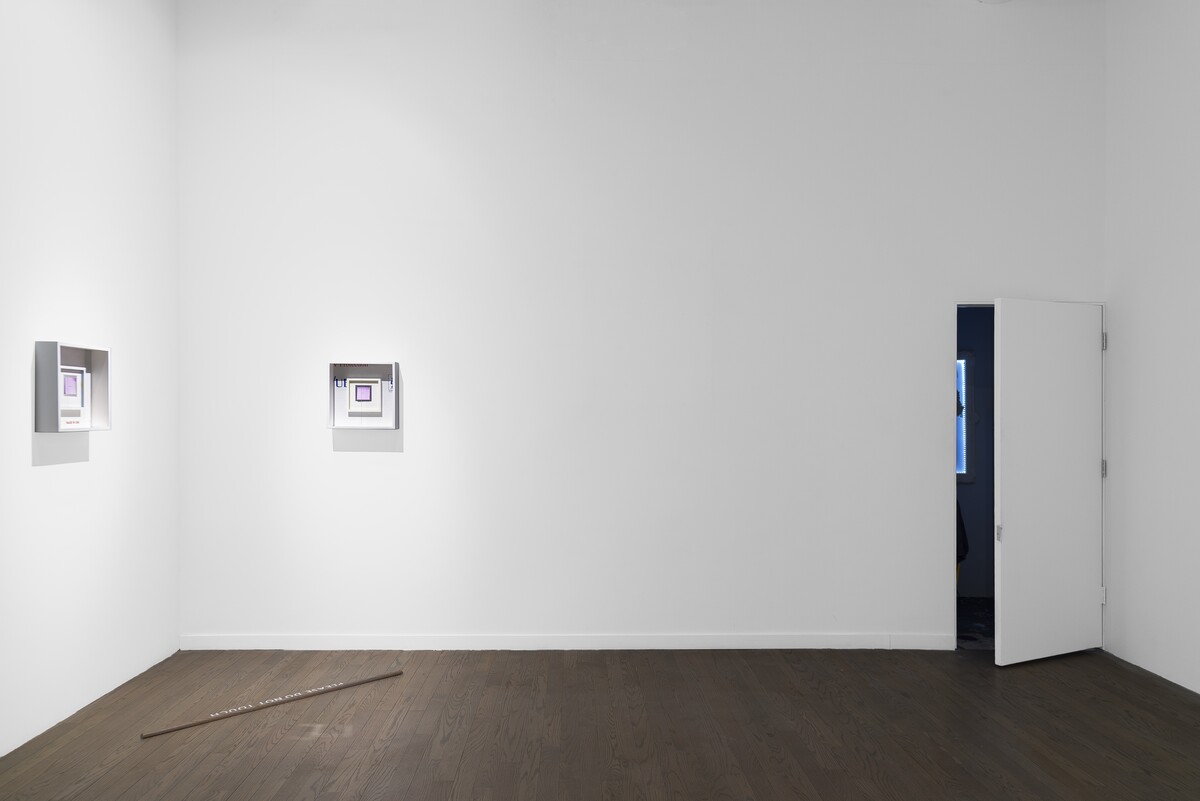
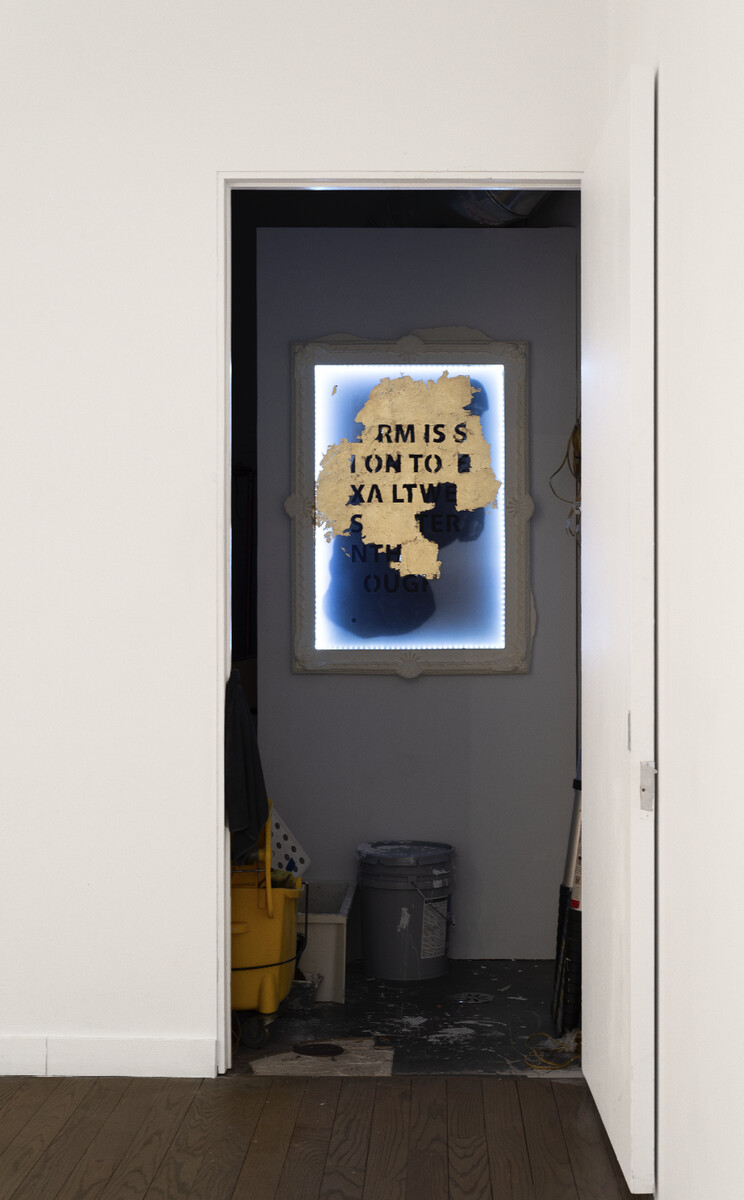
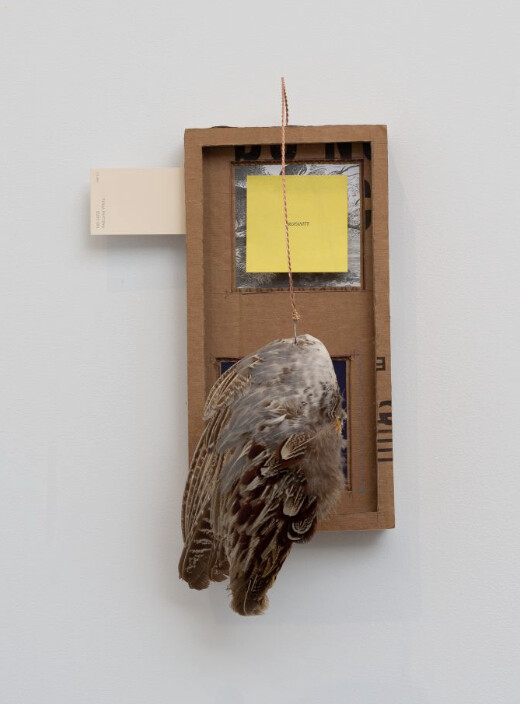
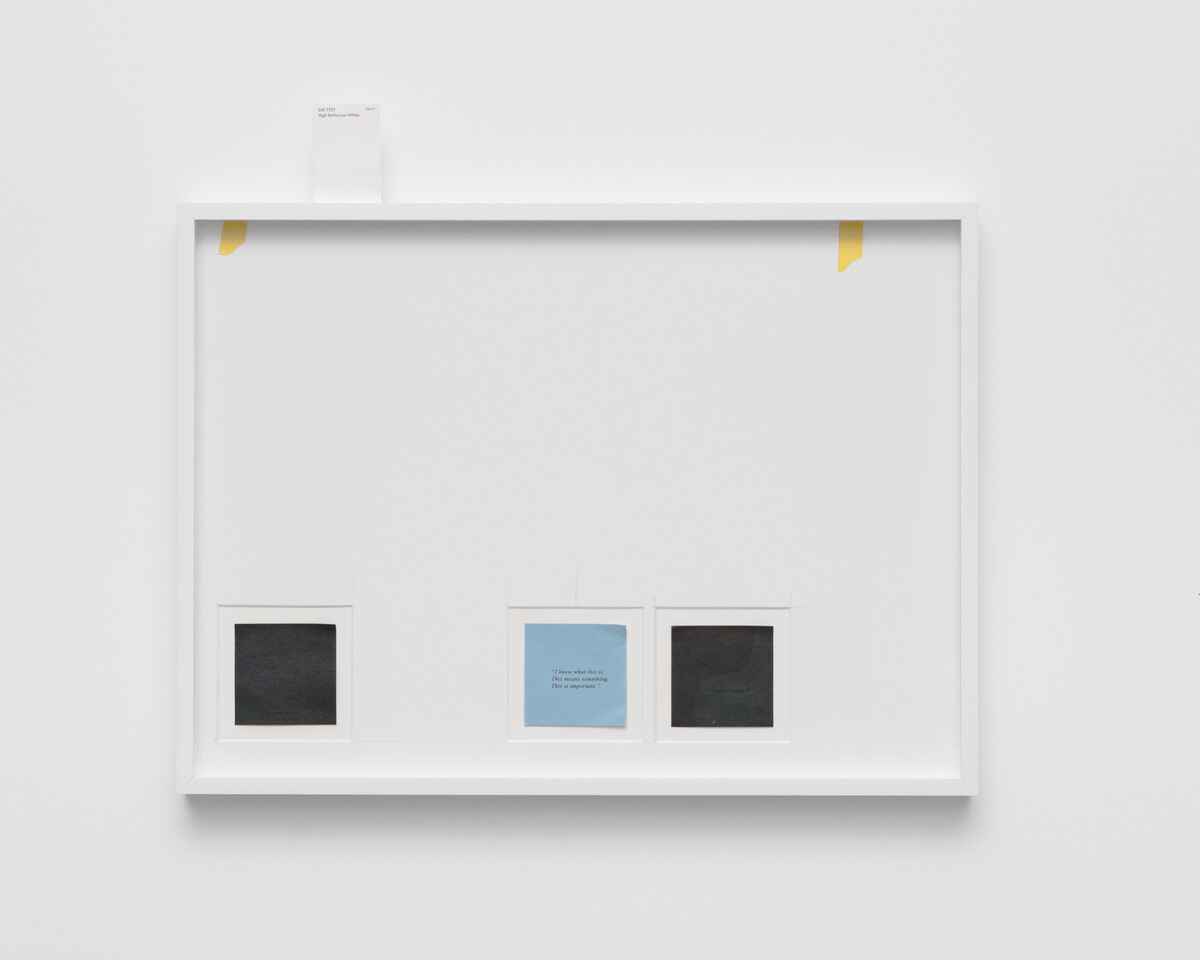
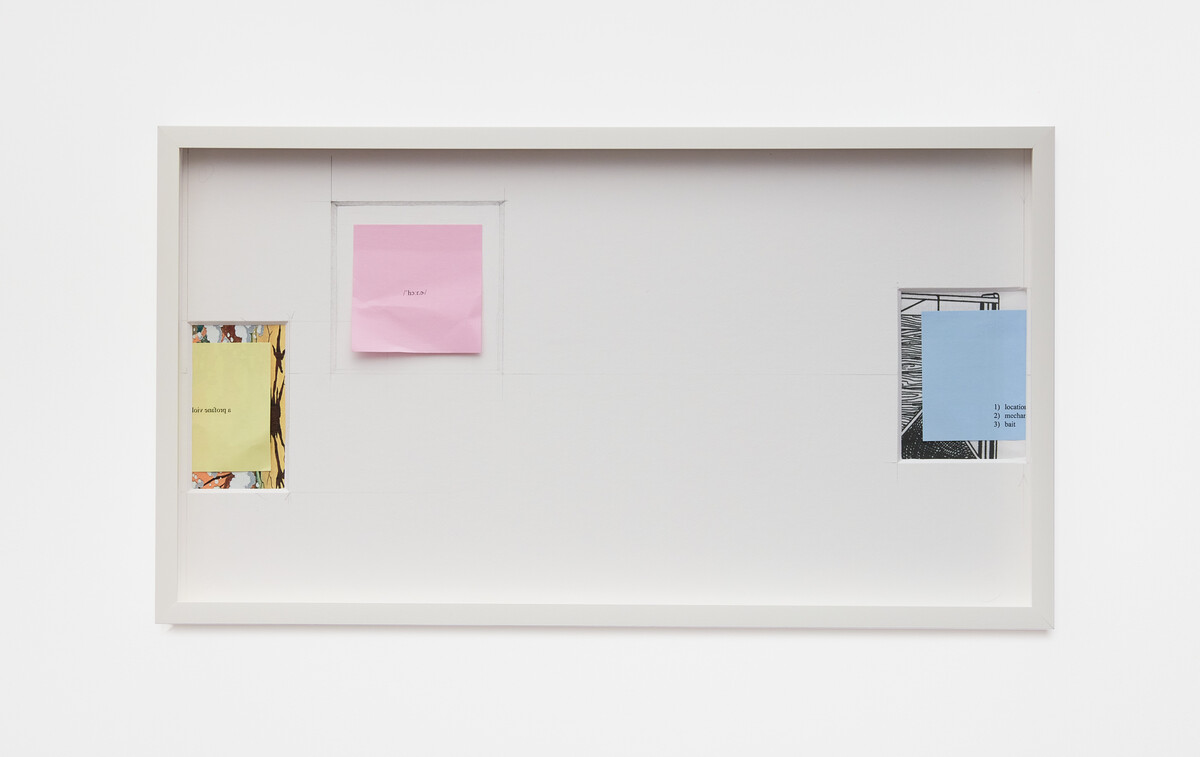
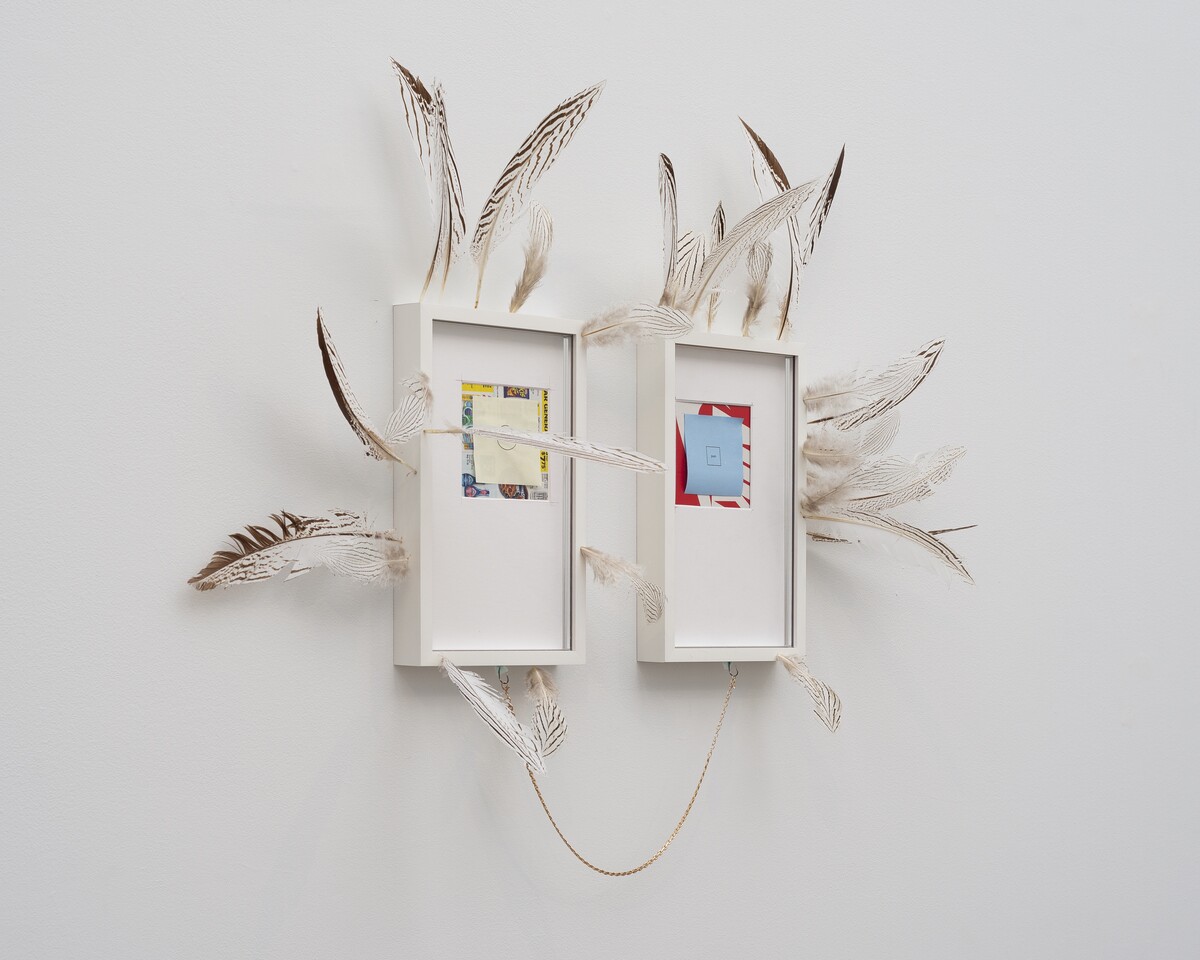
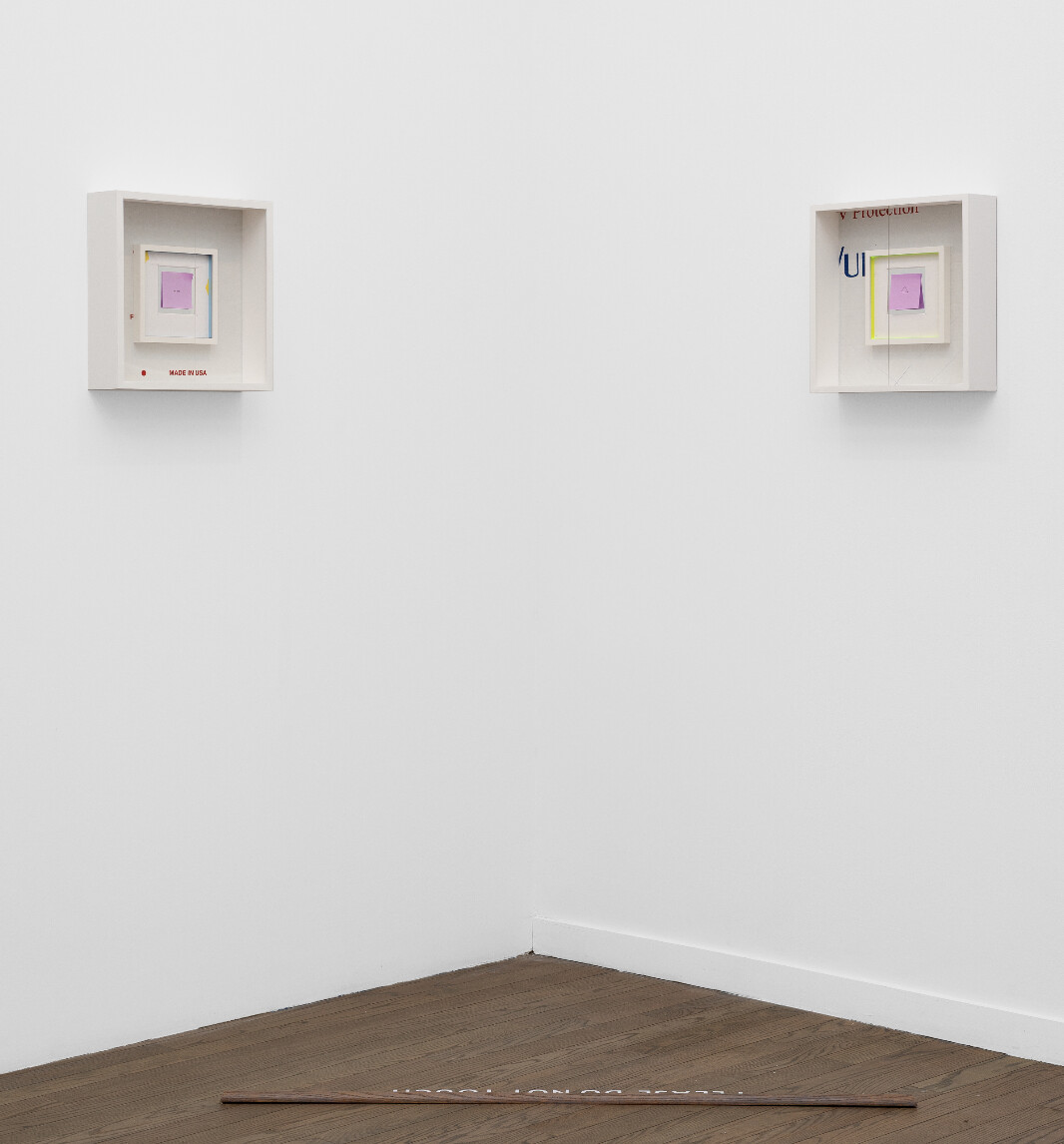
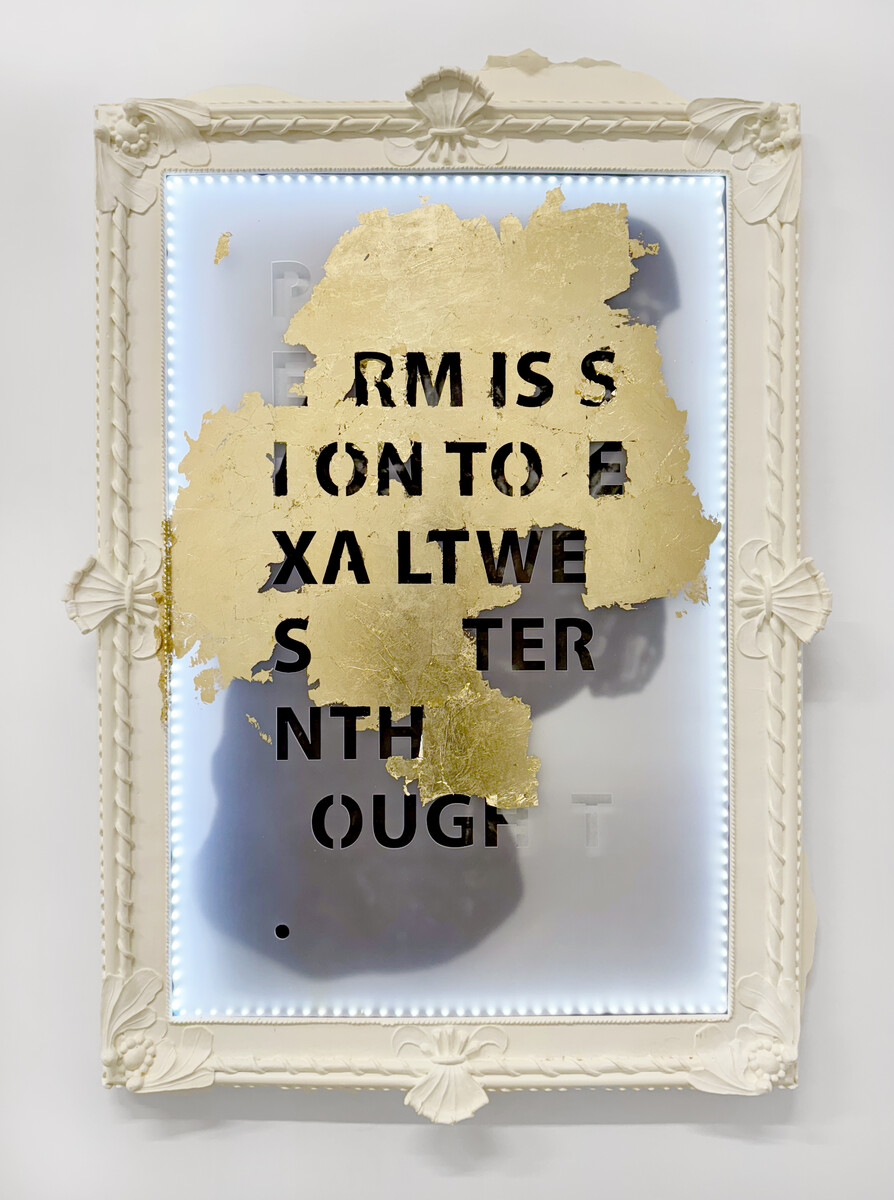
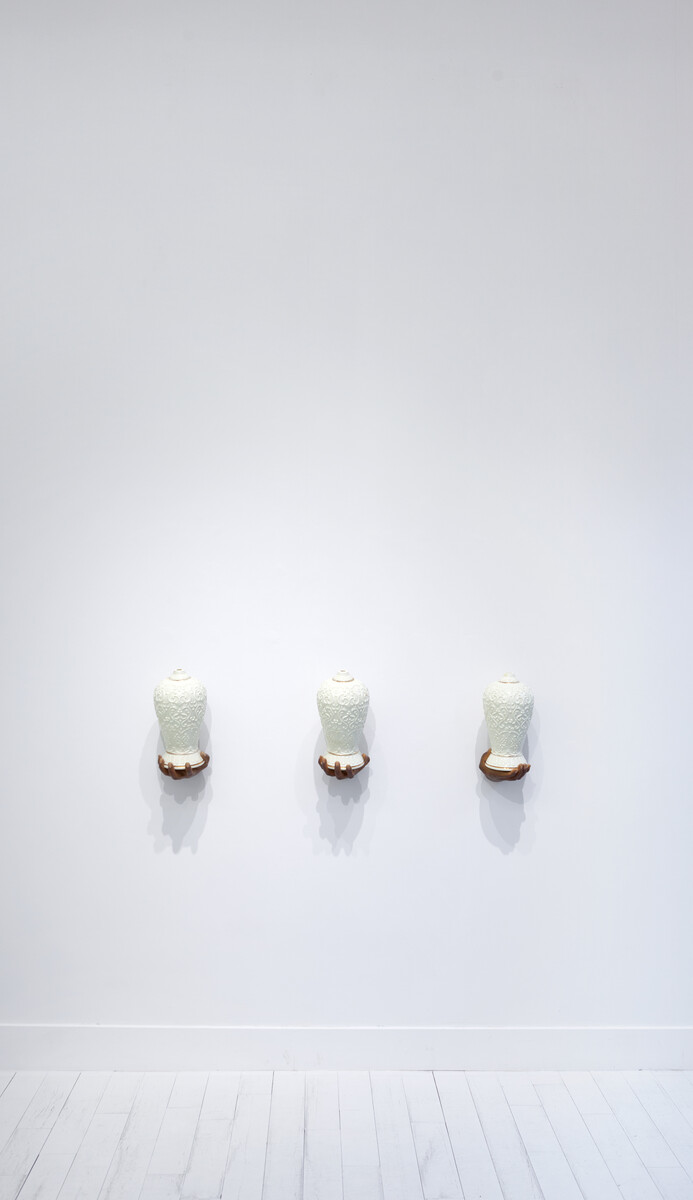
take my wife…PLEASE! debuts the first significant presentation of studies for traps. Subtly calling attention to margins and neutral spaces, Morgan destabilizes the expected function of the frame. Paint chips, bird feathers, mirrors, and luminous spacers interrupt their expected neutrality, instead re-directing the viewer. Here, artworks are installed in the gallery’s interstitial spaces – the utility closet, within door jams. Morgan’s tripartite sculptural work Untitled, No. 1 (I, Rhinoceros), features three trompe l’oeil casts of the artist’s own hand, holding a mass-produced baroque vase. Referencing Albrecht Dürer’s 1515 print, which was rendered entirely from visual descriptions of the animal, Morgan returns to critical questions about the mechanics, and pitfalls, of representation.
————
Text by Artist-writer Barbarita Polster:
If in The Set-up Morgan isolated the exhibition’s namesake comedic device in order to identify its limits in the absence of a corresponding punchline, take my wife…PLEASE! doubles back on this problem by asking what sets up the set-up. In particular, Morgan here draws upon the paraprosdokian (“against expectation”), a figure of speech itself often used as a comedic device in which the latter part of a joke forces a reinterpretation–or “disinterpretation,” as Morgan has referred to it–of its beginning. Take, for example, the following one-liner popularly attributed to comedian Groucho Marx: “I’ve had a wonderful time…but this wasn’t it.” Like the rope lasso buried under leaves, the latter fragment lies in wait to snag its unsuspecting audience with a syntactical bait-and-switch.
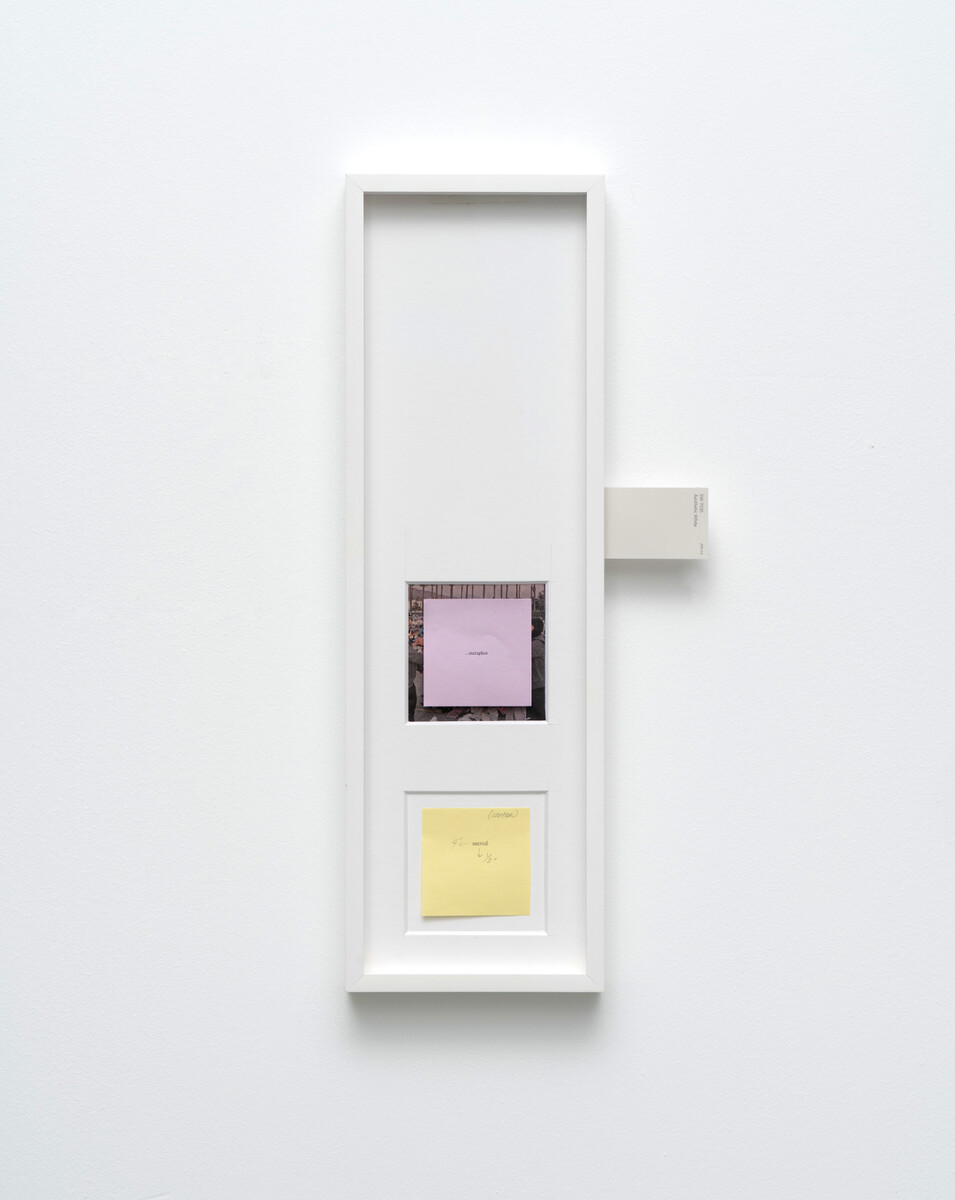
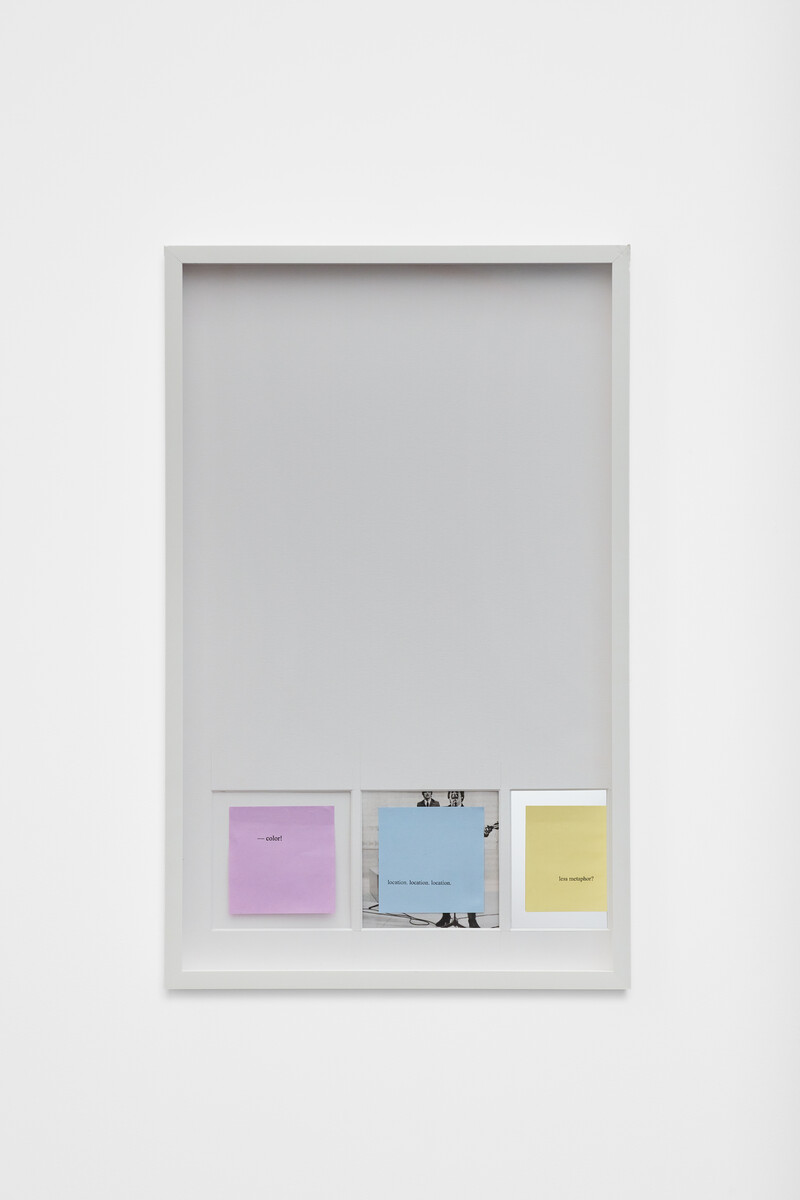
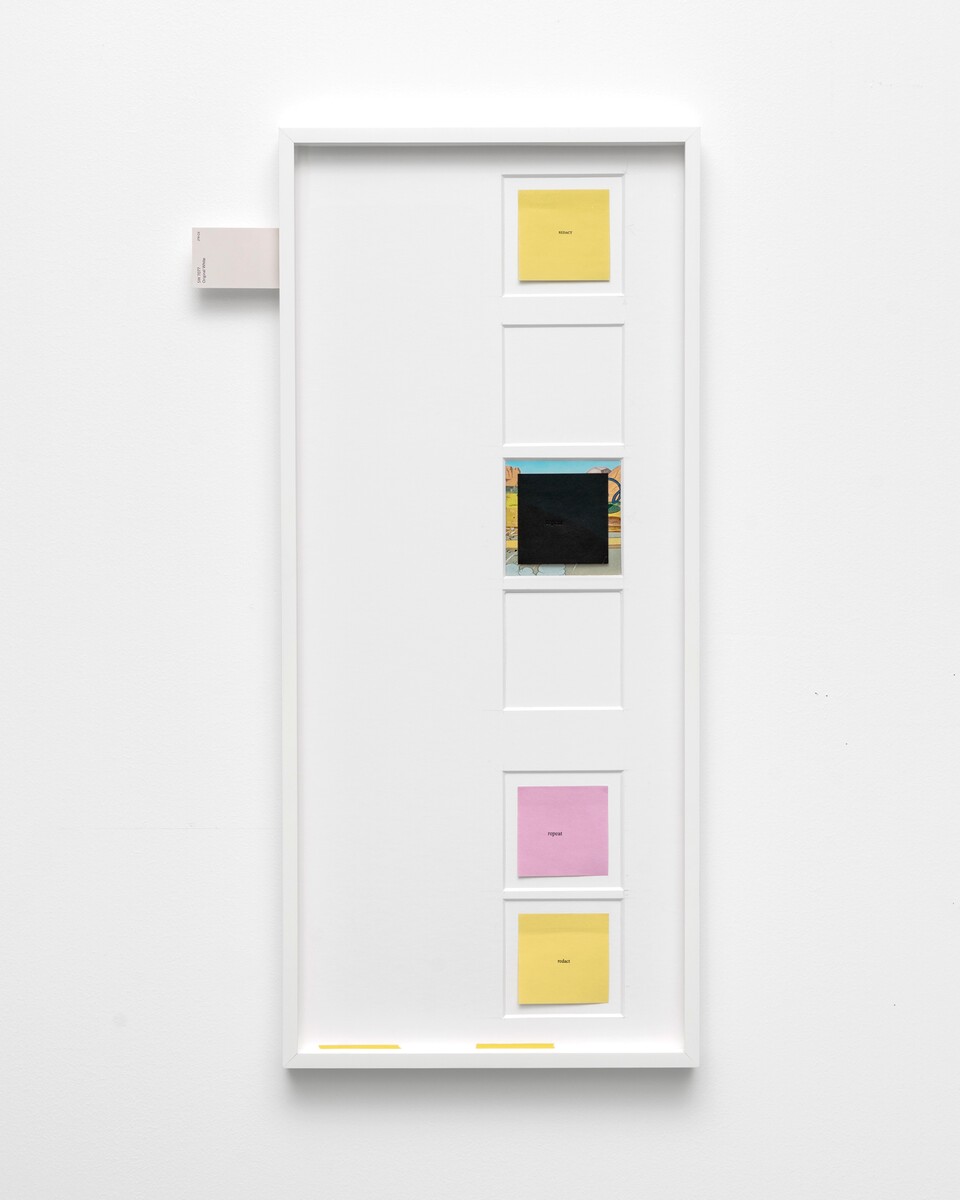
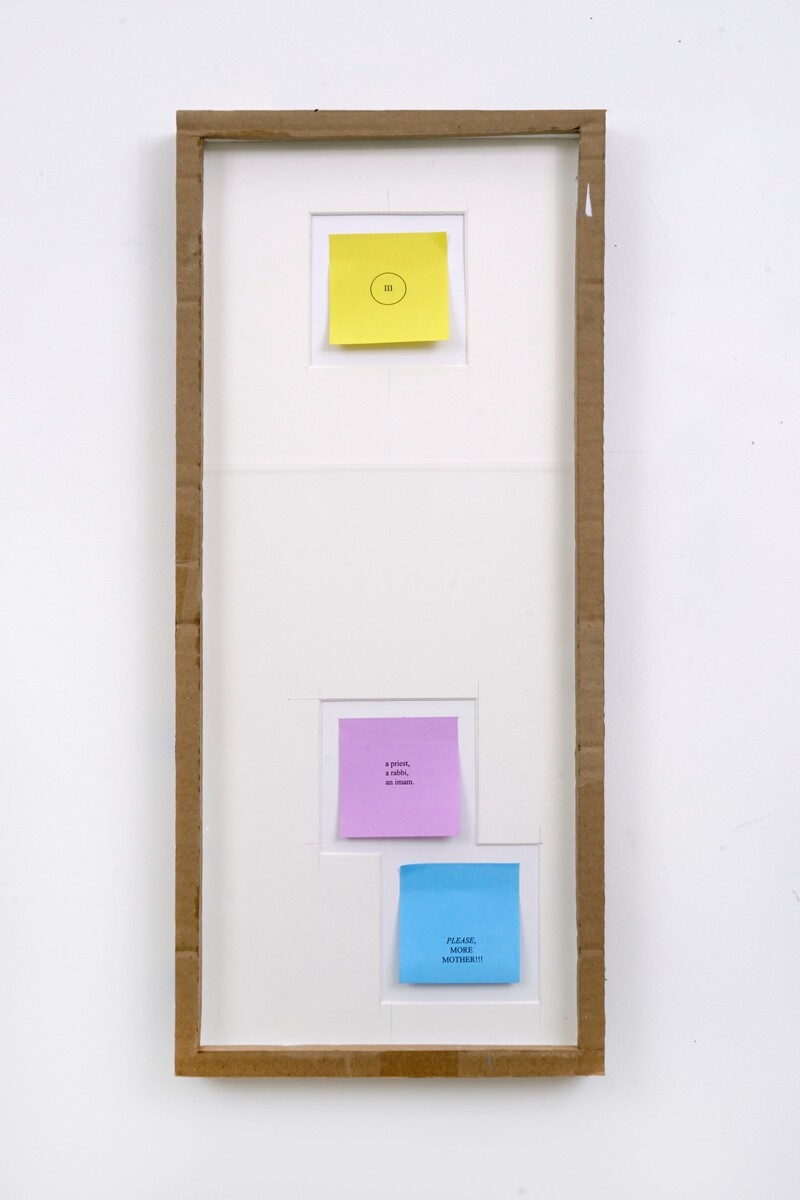
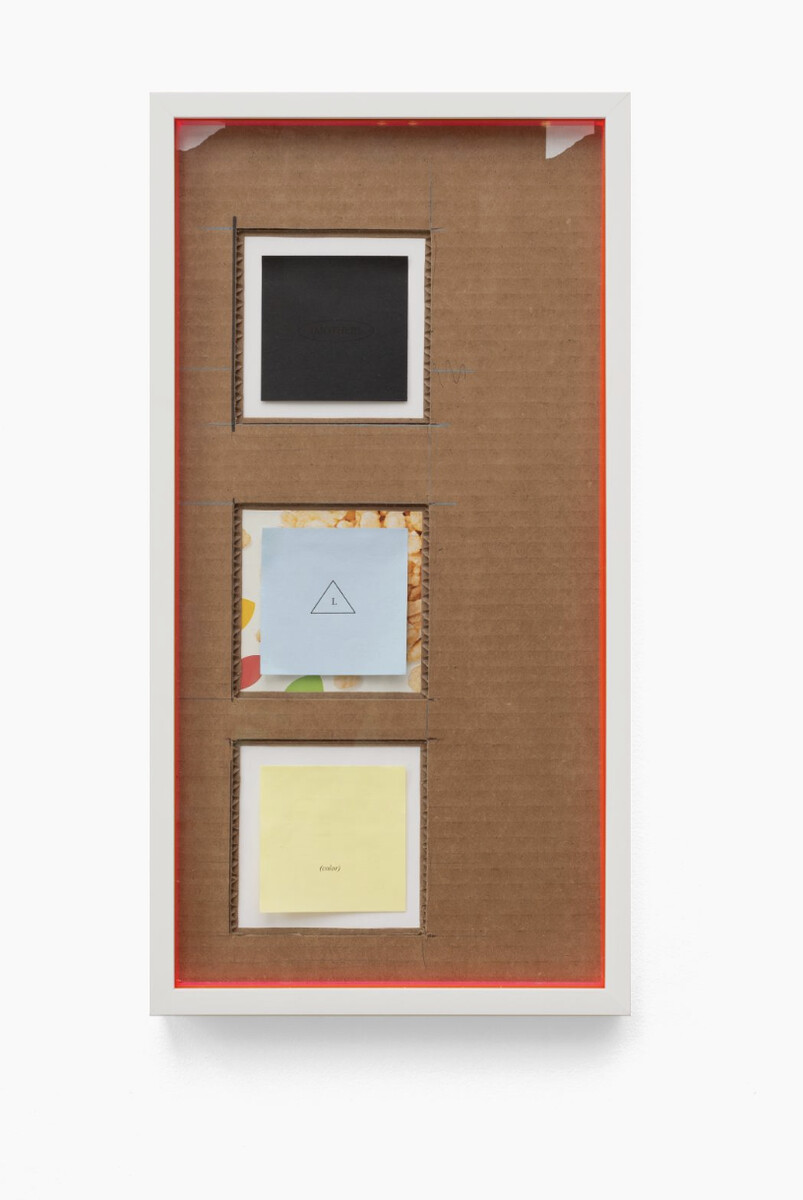
While problems of framing and margins have given shape to Morgan’s work throughout the years, it is the frame-as-threshhold that [fails to] define[s] the recent, wall-hanging studies for traps works. Letterpressed cyan, magenta, yellow, and black Post-It notes float within their own square enclosures, further bounded by graphite registration marks, truncated here and there by the outermost frame, and even marked by an occasional trompe l’oeil wink. Each of these nested frames, meanwhile, like the rope lasso, remains reluctant to advertise a consistent boundary. But it is the contextual framing of the artwork itself that begins to activate the work’s paraprosdokian character, as the gallery set-up provides an occasion for the heightened vigilance of the wary viewer who might pay extra attention to the insinuatory color names on the commercial paint chips–“Alluring White,” “Smart White,” “Welcome White”–slotted into the sides of the wooden frames.
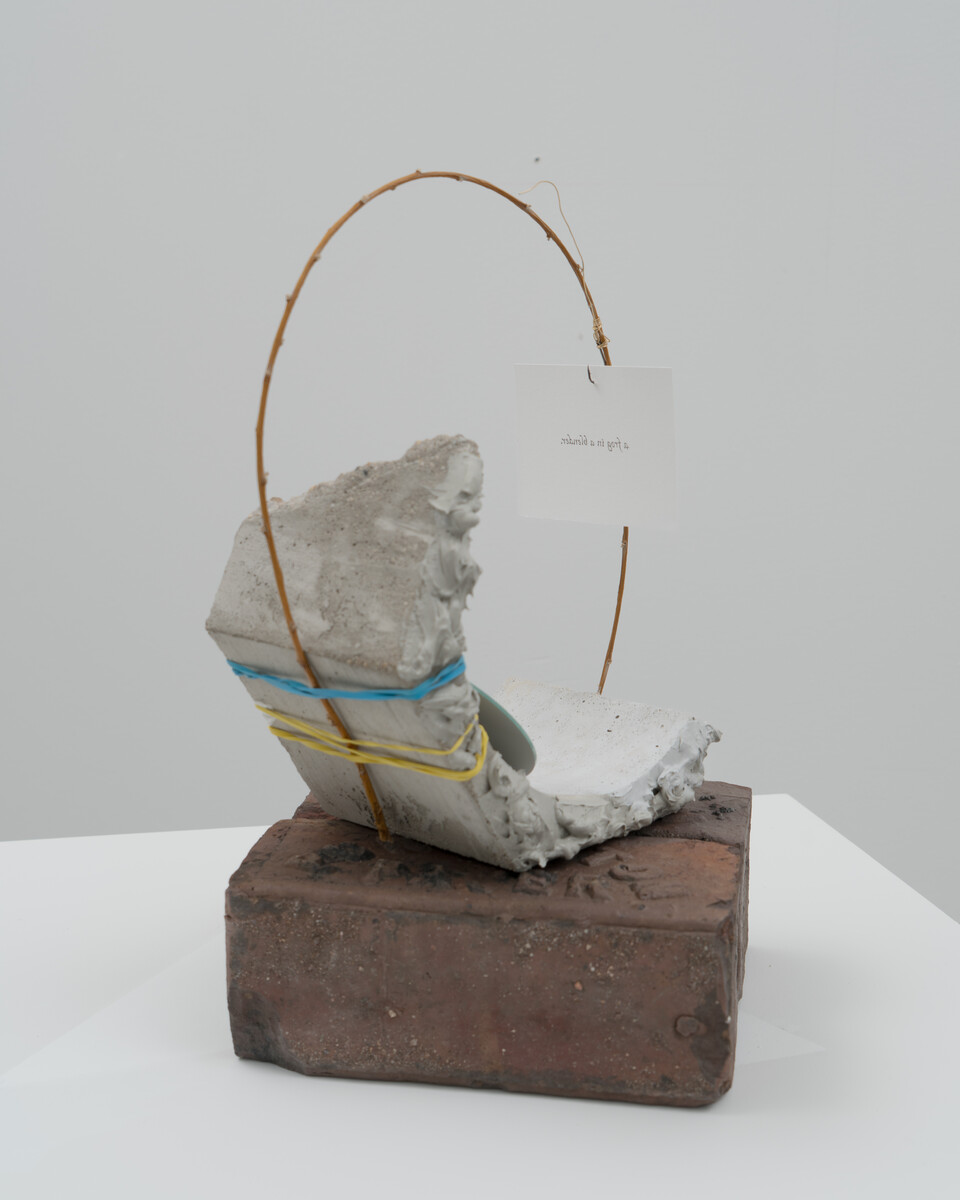
The paraprosdokian form perhaps becomes most apparent in the sculptural studies for traps through the subtle framing provided by the language itself–in other words, what on earth is a study for a trap? If in the syntactical form of the paraprosdokian, the first half of the joke is otherwise just a familiar statement, then it can be said that the second half taken alone–the punchline–remains a simple fragment. Only the relation between the two mobilizes the comedic dynamic, as the latter fragment transforms the former into a set-up, constituting it as such by denying its former premise. But where and when may this precise threshold, this relation, be located? To create a study or model of a trap is to lure the viewer into the realm of research and prototyping, the non-threatening object of study. In Untitled (studies for traps), no. 1, v. III, for example, the cartoonish set-up entices with mirrors, text, and optical cues, drawing the viewer in and positioning them before they come to realize that they are eye-to-eye with a fish hook, itself attached to a tautly bound tree branch. But is it or is it not an actual trap? One false move and the artist or viewer may be recast from researcher into prey.
Far from a series of syntactical exercises alone, however, take my wife…PLEASE! continues Morgan’s exacting assessment of safety, failsafes, and threats, particularly in moments where the threshold of danger hides in plain sight. Through this recent work, Morgan navigates the undecidable moment where the set-up is actively being set-up, being framed. The work almost suggests that one might trust given warning systems completely…because in the event that they ever stop working, you’ll know almost immediately.
Ten must-see shows for EXPO Art Week
The Chicago Reader
Apr 4, 2026
Apr 4, 2026