
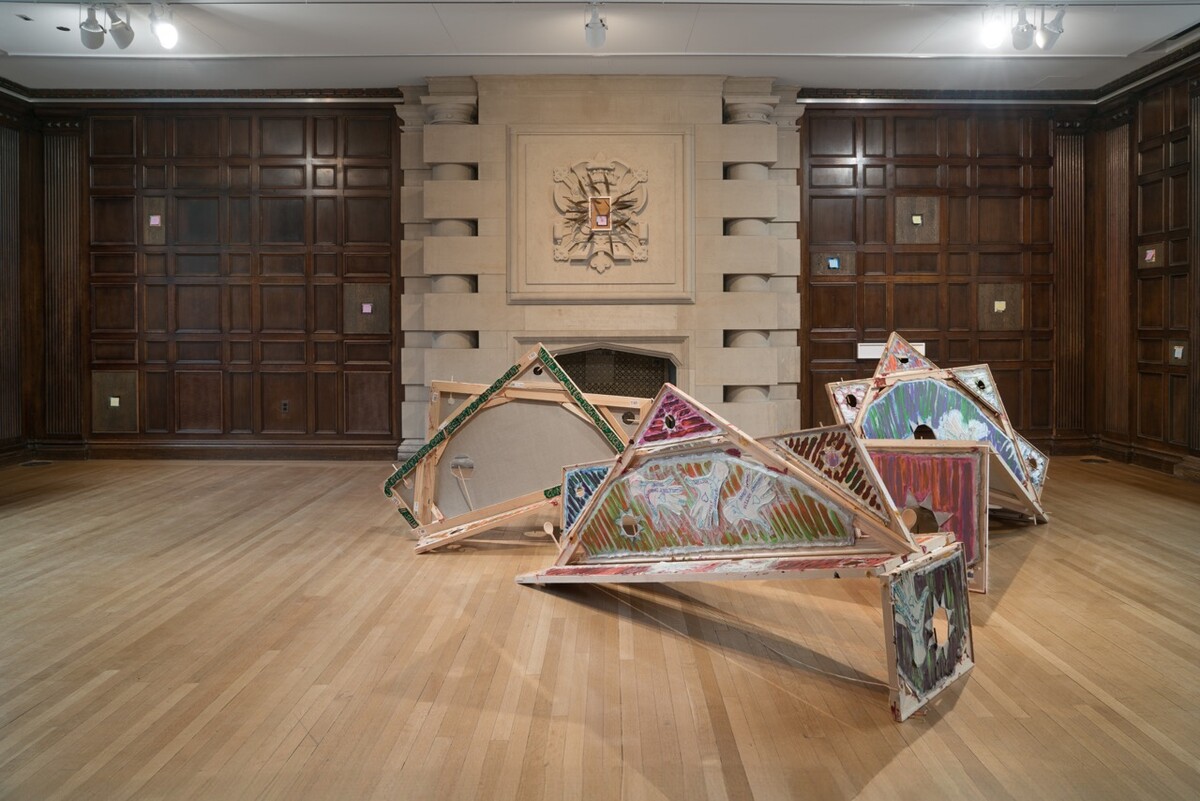
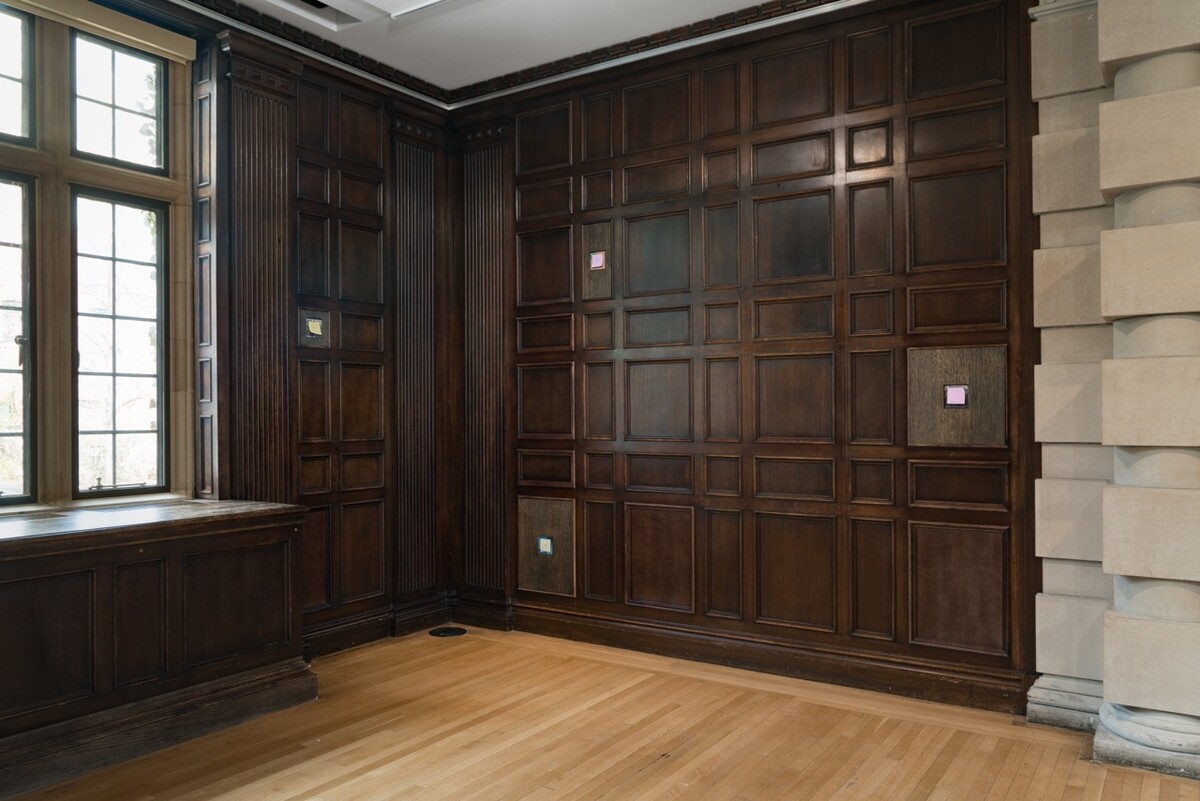
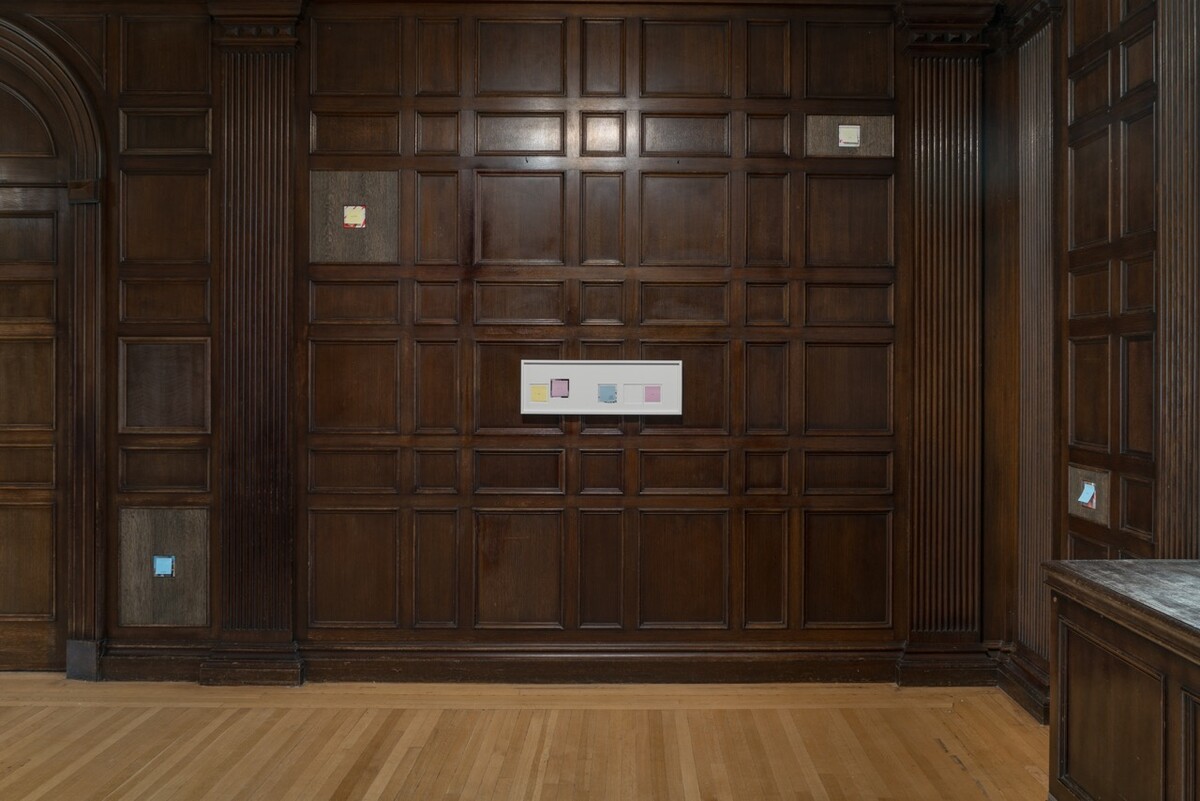
The great proto-minimalist painter Ad Reinhardt famously quipped that “sculpture is something you bump into when you back up to look at a painting.” In Story Structure, Pt. 2, a show conjoining the work of Chicago-based artists and real-life couple Mike Cloud and Nyeema Morgan, the opposite appears to be true. The exhibition, which will be on view at the Neubauer Collegium April 7 through June 28, 2026, presents mixed-media works from Morgan’s “Studies for Traps” series in a tautly orchestrated sequence along the gallery walls. Backing up to take them in, the viewer must navigate around three of Cloud’s large multi-panel paintings, which occupy the middle of the space much like sculptures.
Challenging the conventions of their preferred mediums in this manner, Cloud and Morgan amplify the differences between their aesthetic programs. Indeed, Morgan’s art of restraint, so coolly and elegantly exemplified in her preoccupation with framing, is a far cry from Cloud’s signature profusion of loudly clashing signs and signifiers, the logical, if psychedelic, outcome of the artist’s stated desire to “paint everything all at once.” Yet despite these formal differences, shared interests and concerns are at play. Both artists explore questions related to language and communication, information and (rather more topically, alas) dis- or misinformation.
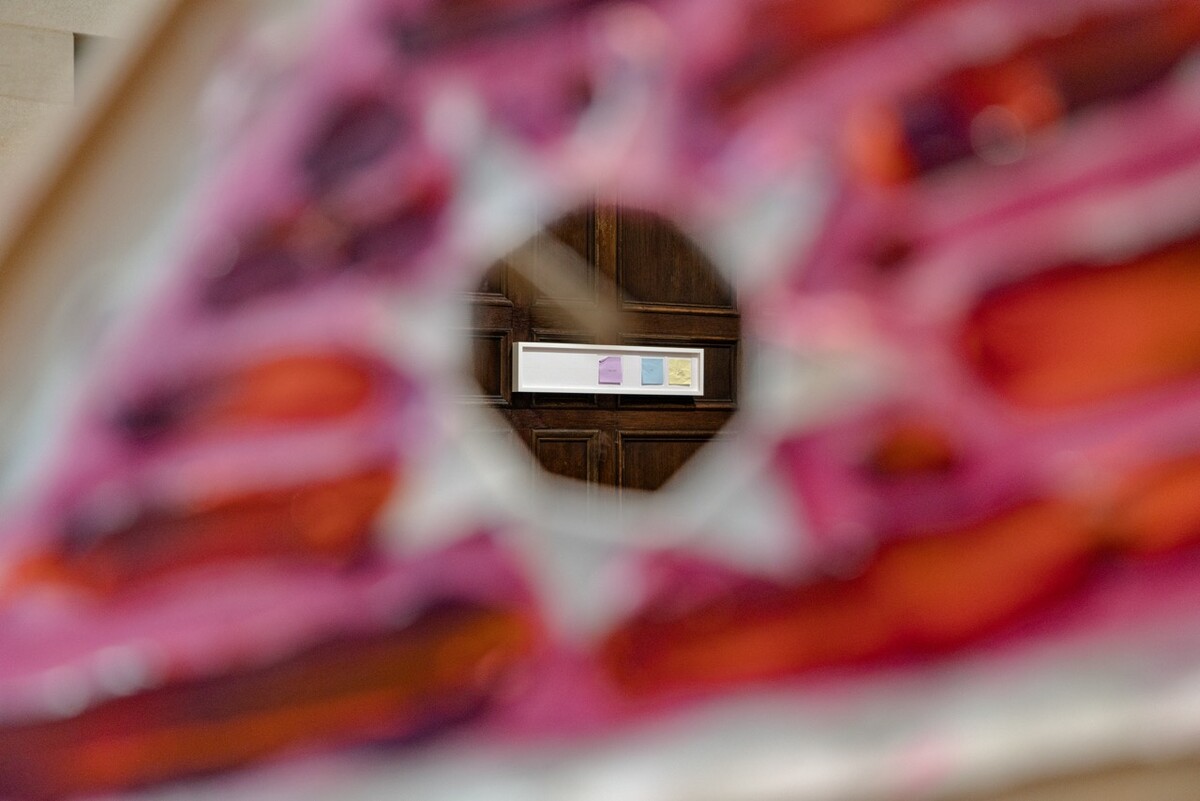
Although Cloud’s and Morgan’s works do not necessarily “mean” something in the way most contemporary art sets out to be “meaningful,” the riddle of making meaning is at the core of their respective practices. Morgan’s longstanding interest in frames and framing mirrors a profound suspicion of the various ways information is presented to us—of both context and subtext. Her “studies for traps,” composed of framing mats and Post-It notes, hint at the power of text and other authoritative modes of meaning-making to obscure and suppress as much as they reveal. At the same time, the works allude to the transgressive appeal of margins of all sorts—peripheral spaces in which the marginalized may flourish. Conversely, the frames in Cloud’s paintings don’t simply lend the pictures a sculptural quality; they are often inscribed with ideograms and graphic forms that invite a reading of the artist’s work as saturated with cosmic symbolism—of a kind that never fully satisfies our hunger for meaning. Cloud has made a series of paintings for this exhibition inspired by search results for the word “sun” on the New York Times website. These vaguely solar works, which simultaneously resemble a herd of meekly grazing stegosaurs, allude to the centrality of “information” in the artists’ practices—and to the evident challenges of navigating today’s unrelenting media streams.
Both artists have said they are drawn to the vagaries of “social form” rather than “social truth,” the dominant currency of so much contemporary art. A collaboratively produced audio piece they created for this exhibition considers the mythologies of the “artist’s life,” a folk motif they explore as a social form shaped by storytelling and hearsay. Morgan is the child of artist parents, and Cloud and Morgan are the parents of two children. More than most, they know that any sentence beginning with the words “An artist I know” invites the response: “But do you, really?”

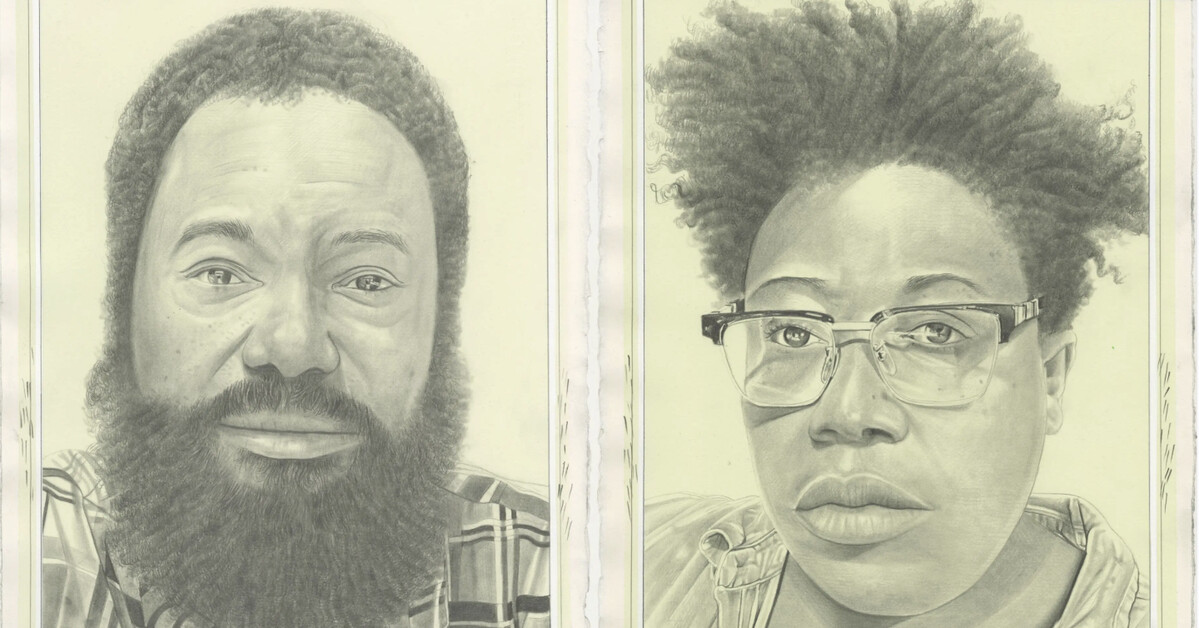
MIKE CLOUD & NYEEMA MORGAN with William Corwin
The Brooklyn Rail
Apr 1, 2026
Apr 1, 2026
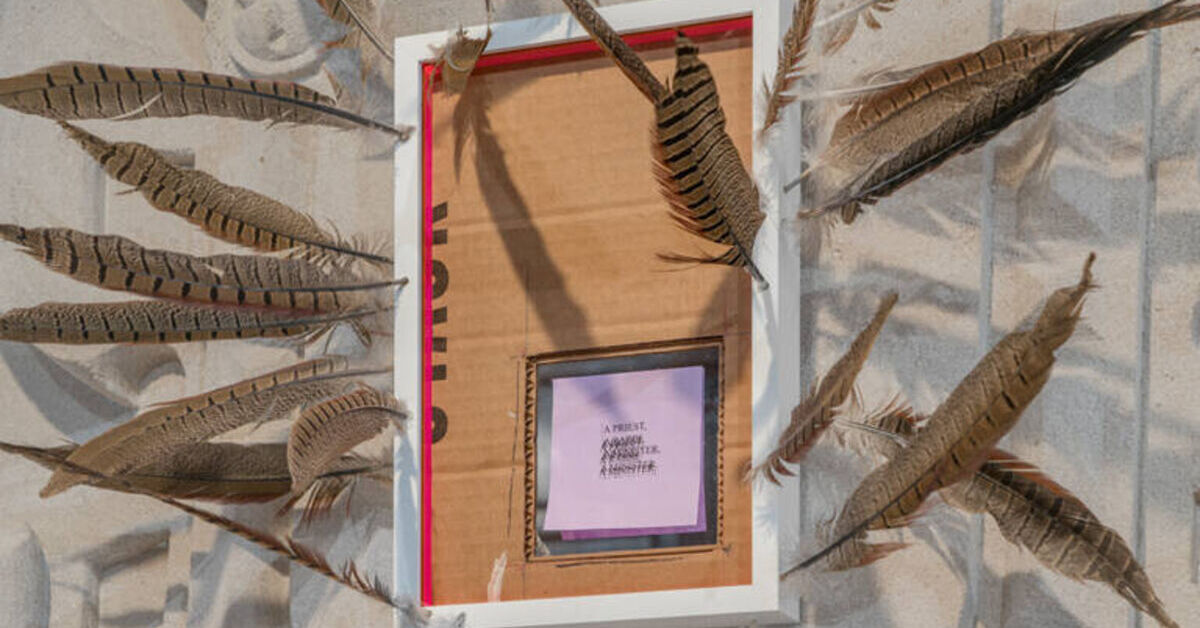
Nyeema Morgan and Mike Cloud Turn the Neubauer Collegium Into a Riddle
New City Art
Jun 15, 2026
Jun 15, 2026