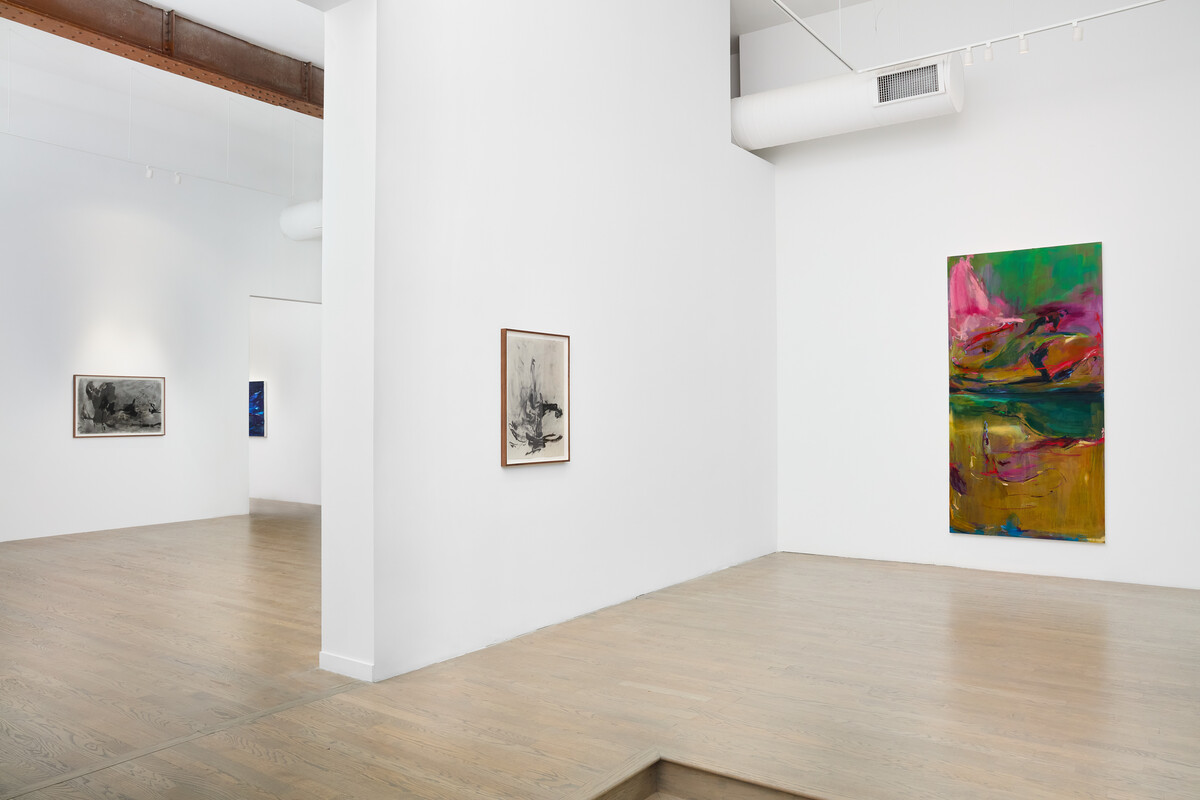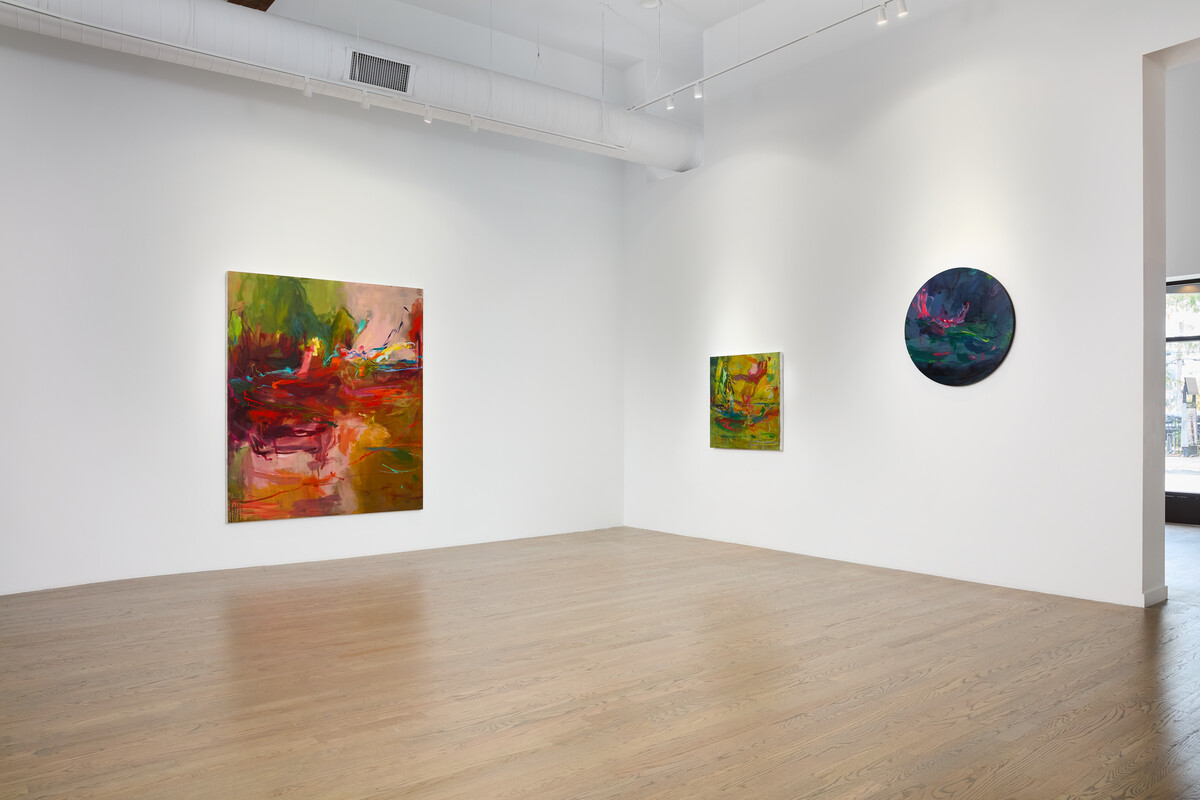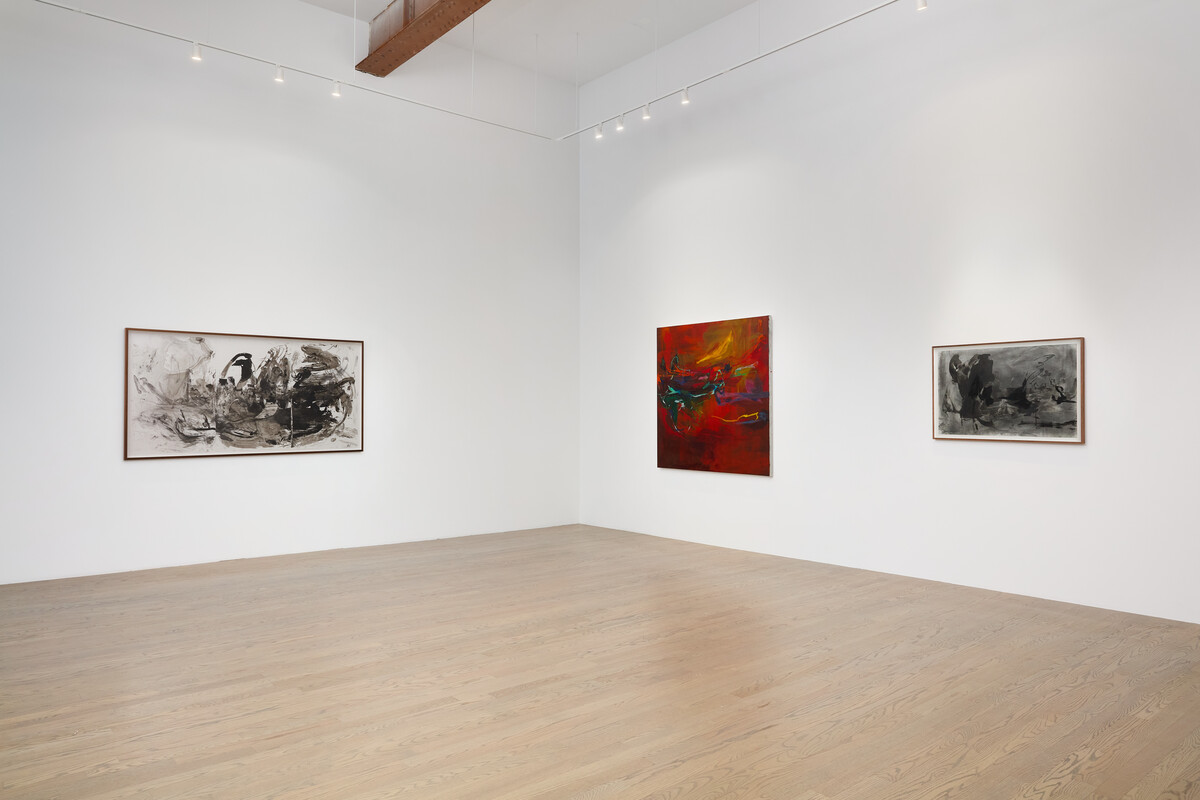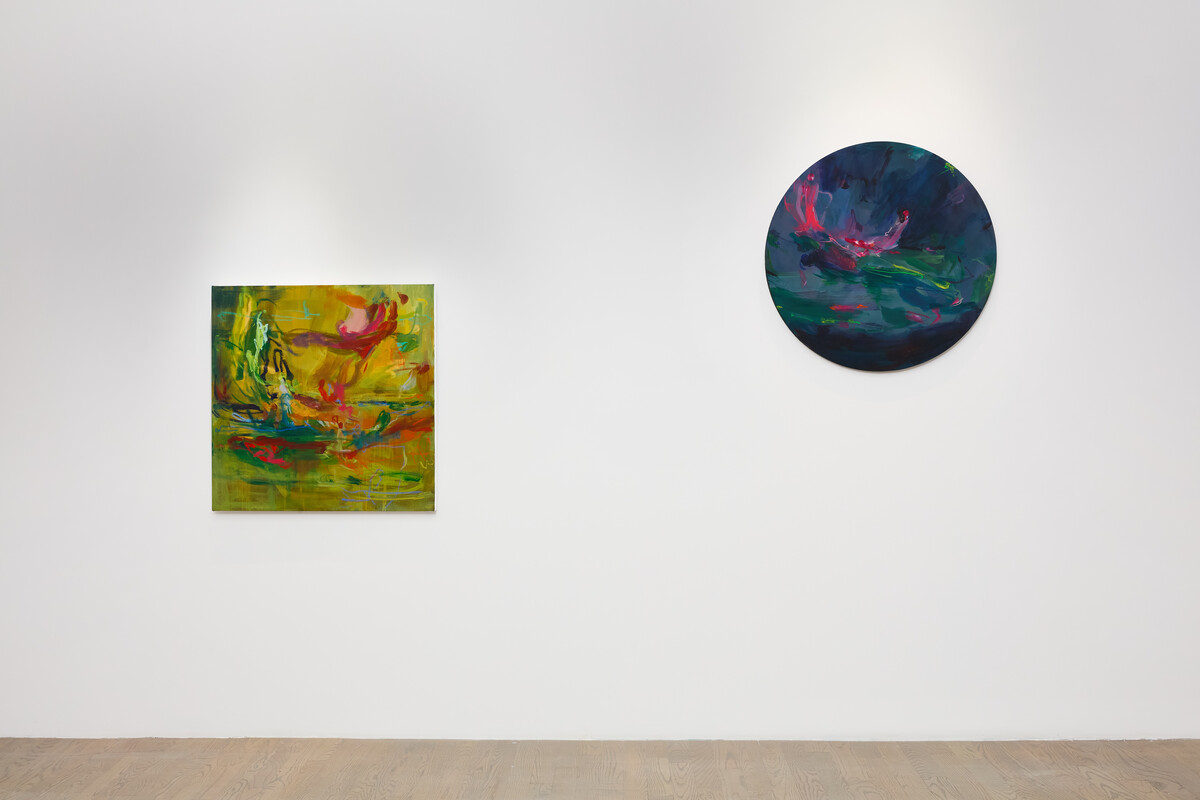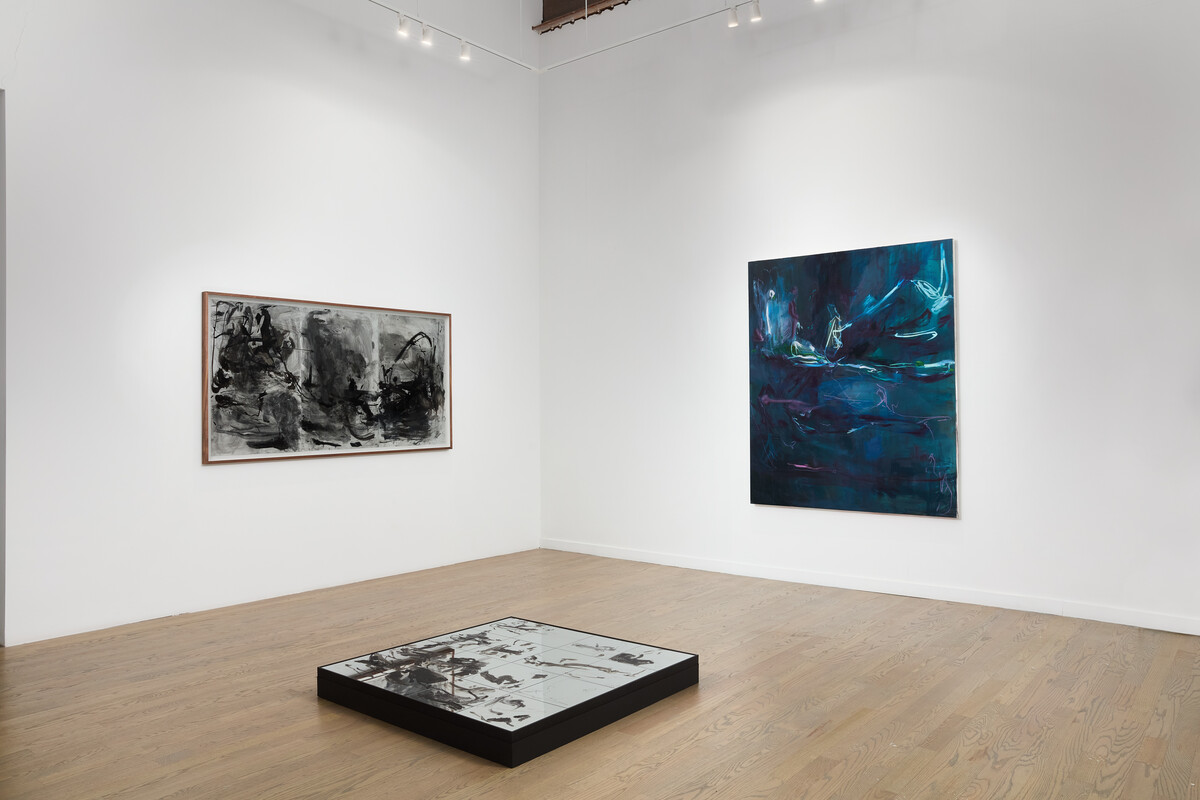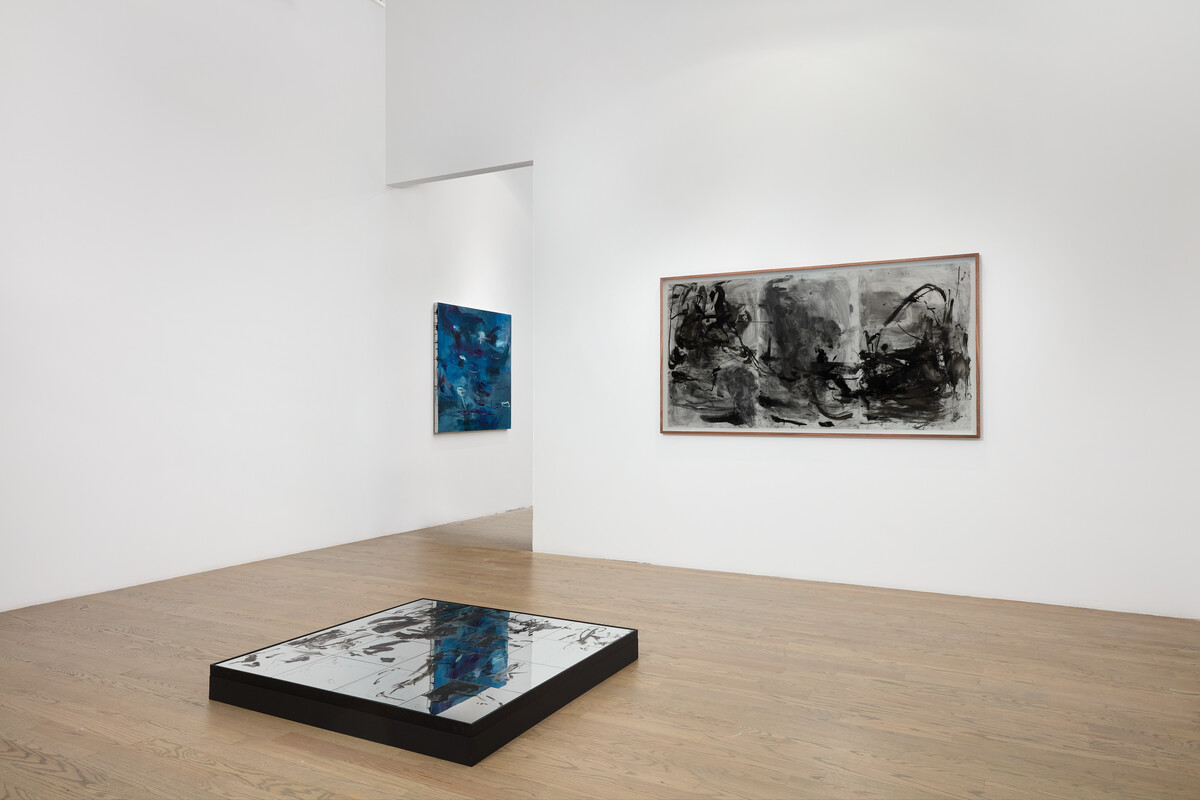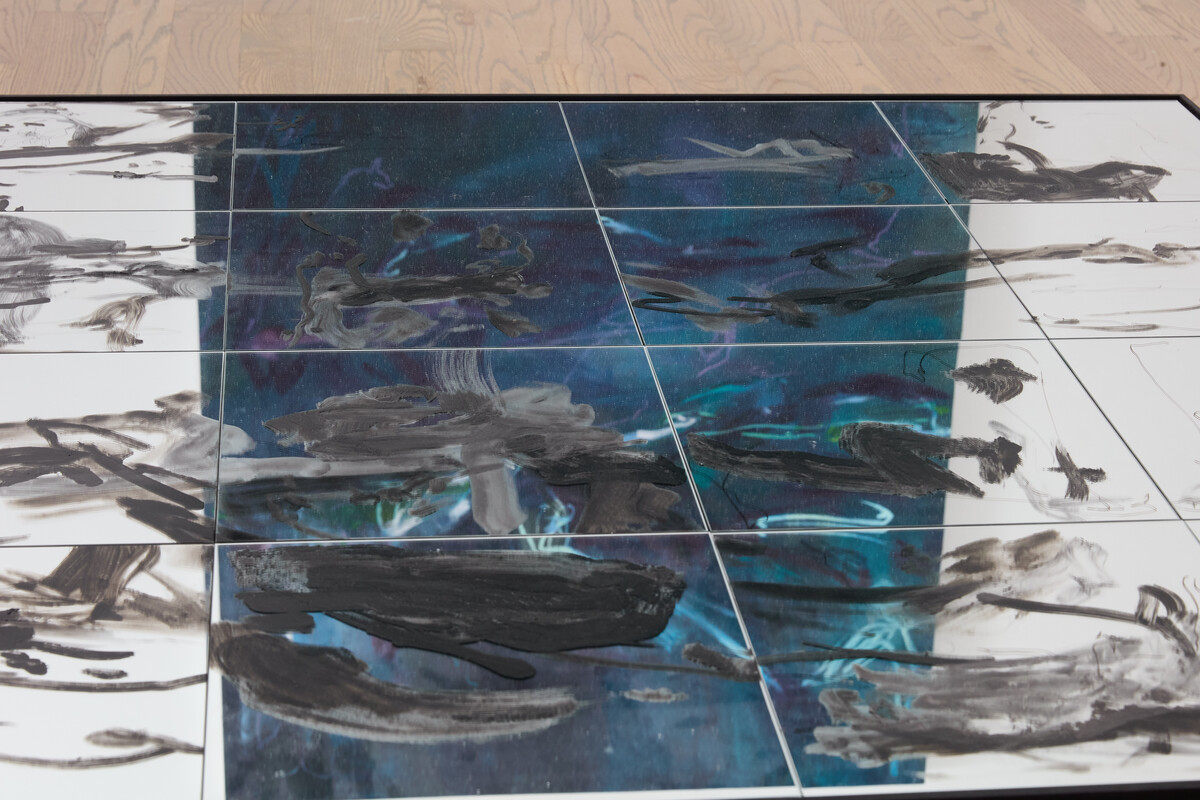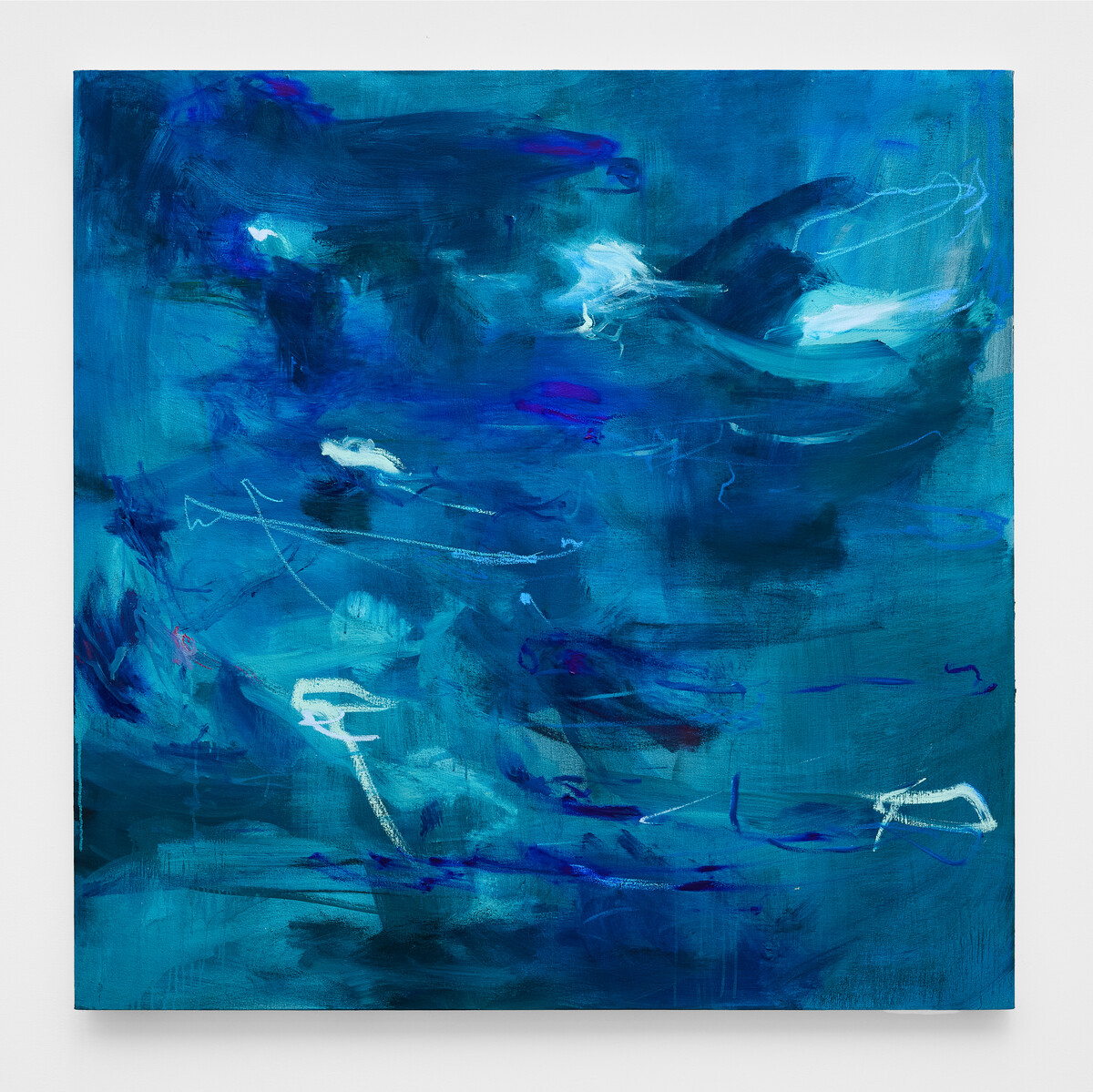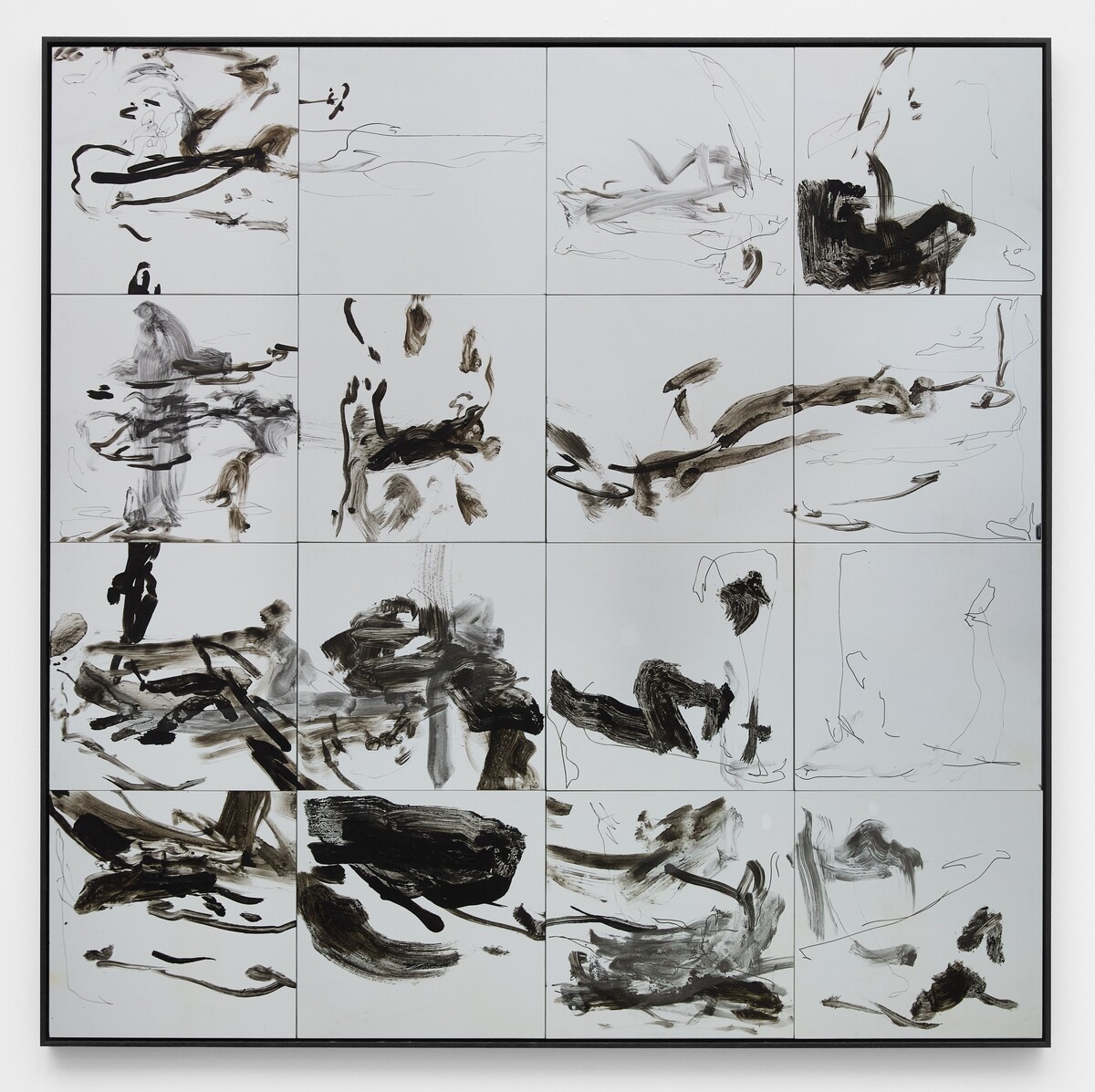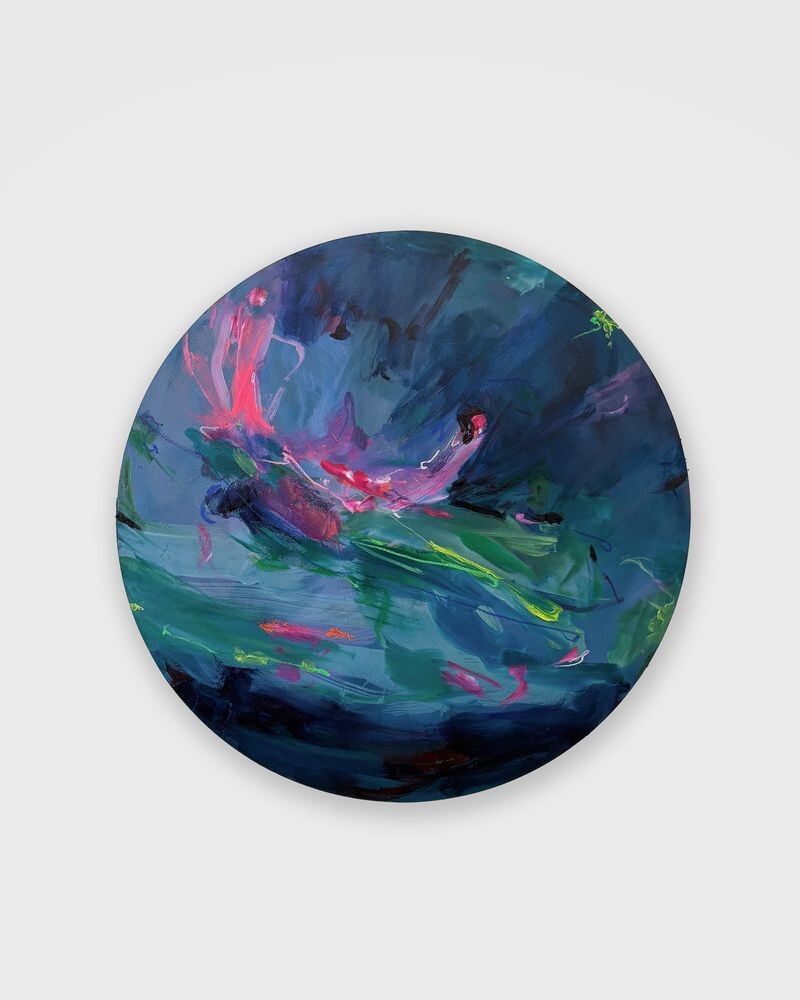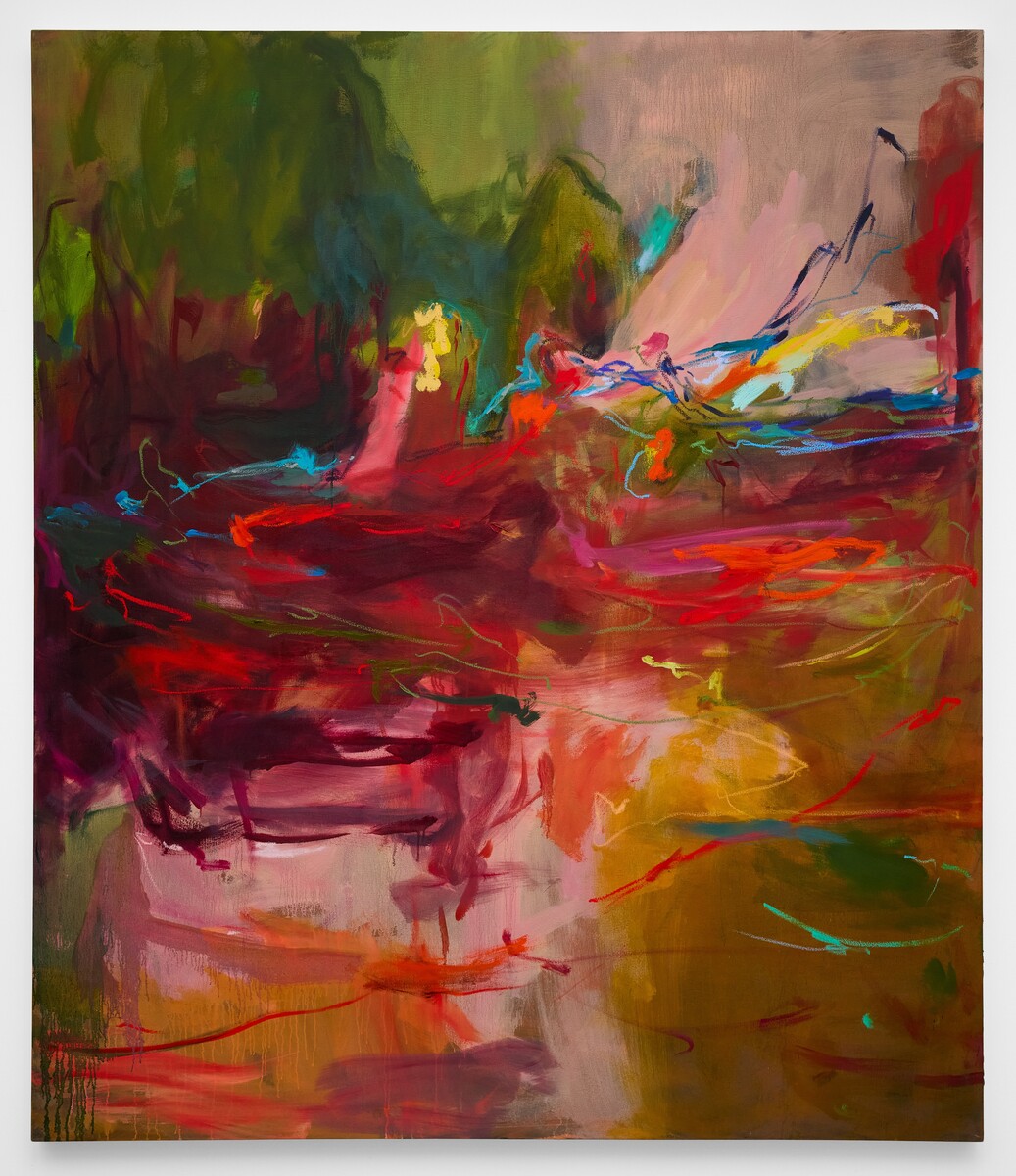
PATRON presents our second solo exhibition, Errantry, with Chicago-based artist Lindsay Adams. Adams’s new body of work extends an exploration into the query at the root of her practice; Where can I go to wander? As she moves across her canvases with an intuitive choreography, delicate gestures evidence errant modes of being, and moving through the world. Errantry marks her first exhibition since the unveiling of her mural commission at the Obama Presidential Center.
The exhibition takes its title from Édouard Glissant’s concept of errantry, articulated in his Poetics of Relation published in 1990, as a form of movement that resists the demand for a singular origin or stable identity. For Glissant, errantry is not aimlessness but a way of being, in relation to places, histories, people, and systems of knowledge that remain irreducible to one another. Adams’s paintings similarly resist a fixed point of arrival. Forms appear to gather and float across their surfaces, creating environments that feel at once intimate and expansive.
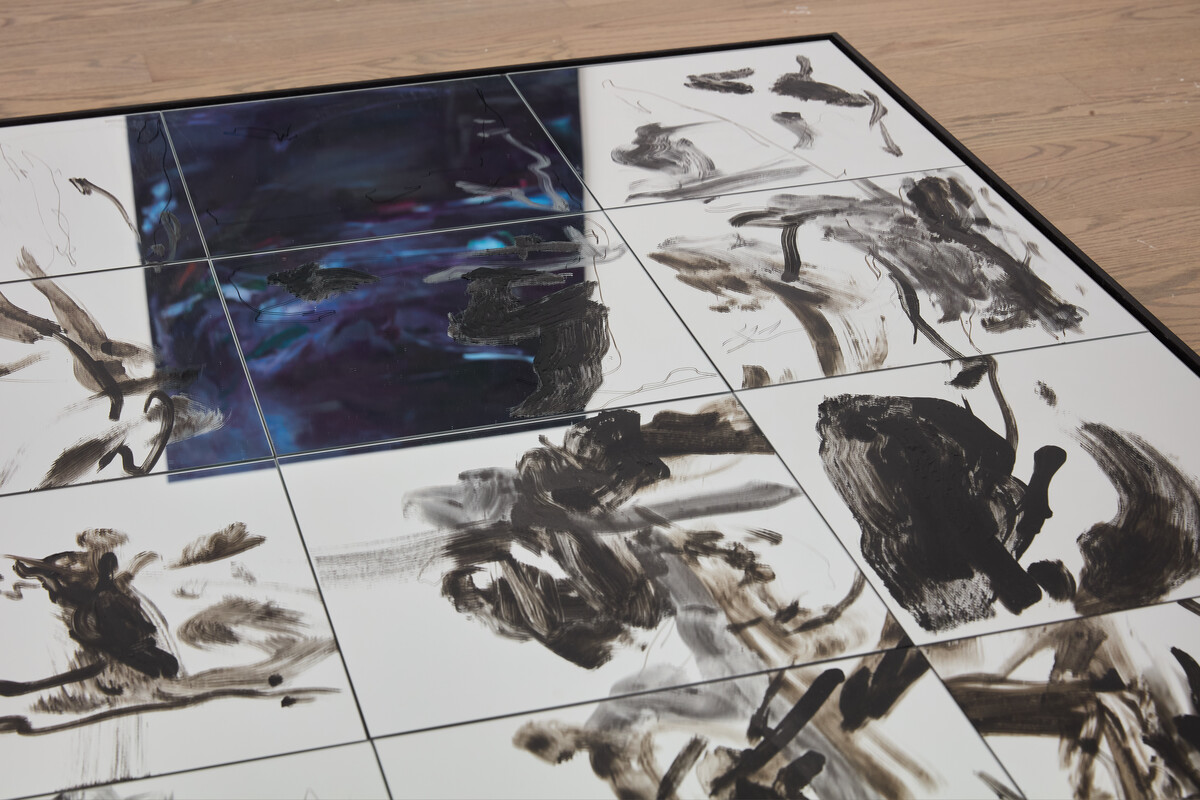
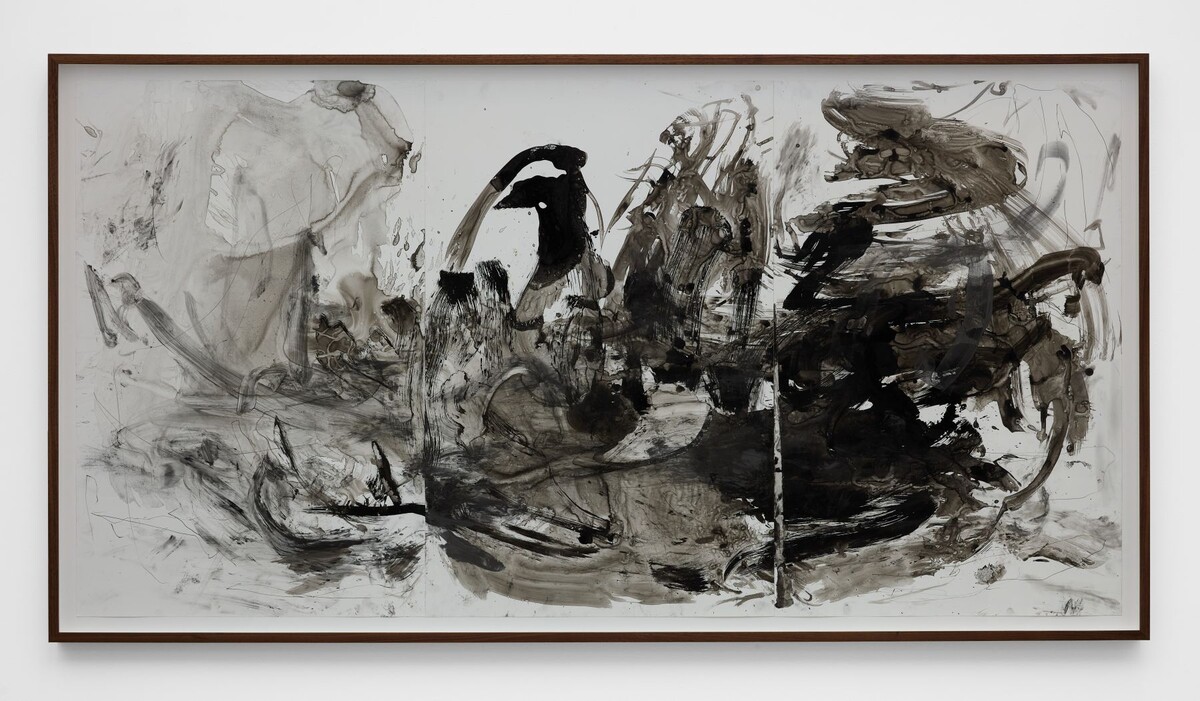
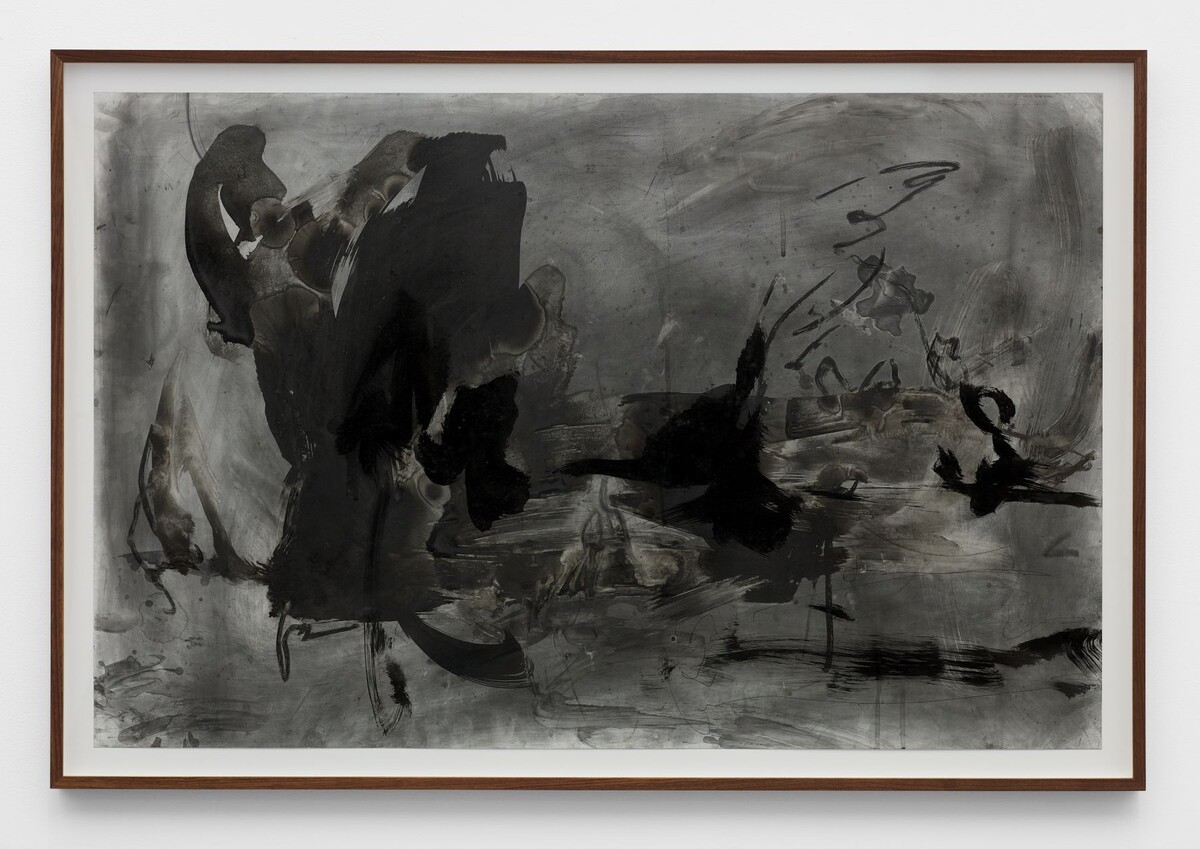
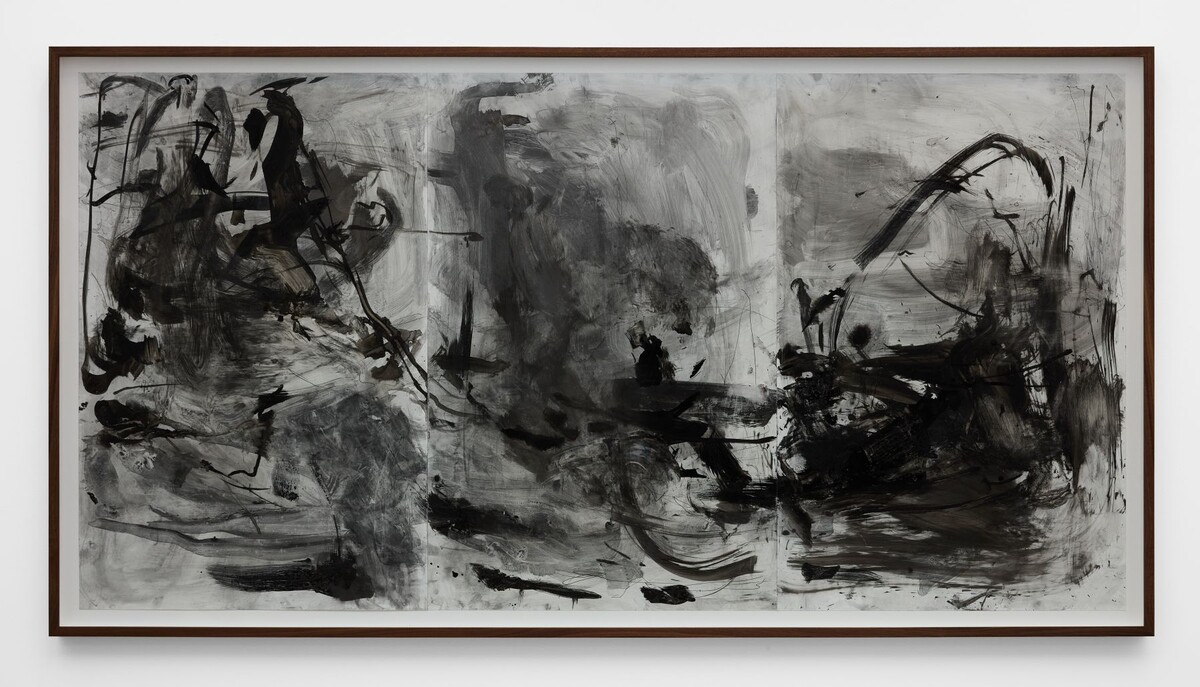
Glissant’s writing enters the exhibition directly through Untitled (Poetics of Relation, Glissant) #1 and Untitled (Poetics of Relation, Glissant) #2 (2026), large-scale works on paper with fervent gestures in ink, graphite, and charcoal on Yupo paper. These works establish a dialogue between her conceptual references and painterly language, where marks can function as fragments of something beyond the image.
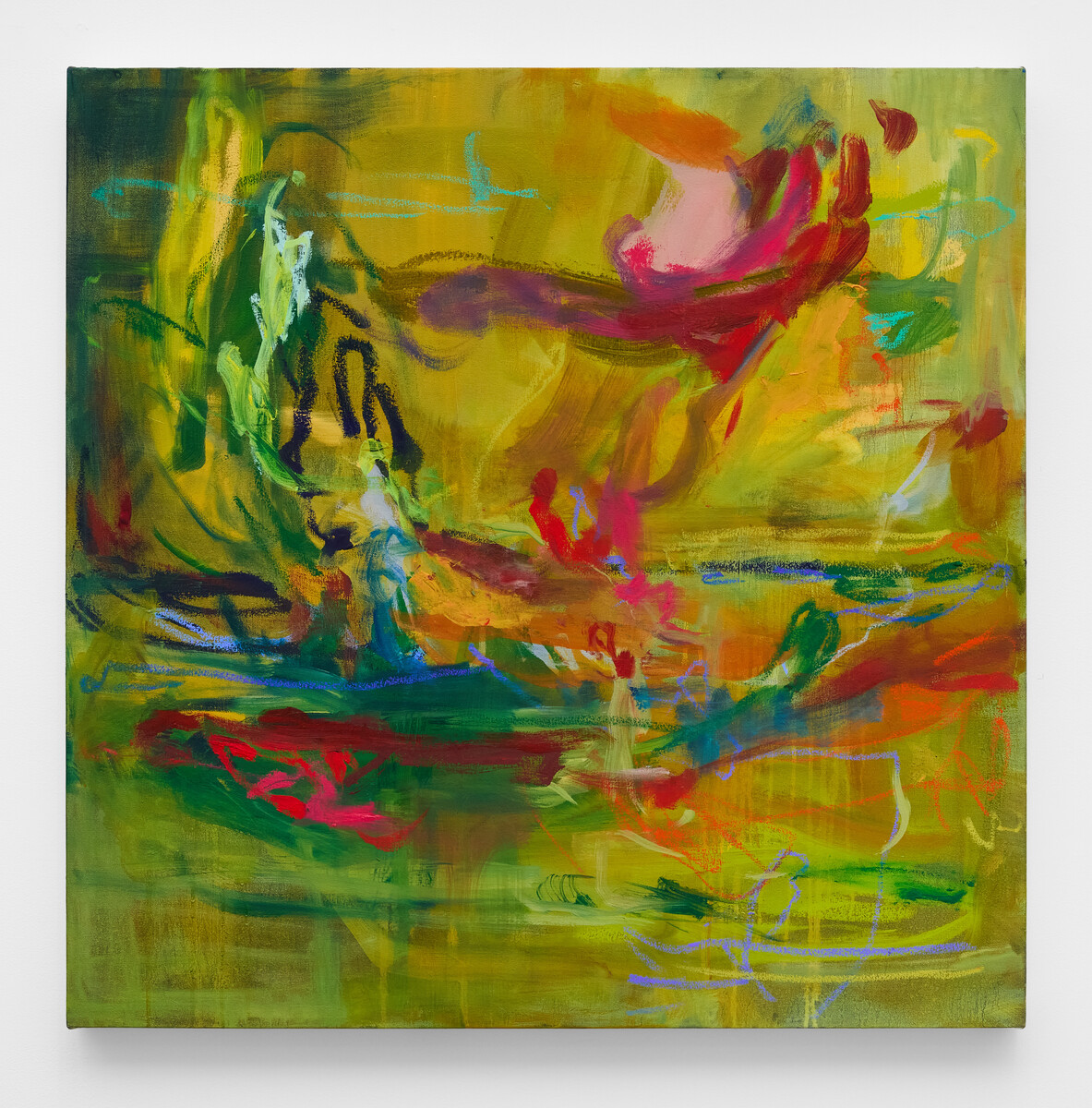
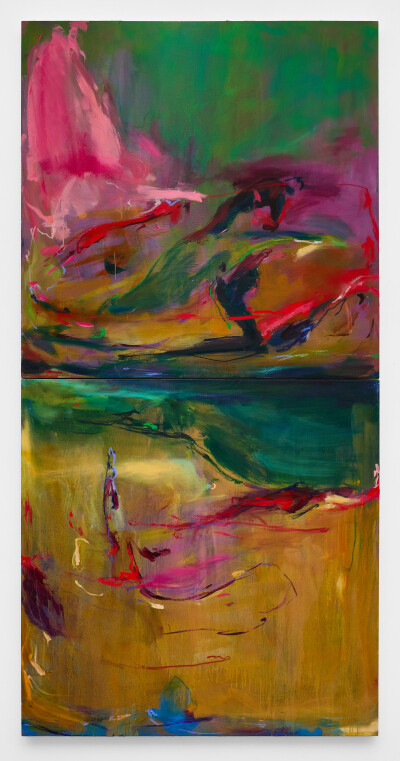
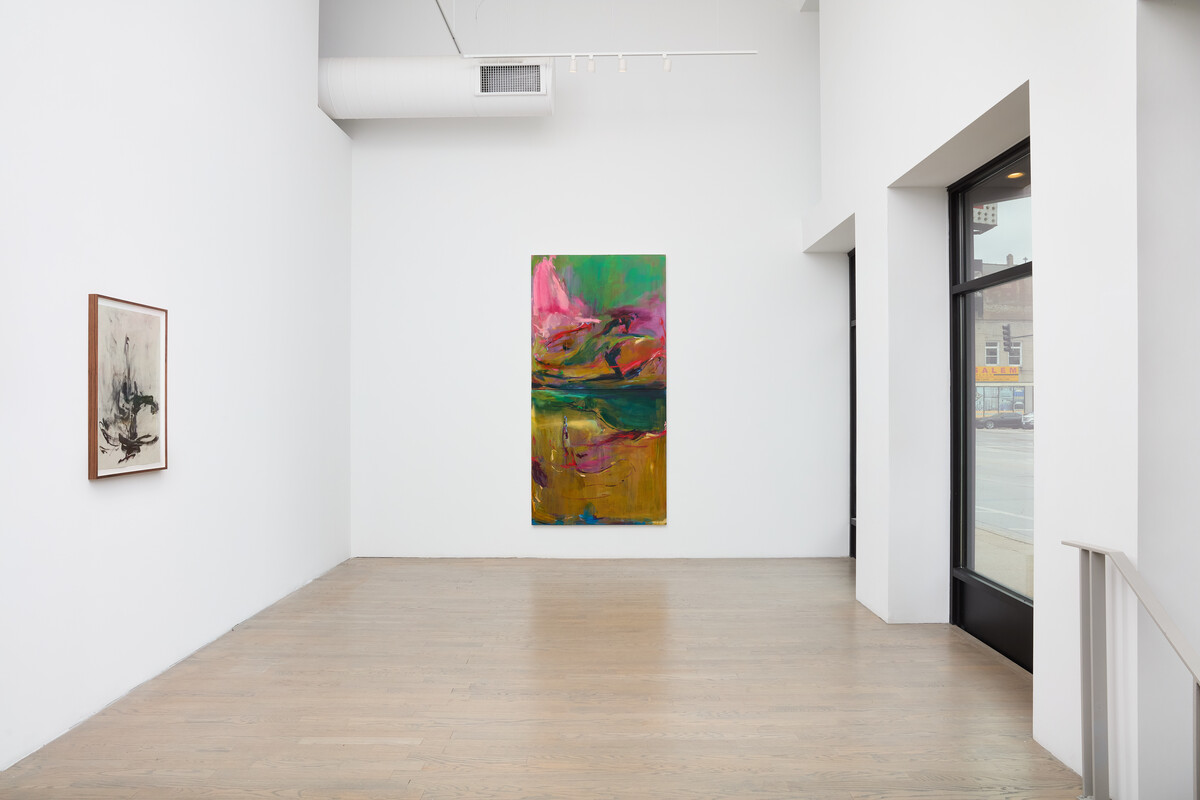
The ascendent diptych, “Not being afraid of what I don’t know I unanxiously awaited the emergence” (2026), marks the threshold to Adams’s exhibition. Swirls of green and pink juxtaposed against cutting blues and yellow dripping down the surface beckon the viewer into imagined realities. Adams’s approach to the painted surface finds an important precedent in Helen Frankenthaler’s radical rethinking of the relationship between color, gesture, and ground, which allowed paint to behave as both image and material. Likewise, Adams approaches the canvas as a permeable field through aqueous washes of pigment and thick applications oil stick, culminating in compositions that float through undetermined spaces.
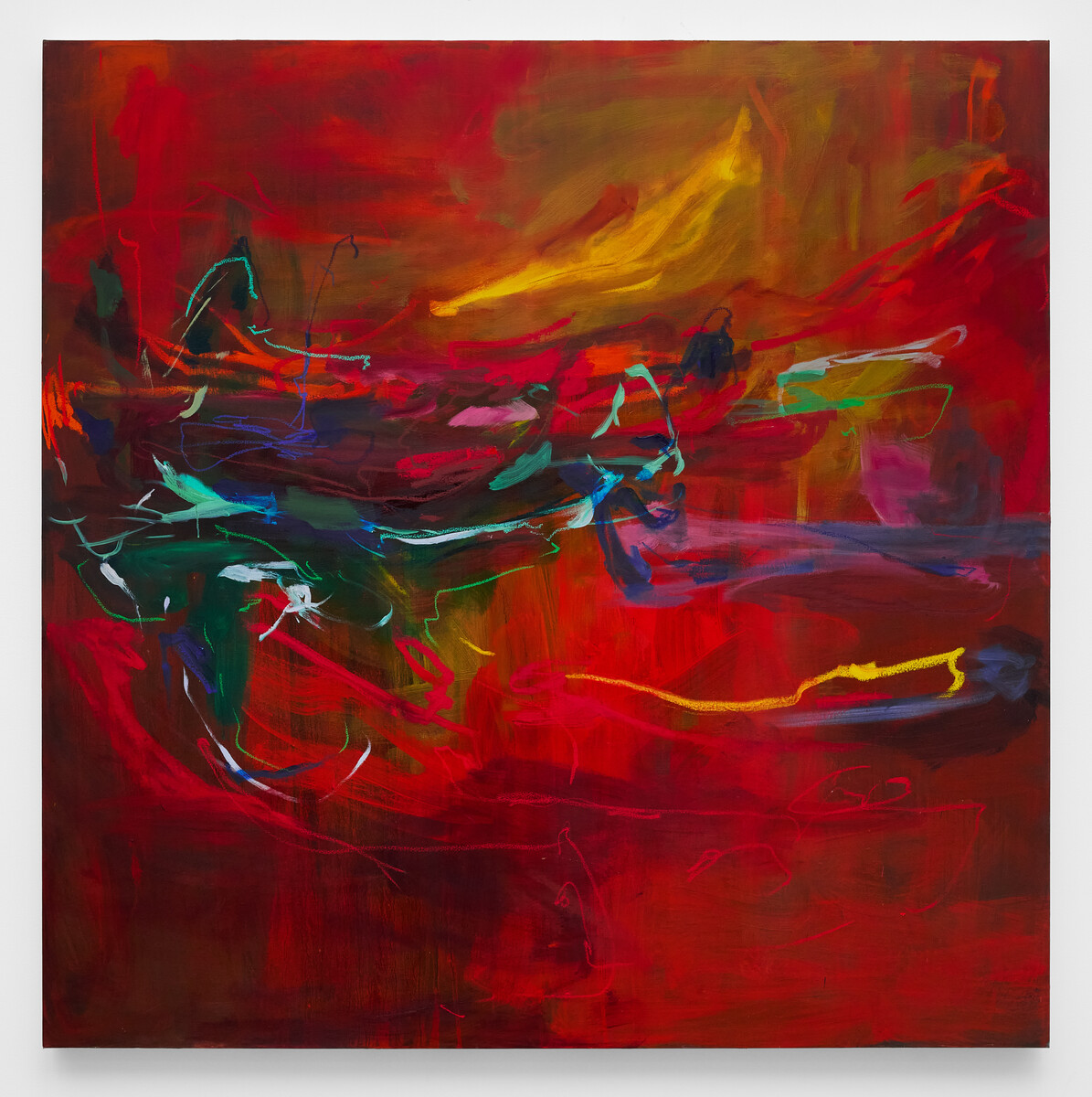
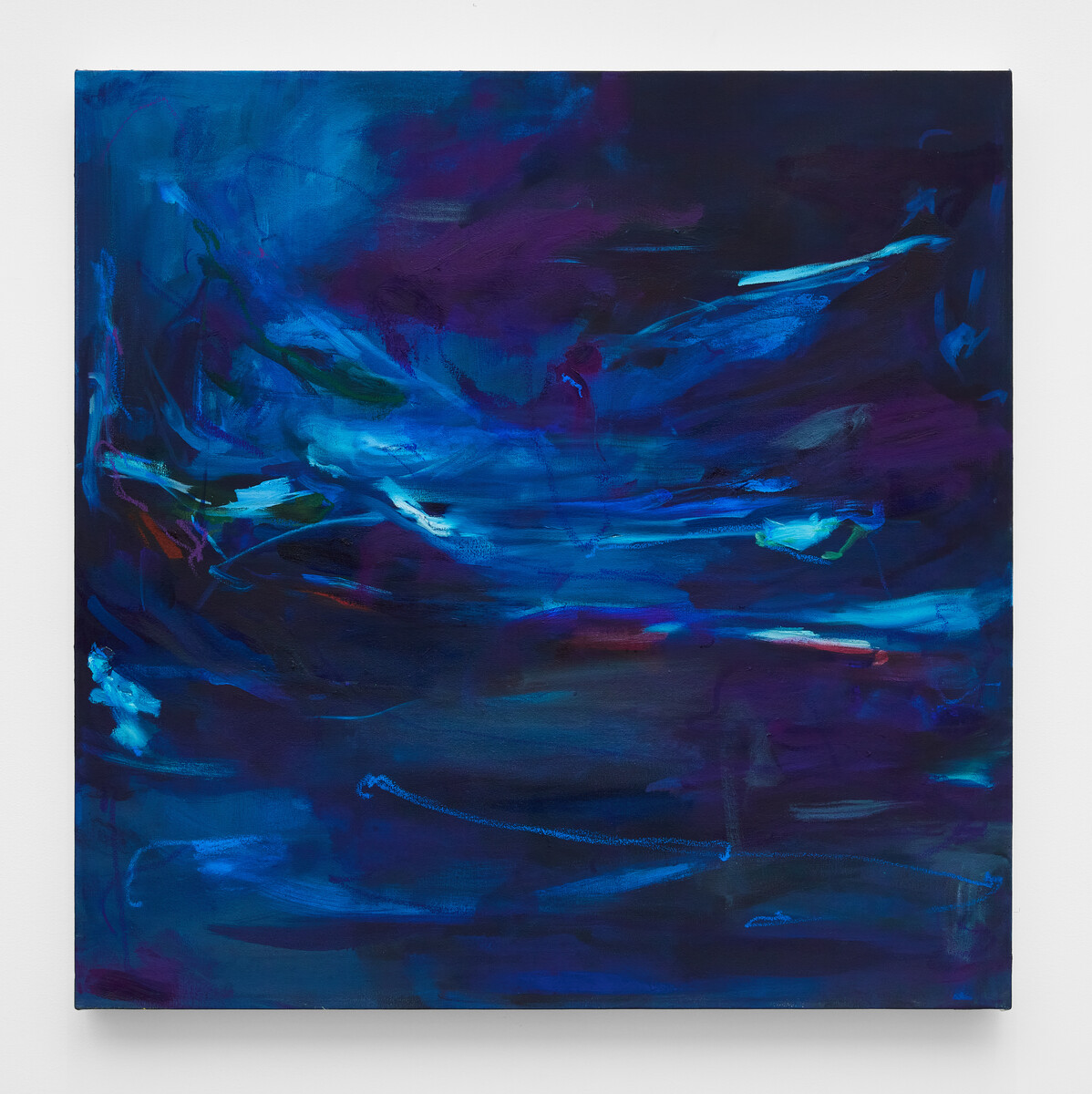
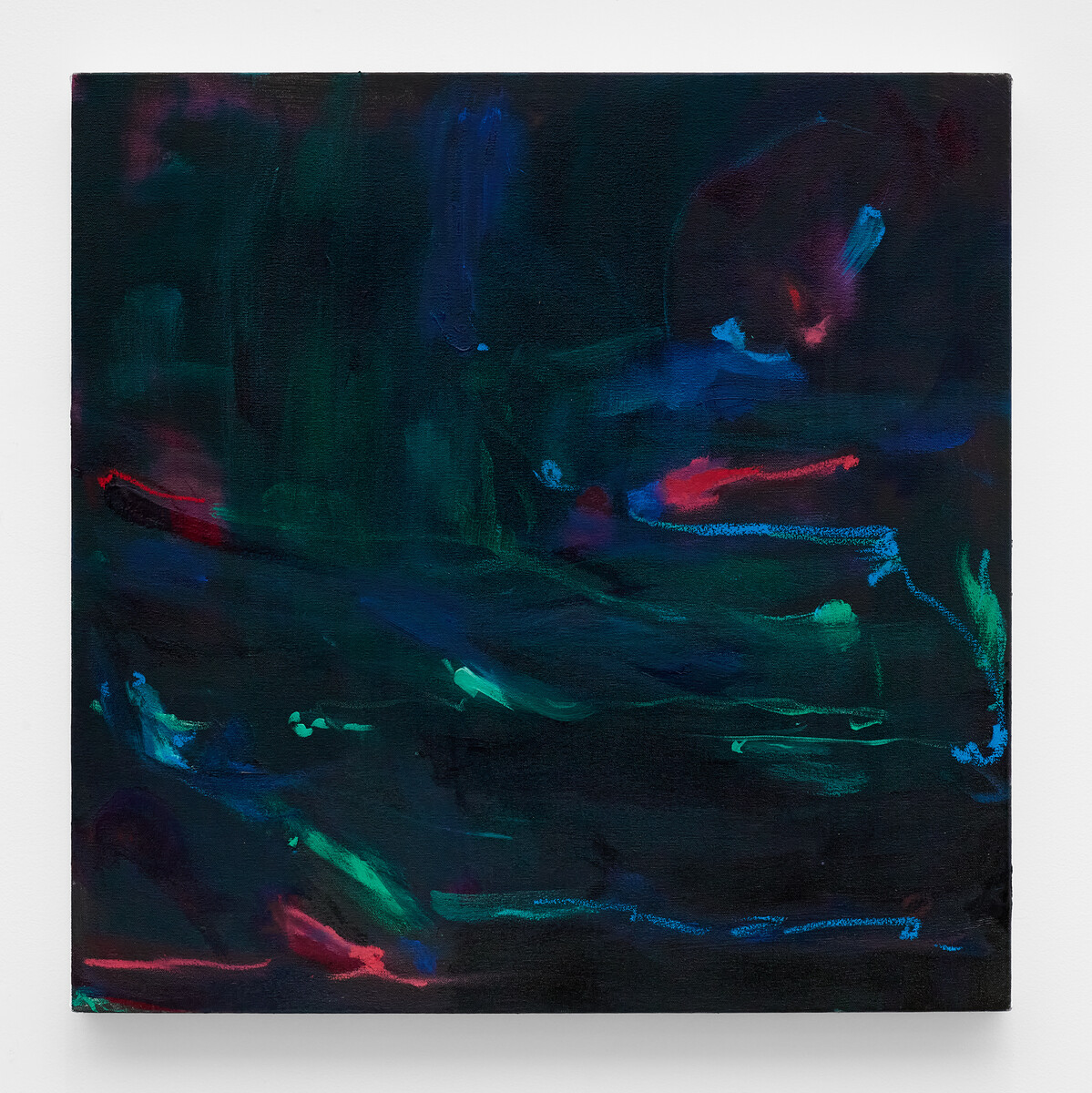
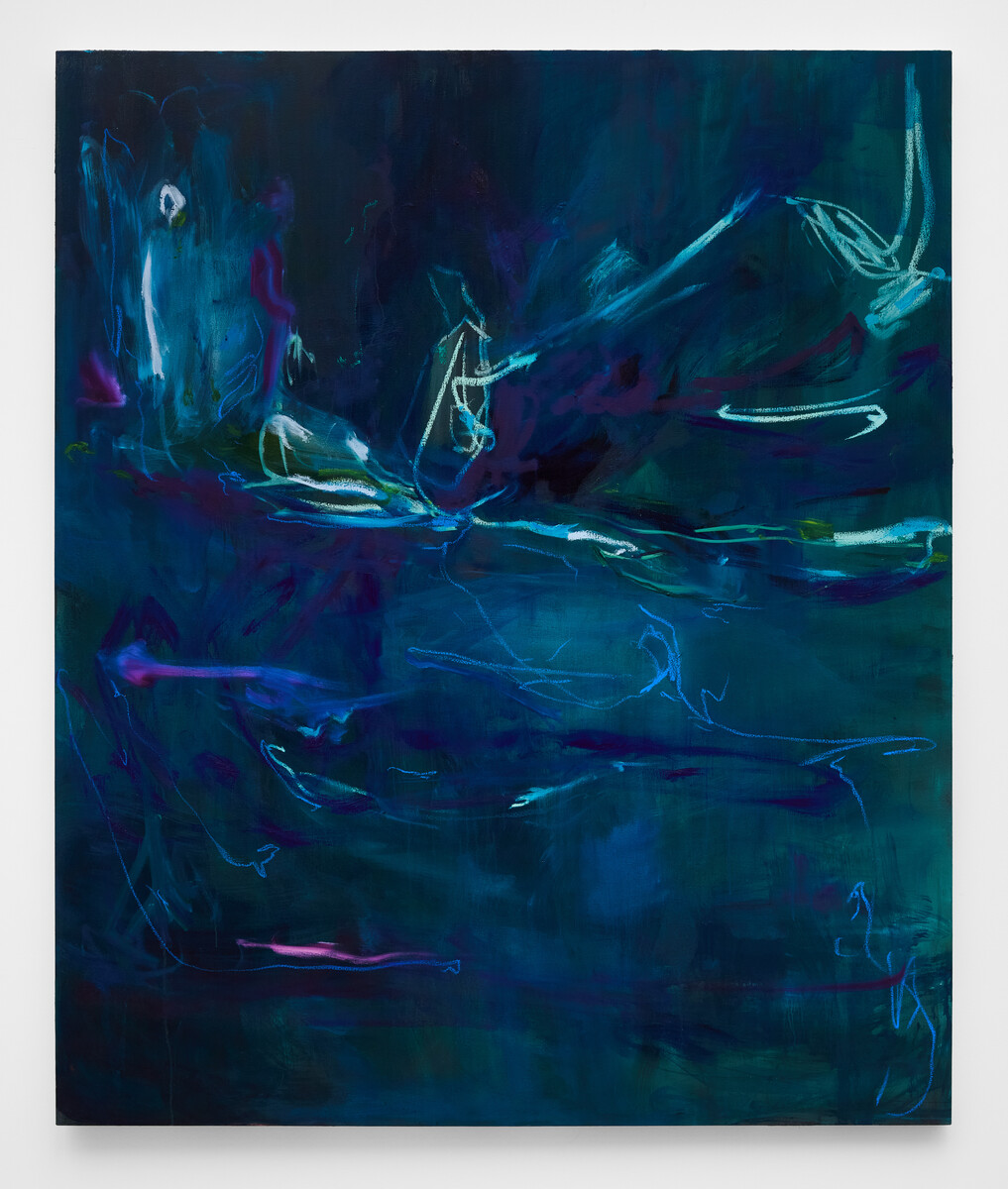
Continuing her engagement with concepts of opacity and refusal, Adams builds each painting on a foundational ground of black paint. With each layer she mitigates the light and spatial perception available to the viewer, negotiating what is knowable and what is withheld. In Rhizome (2026), the subtlest green hues seem to glow from within deep tones of inky blue, articulating a state of suspension.
Throughout Errantry Adams constructs paintings that refuse to settle into a singular reading. Her works move through abstraction as one might move through an unfamiliar landscape without a map, but with an attentiveness to what emerges along the way. Her paintings evidence a commitment to openness and emphasize wayfinding over arrival.
Installation views: