“Writing comes like the wind. It’s naked; it’s made of ink, it’s the thing written, and it passes like nothing else passes in life, nothing more, except life itself.”
— Margueritte Duras, Writing
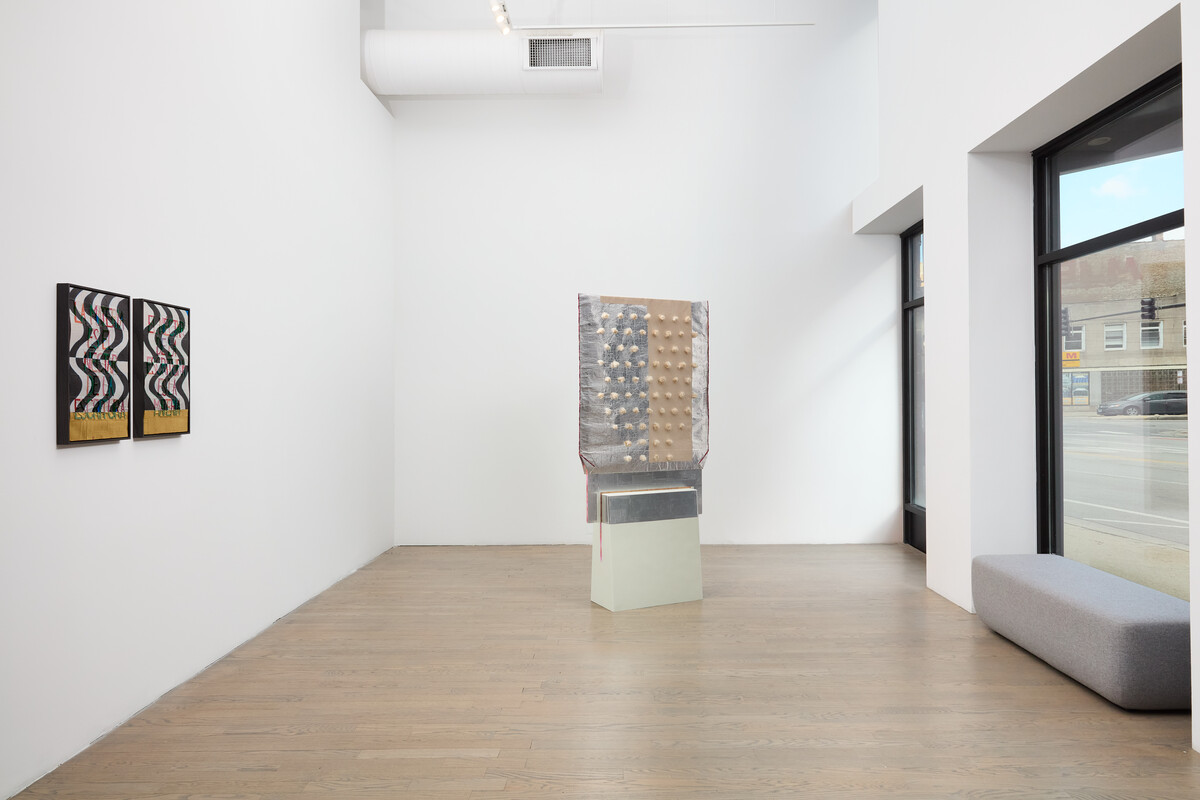
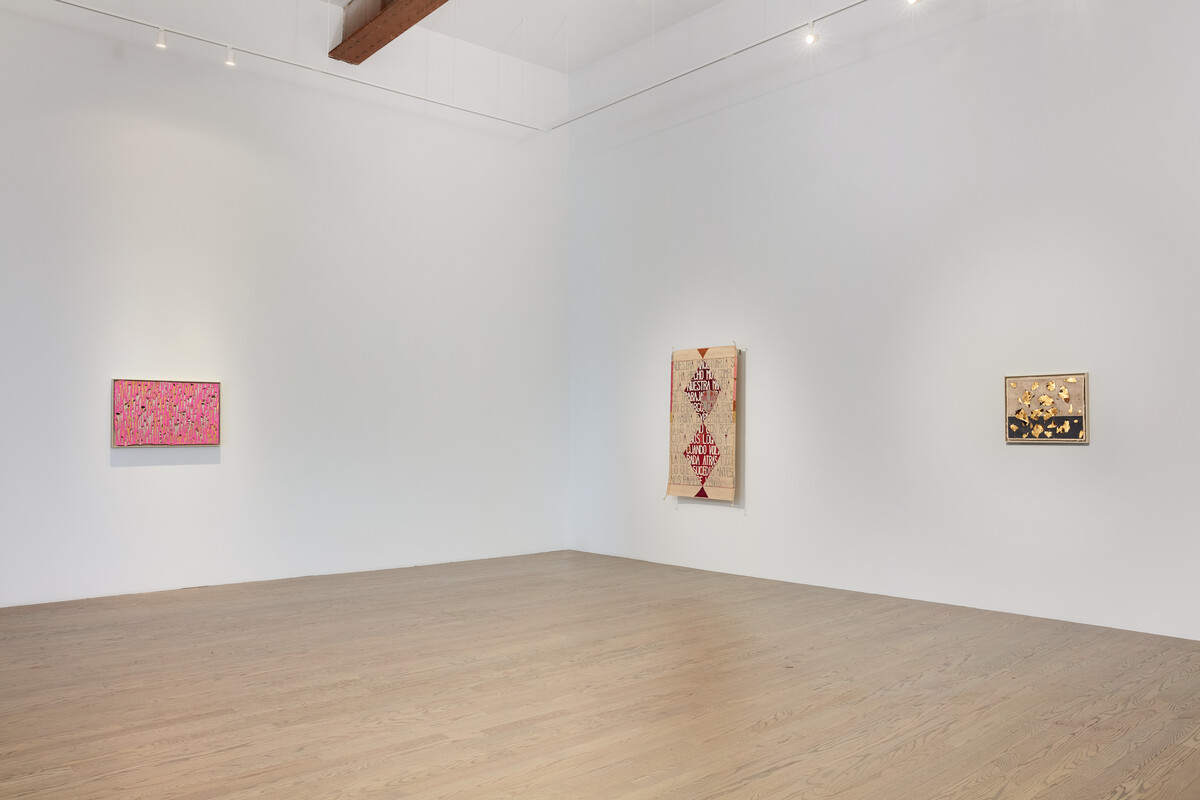
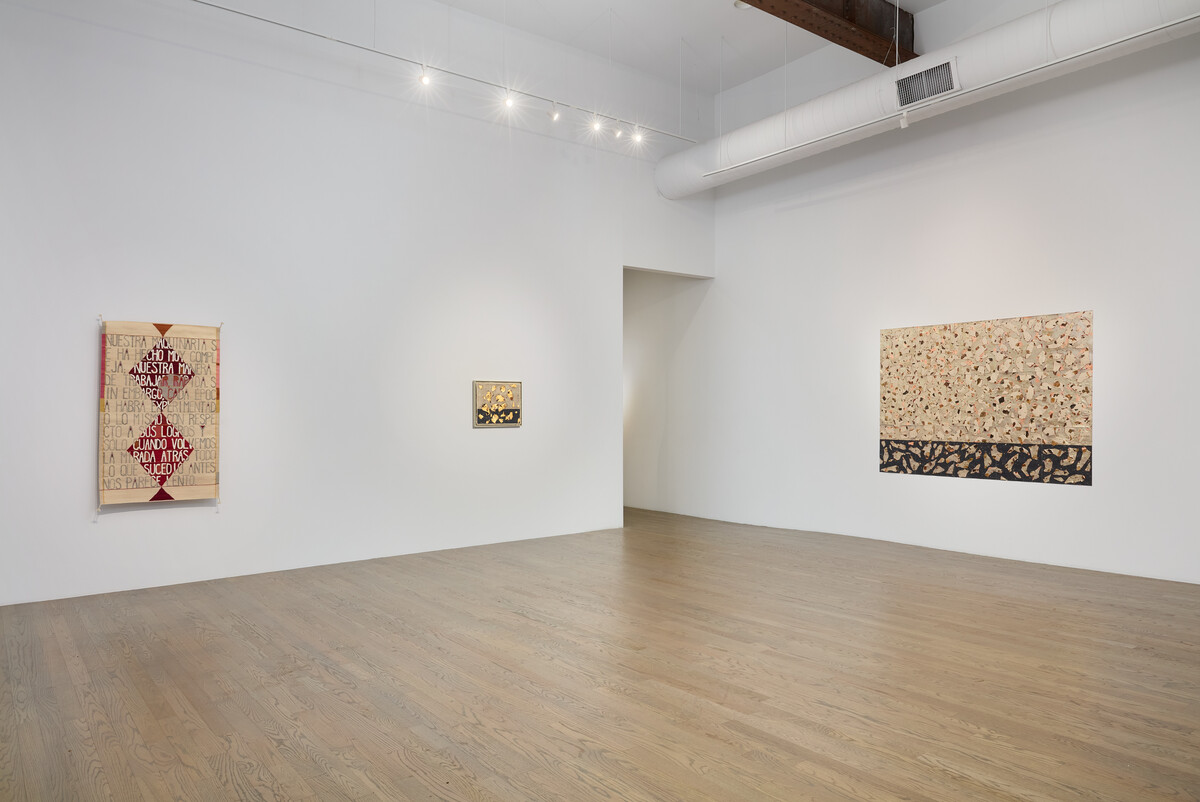
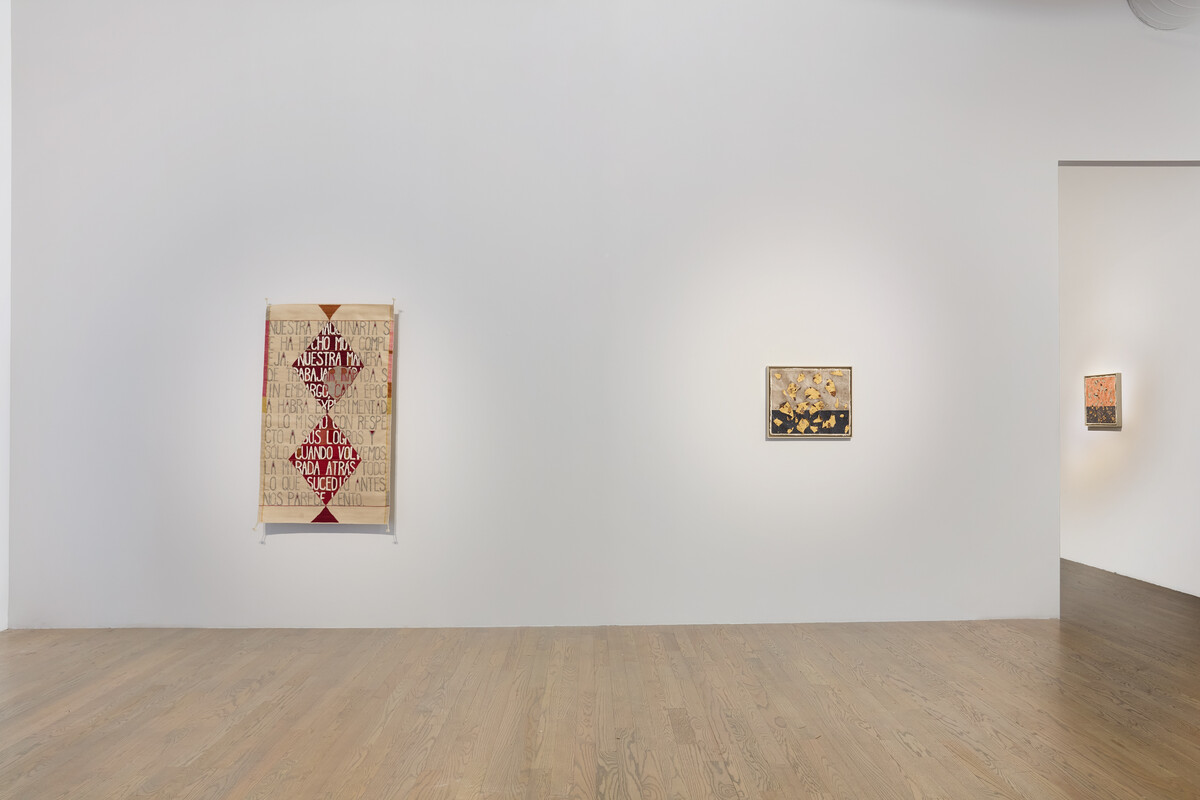
PATRON is pleased to announce Stanzas, our second solo exhibition with Mexican-born, Chicago-based artist Dianna Frid. Combining embroidery, sculpture, collage, drawing, and weaving, Frid’s materially rich practice centers writing—legible or otherwise—as a boundless transmission and system of continuity and transformation. Taking the construction and ritual of writing and weaving as points of departure, the exhibition consists of a body of work Frid began in Oaxaca in 2024 during a nine-month relocation to Mexico.
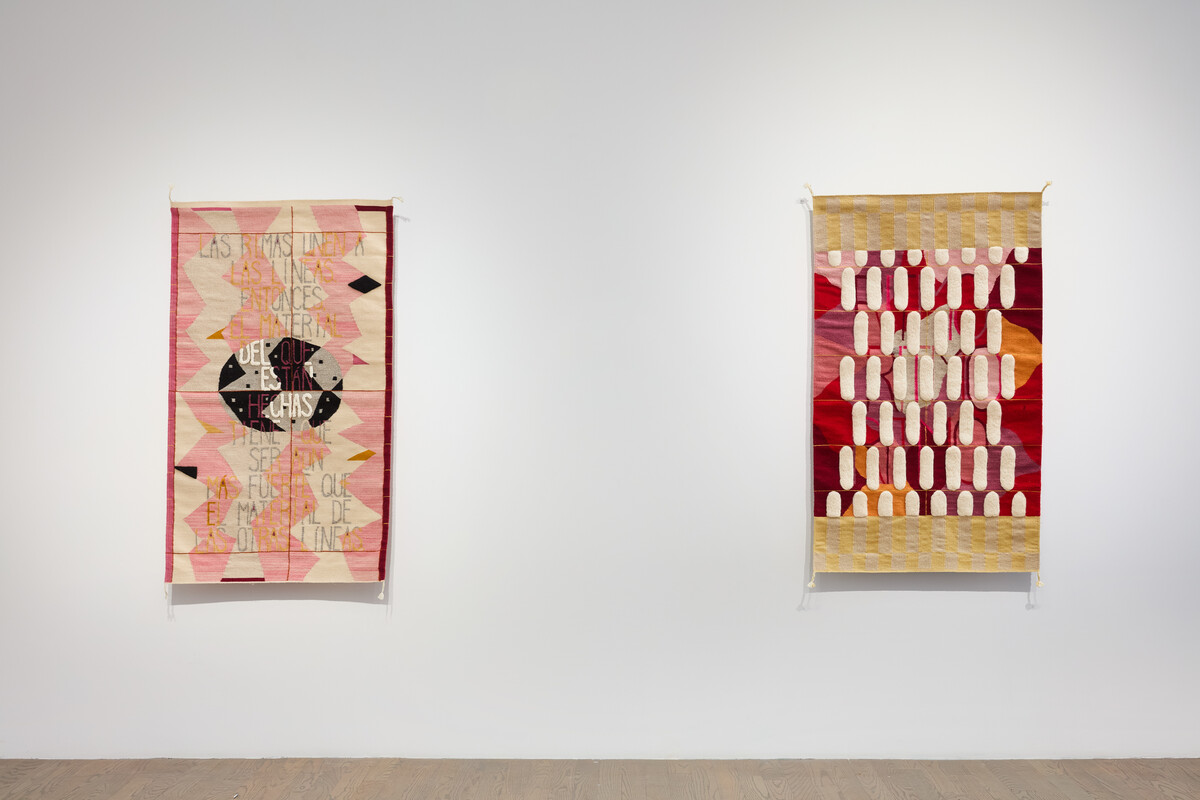
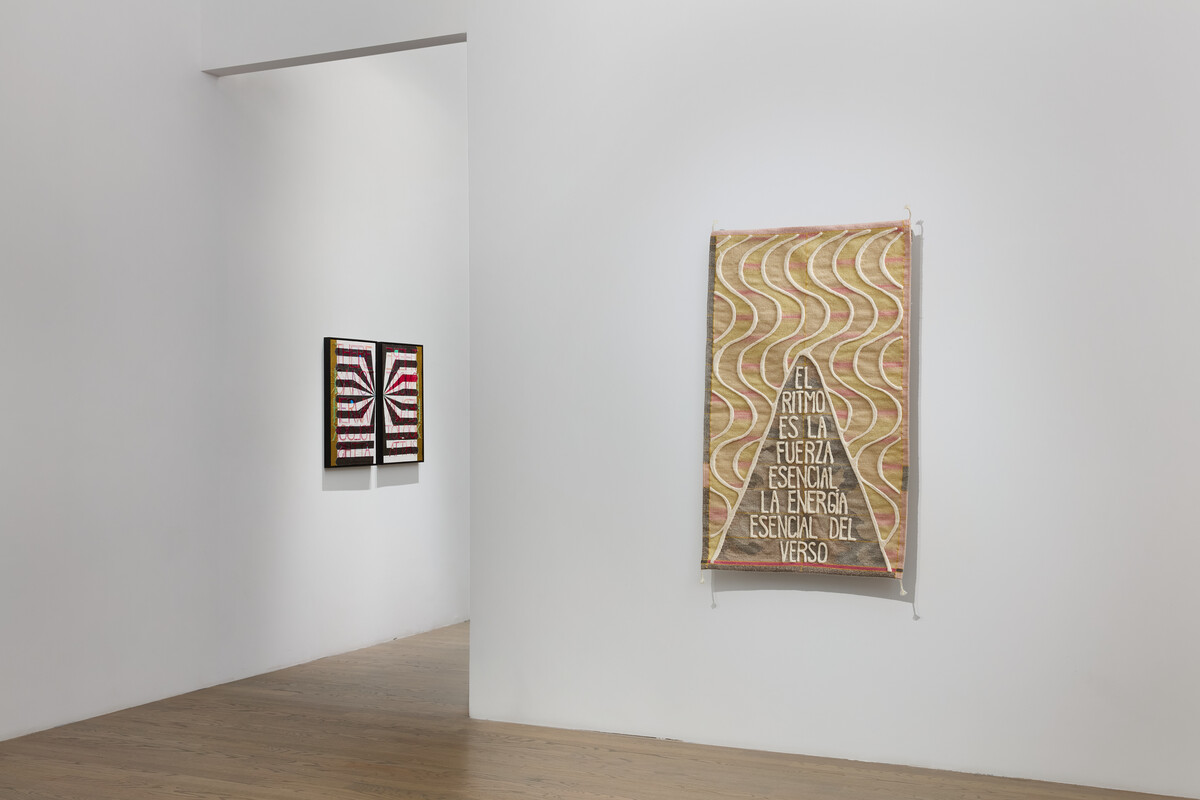
The word stanza carries different meanings across languages: in Italian, a room; in poetry or song, a grouping of lines—patterns of interiority and architecture and of warp and weft, transcription and translation. Frid’s practice consistently reflects a life lived in ongoing states of translation. Hers is an expanded relationship to language and to fluctuating roots—of language and of place. Frid’s embroidered diptych, La materia es el néctar de la escritura (matter is the nectar of writing) posits the dual meaning in Spanish of materia as both subject and matter and catalyzes a question inherent to Frid’s practice: what is the material of writing, beyond what is commonly understood as legible words? How do we experience time both within and outside of language?
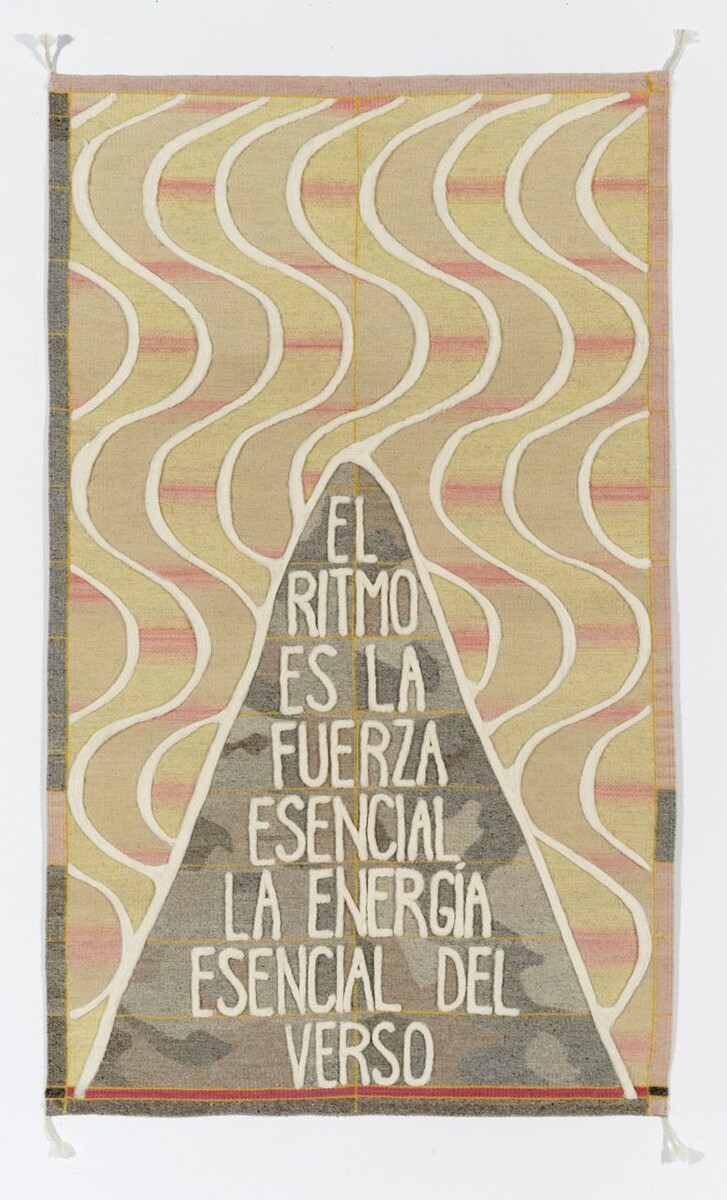
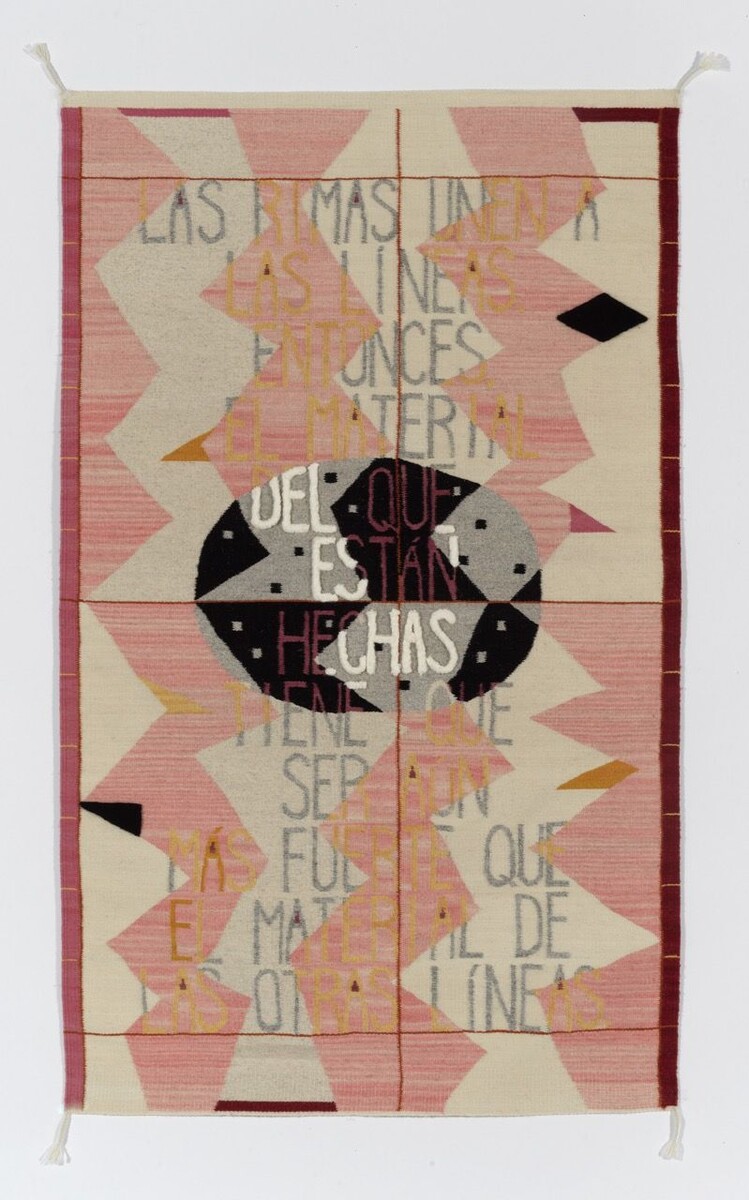
Frid’s works in the exhibition result from a deep attunement, to active, ongoing interconnections of time, matter, and process. Channeling the embodied sense of place—rhythm pulsates through the repetitions implemented in the creative process, as well as the natural, cyclical processes of plants yielding their fruit and minerals compacting into rocks. Rhythm, a framework of connection and continuity superseding language, recurs and resounds throughout Frid’s work. In the exhibition, the works channel an embodied spirit of place. Stanzas includes five tapestries meticulously woven and felted from wool dyed with cochineal, pericón, and huizache. They were made in collaboration with the studio of Lili Vásquez and Antonio Mendoza, Zapotec weavers from the village of Teotitlán del Valle. Frid, Vásquez, and Mendoza share an understanding of textiles as texts–carriers of languages and codes that extend beyond the legible. The textiles produced from this collaboration incorporate wool colored with cochineal, an insect-derived dye that produces a range of reds and pinks. This method for achieving carmine textile dyes was traditionally prevalent in Mesoamerica until synthetic dyes became standard for dyeing cloth. In her early twenties, Frid volunteered at a ranch in the outskirts of Oaxaca City where cochineal was being cultivated. Created after drawings made by the artist, the textiles’ compositions incorporate excerpts from writings by poet Vladimir Mayakovsky and artist Anni Albers which reflect, respectively on time, weaving, and rhythm, as process and the fundamental force of poetry. Together, the texts underscore the rhythmic life force of the written word. Through weaving’s warp-and-weft structure, Frid connects language to the ongoing, physical transformation of matter.
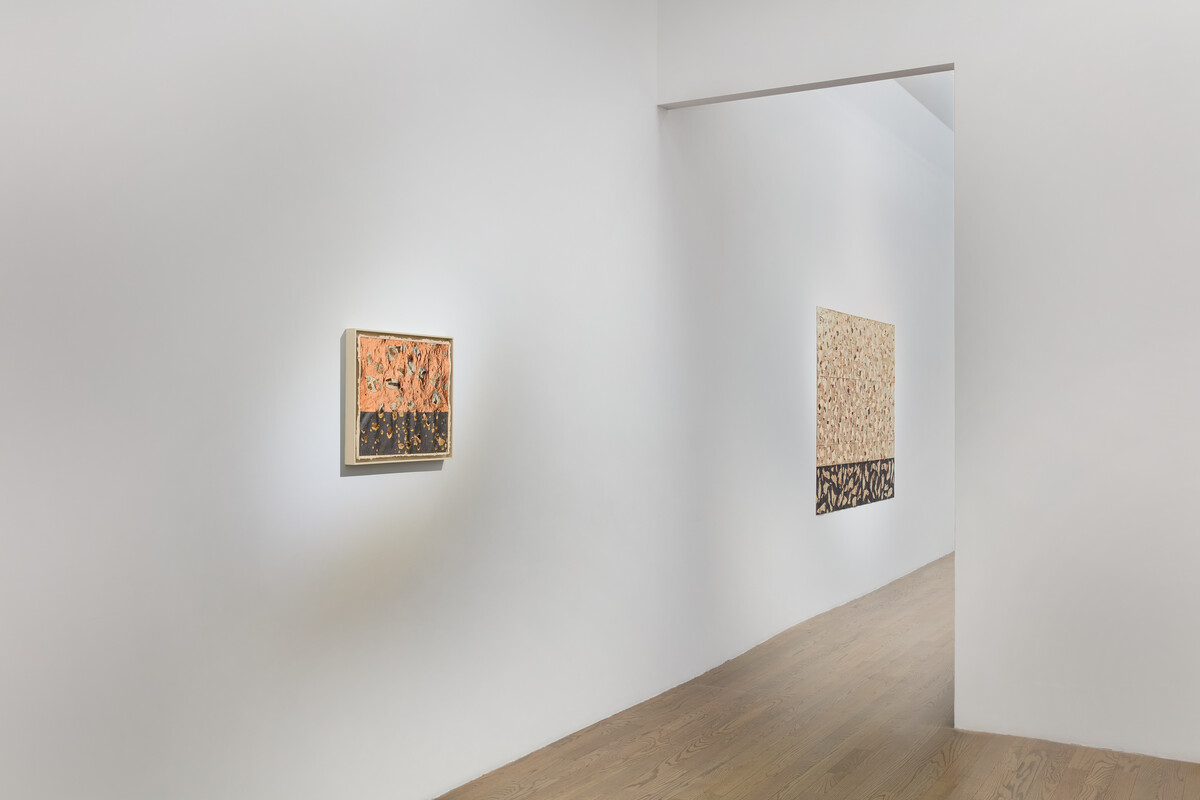
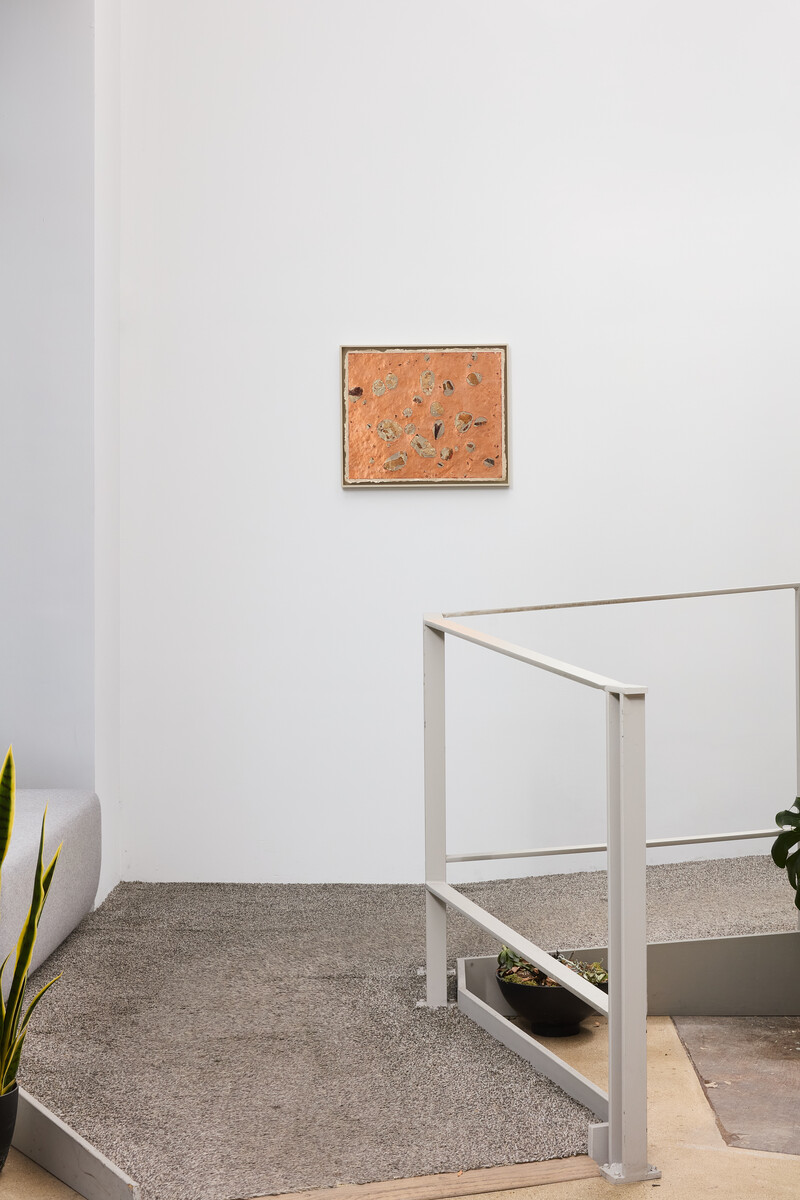
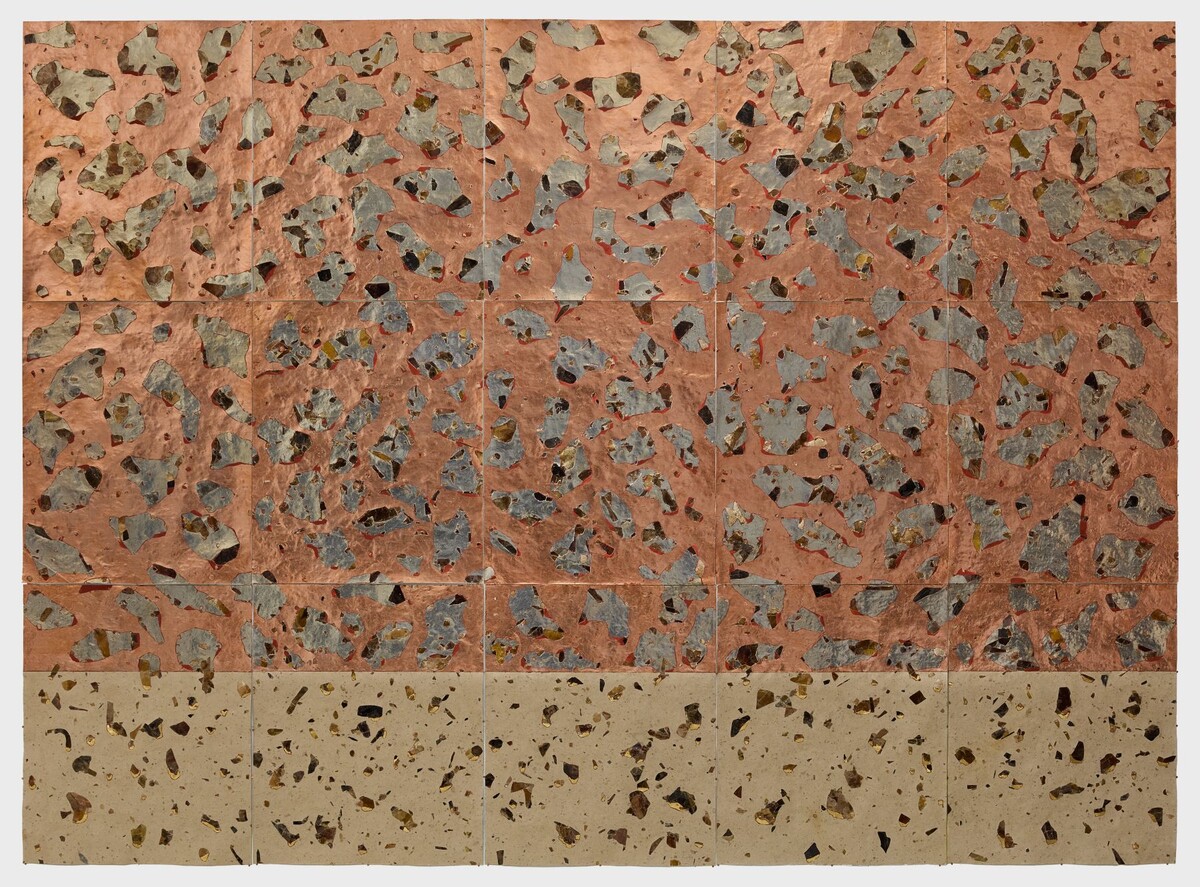
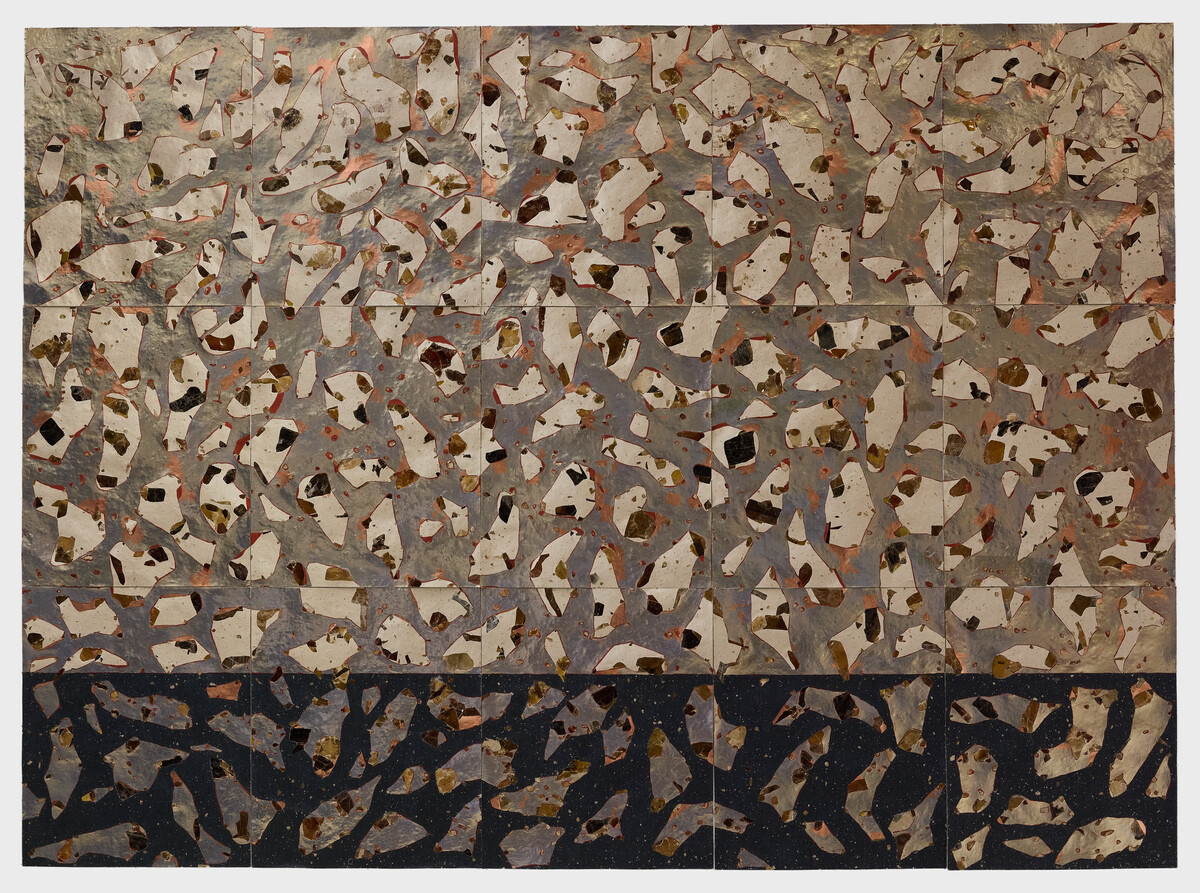
Stanzas features two expansive new works on paper made from the fiber of the pochote tree: Nectar #2 and Nectar #3 ( 2026). Starting with paper crafted by Oaxaca-based Enrique Ramirez, a master papermaker, the works are made through a process of excavating shards of mica embedded into the fibers before gilding the surfaces with metal leaf (gold, silver, pewter, and copper) and layered with graphite and colored pencil. The shimmering slivers of mica—abundant near volcanic regions and impressed on most forms of human technology—can be newly read as forms of asemic texts. This kind of wordless writing extends into Frid’s Spells and El texto y sus sustancias series. In El texto y sus sustancias #19, Frid reveals shards of mica embedded into fibers of pochote dyed with cochineal. In this series, each errant mica fragment becomes mineral meteoric debris: trails of gold, silver, copper, pewter and graphite.
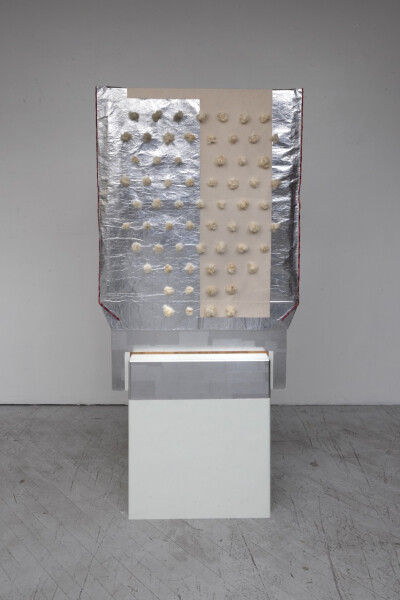
For Frid, rhythm takes us beyond poetic meter but into the material and temporal reality of being. This fundamental force is inscribed within Writings on Rhythm V.2, a sculpture in which pochote cotton, the same material used to make the paper, becomes an asemic text across a field of aluminum and canvas. The sculpture harkens to a container—an architecture—that came before writing and will outlast it. Writing, here, is both matter and an internalized way of being in the world; an active, expansive process, which, like the rhythmic vitality of breathing, is life itself.
Installation Images: