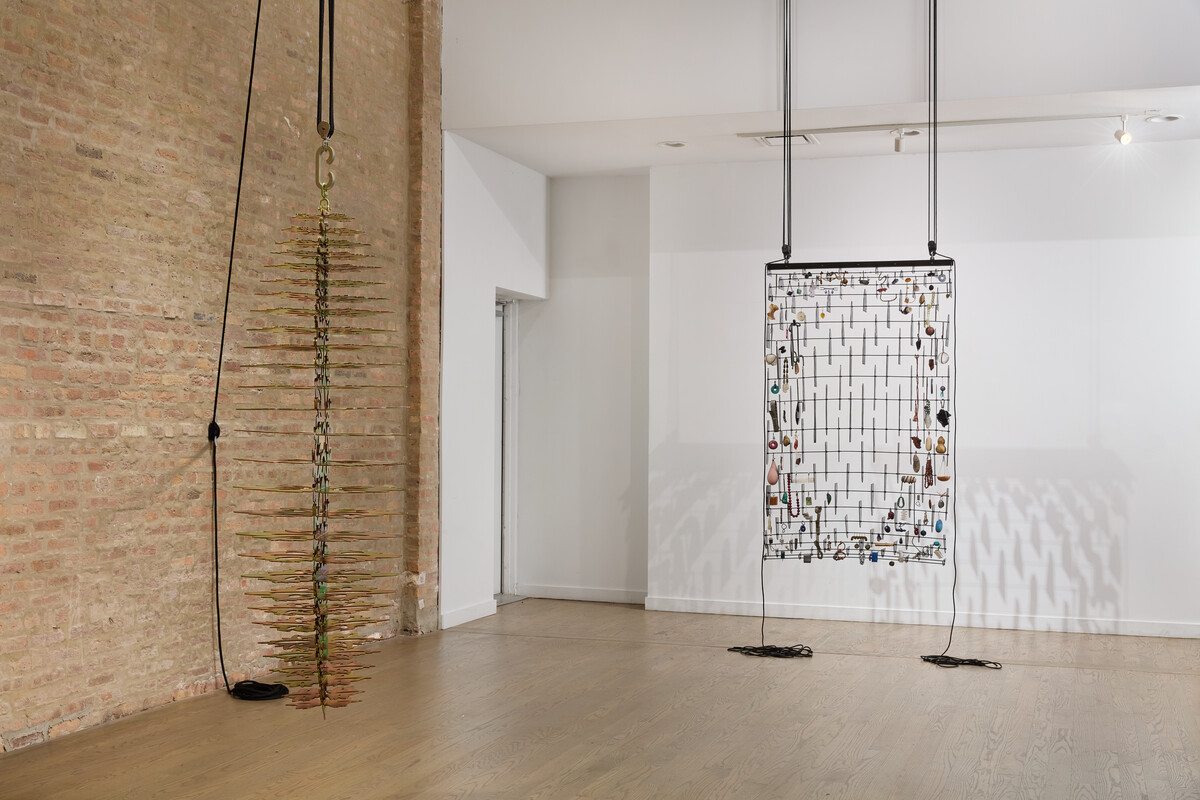
PATRON Gallery is pleased to announce Xoanon, a solo exhibition of new sculptures by Brazilian artist, Lucas Simões. The works featured in this exhibition extend Simões’s ongoing investigation into the relationship between form, volume, and the structures that give shape to matter and presence.
The exhibition takes its title from the ancient Greek xoanon, a term used to describe archaic period (800–480 BCE) cult objects that preceded figurative sculpture. These objects, made from natural materials such as wood or stone, were revered for their inherent spiritual presence. Xoanon were not simply artistic, but were considered to embody the divine presence — they could be regarded as the gods themselves, as vessels imbued with the spirit of the gods, or altars of devotion. Simões redresses this synthesis between representation and embodiment with materials that make up our contemporary landscape such as concrete and steel.
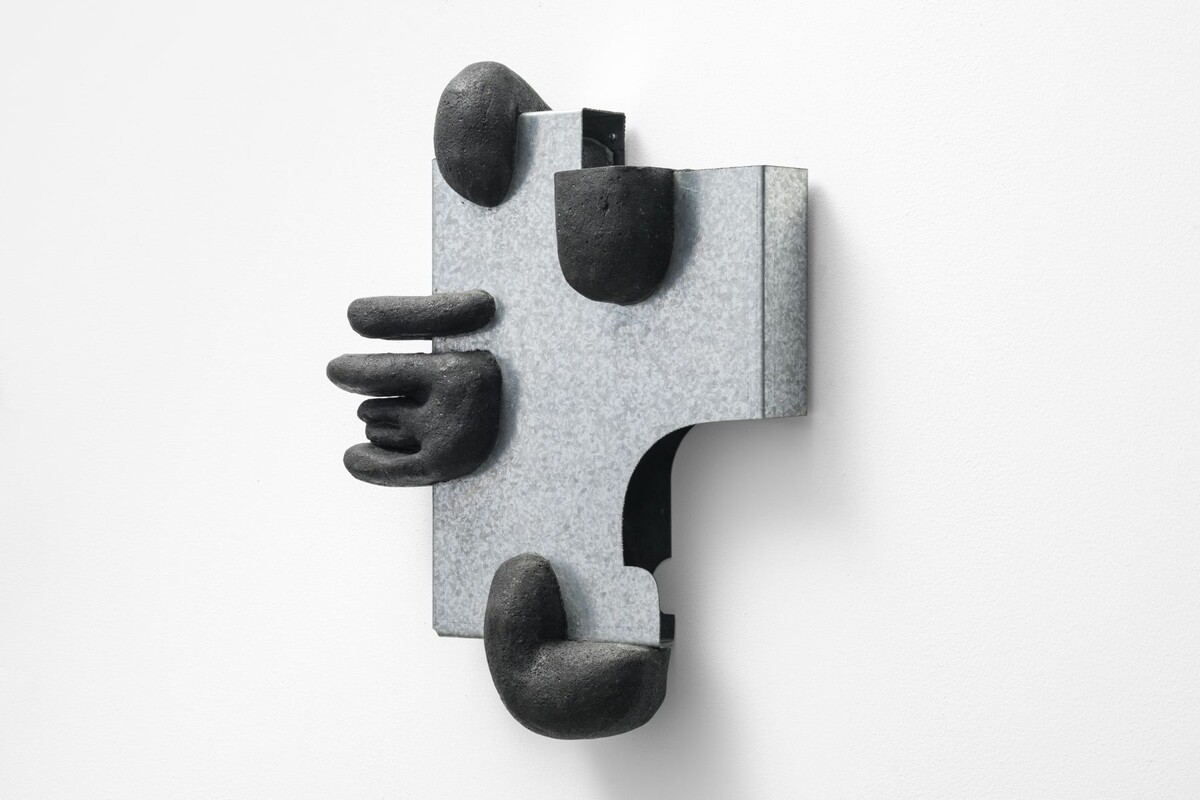
The exhibition takes the xoanon as its point of departure for unfolding an object’s material presence, its form, and its fissage. A mold that shapes a body becomes a body itself; a grid is adored with amulets, an image is reproduced until it nearly vanishes. Simões enacts these gestures to point to the poetics of what surrounds and contributes to the form. To name the show Xoanon suggests that modern architecture and images, presented as stable, finished form, rely on ancient systems of belief, protection, and repair.
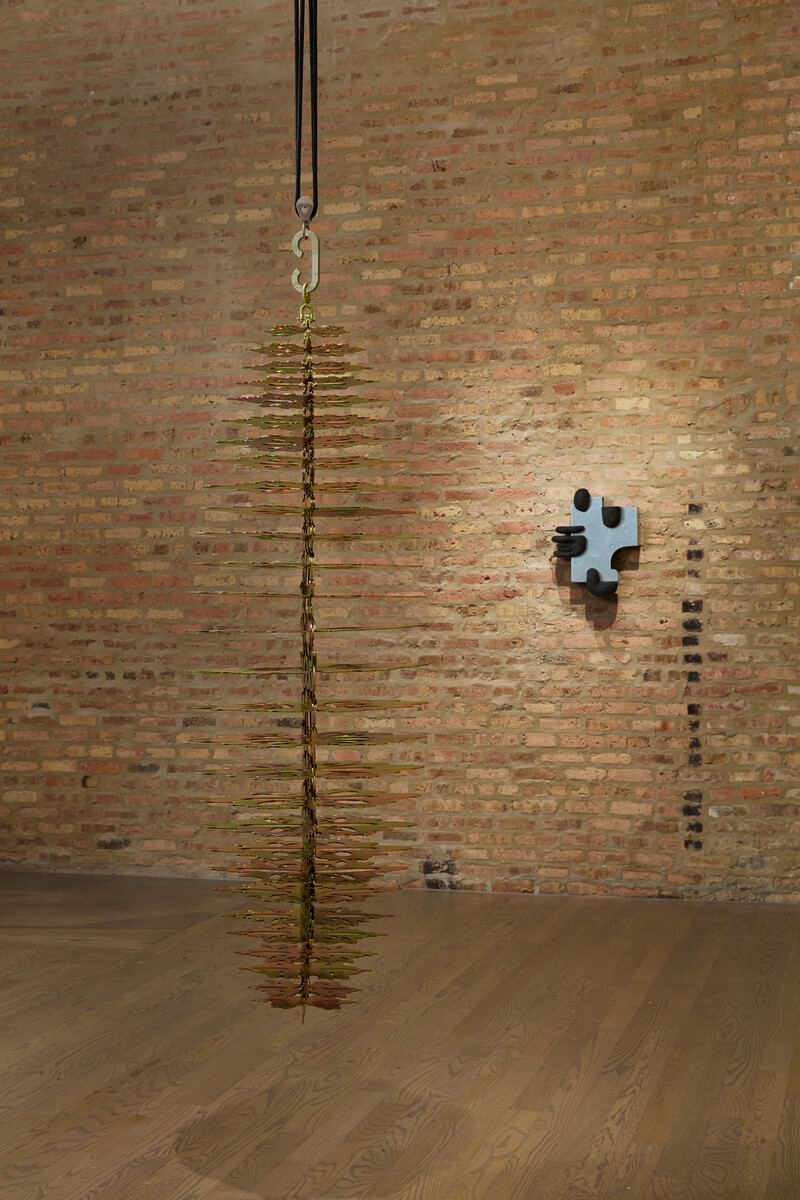
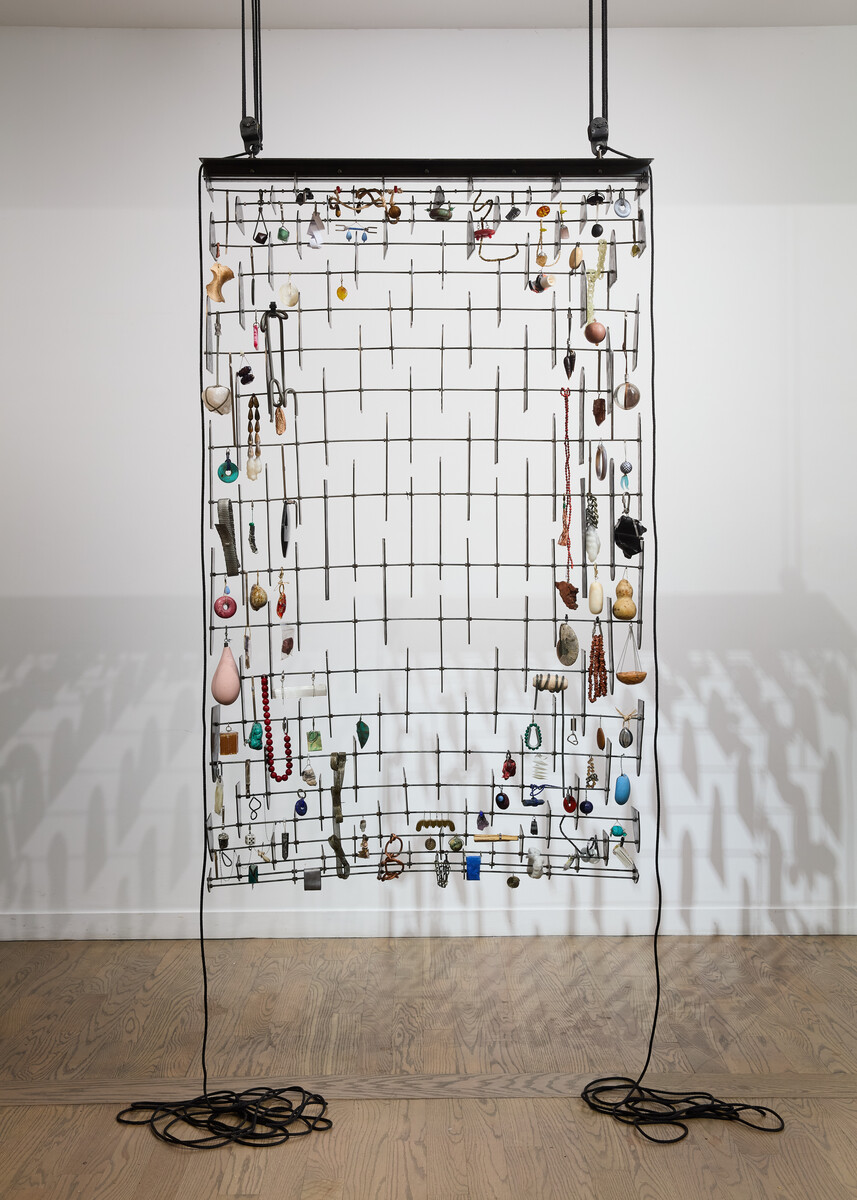
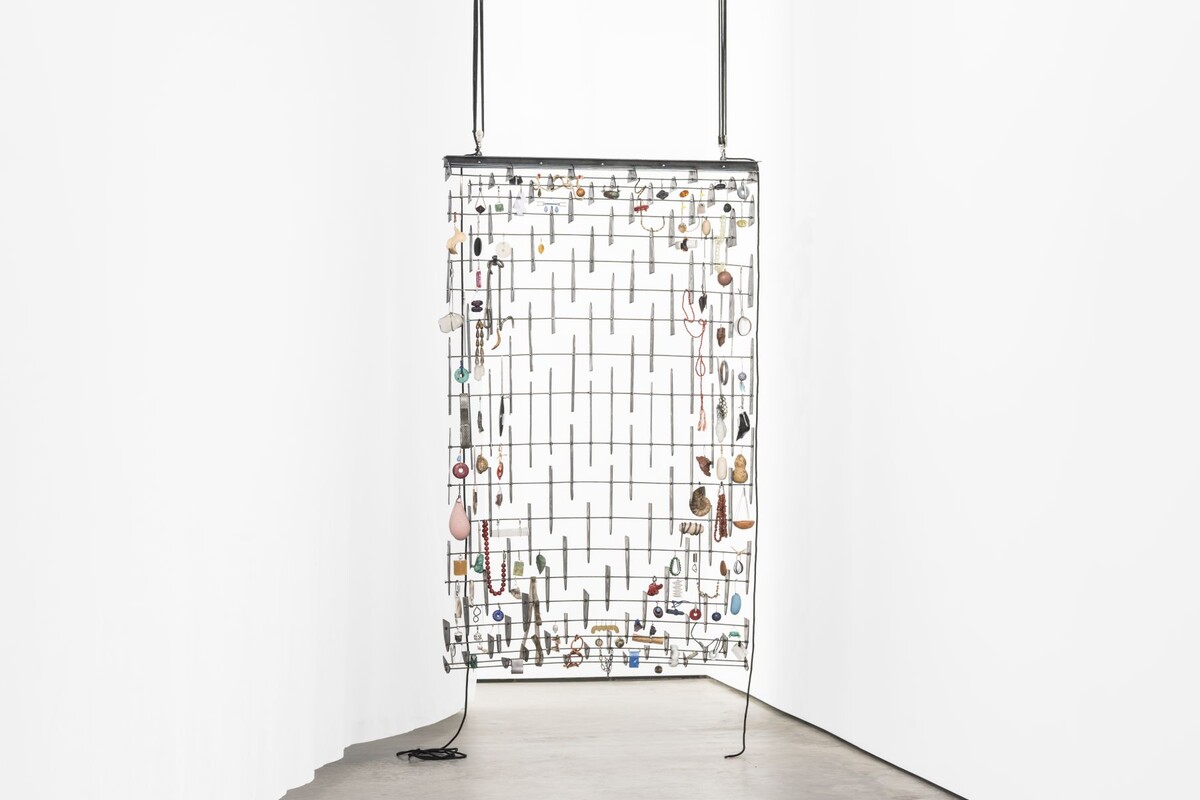
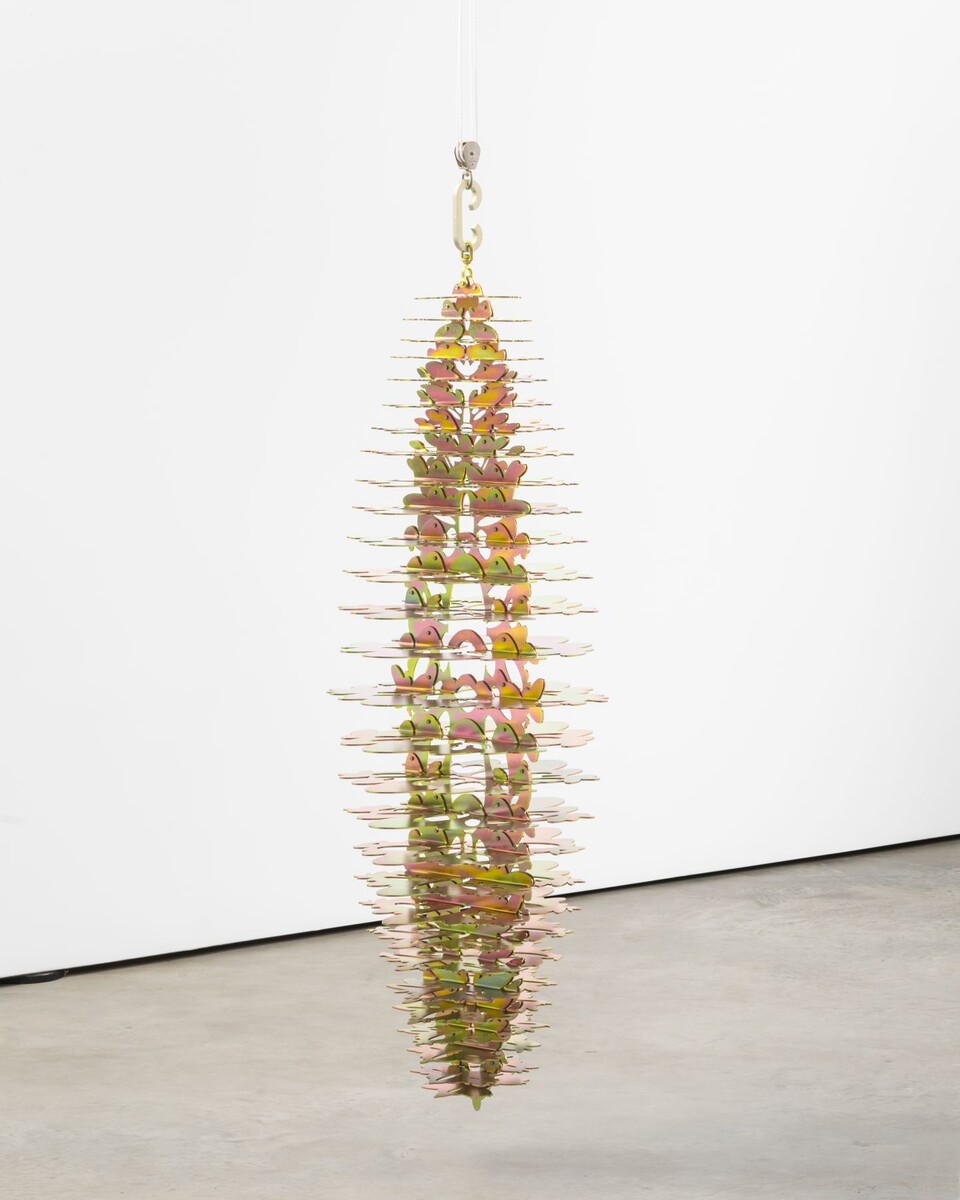
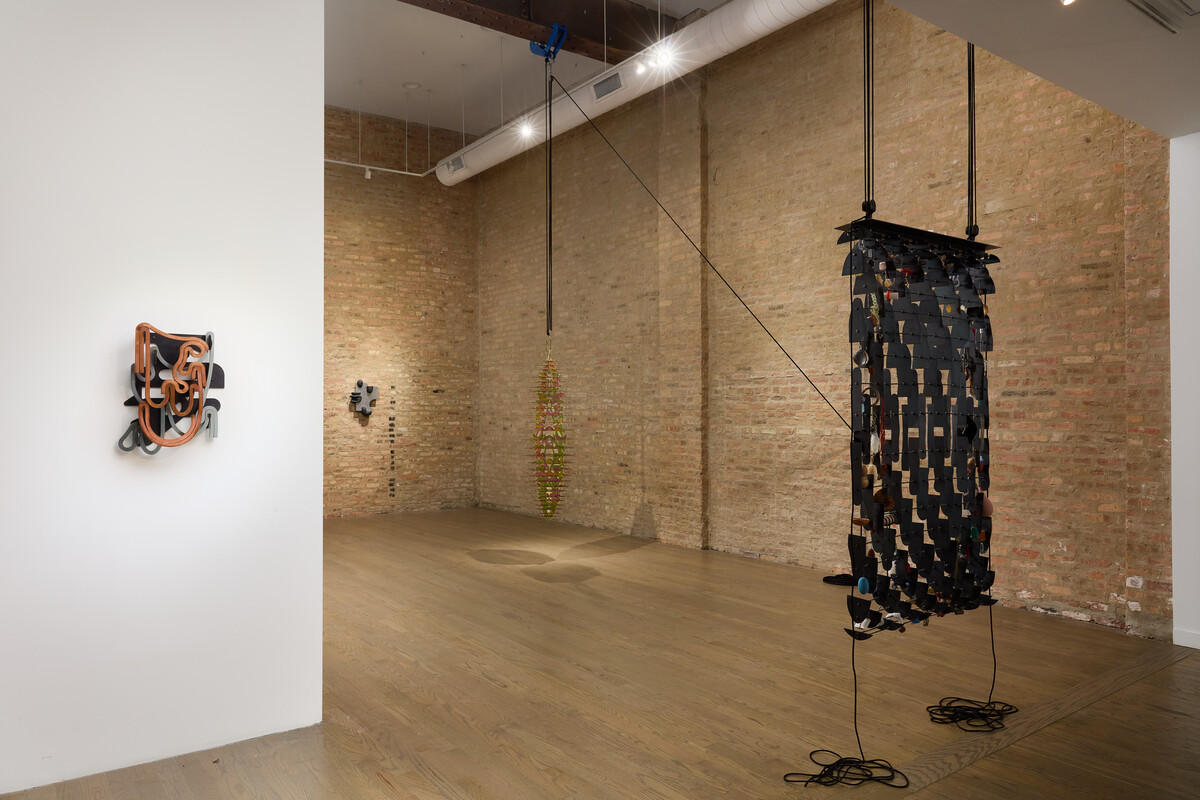
In his spindle-like sculpture of iridescent, galvanized steel, Xoanon, Simões draws upon the steel plates used to cast a former series of works, Phenomenology of the Round (for Artemis). Used to shape soft, bodily forms of concrete, the now polished plates, freed from their initial function, harken to the freestanding xoanon sculpture in the ancient city of Ephesus, which according to legend fell from the heavens. What was once a negative space assumes the role of a positive presence, an architecture capable of holding, suggesting, and making perceptible what cannot be fully seen. Simões’s Gelosia (2025), a screen of metal plates, rods, and material adornments, references both the window screens widely used in Brazilian colonial architecture and the accumulation of offerings one would have seen placed on the xoanon. Across Latin American cities, contemporary fences and grilles, often adorned with amulets, line doors and windows to symbolize protection and security. Suggesting the ways in which jewelry, icons, and sculptures continue to hold emotional and spiritual meaning stones, ropes, and metals configure as potential harbingers of projection and value.
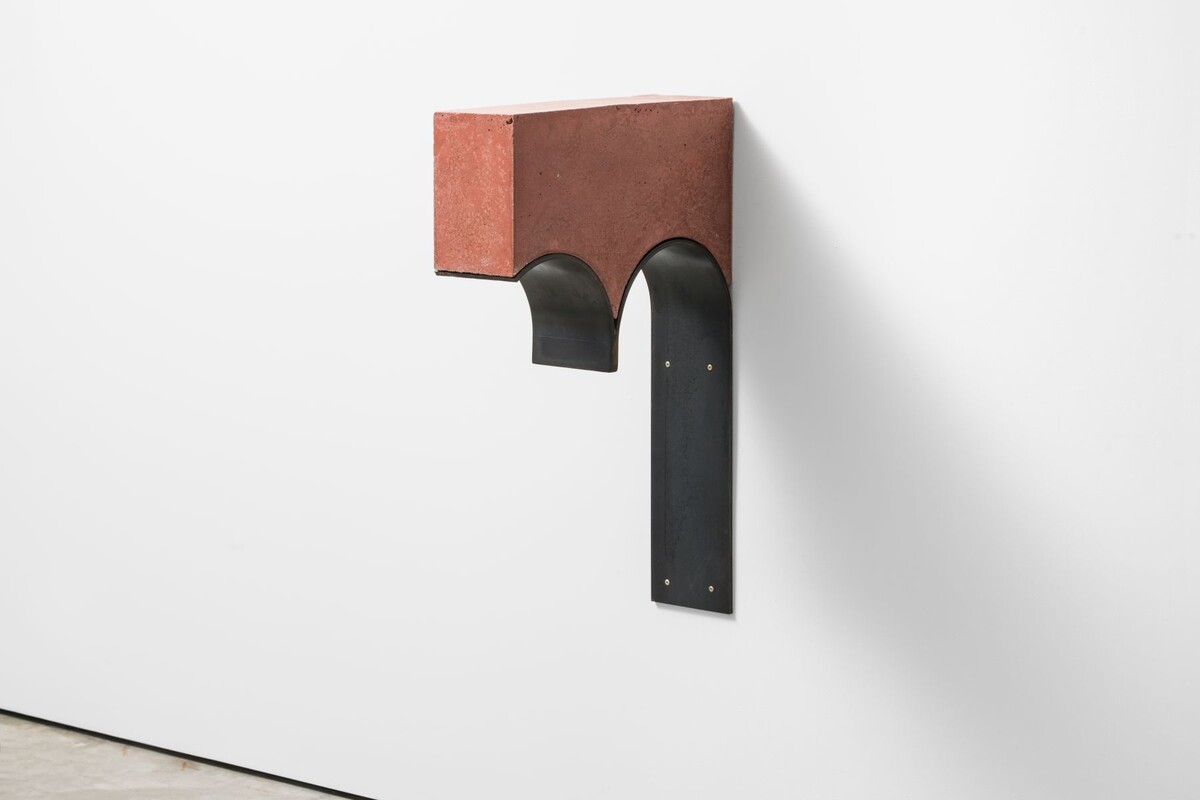
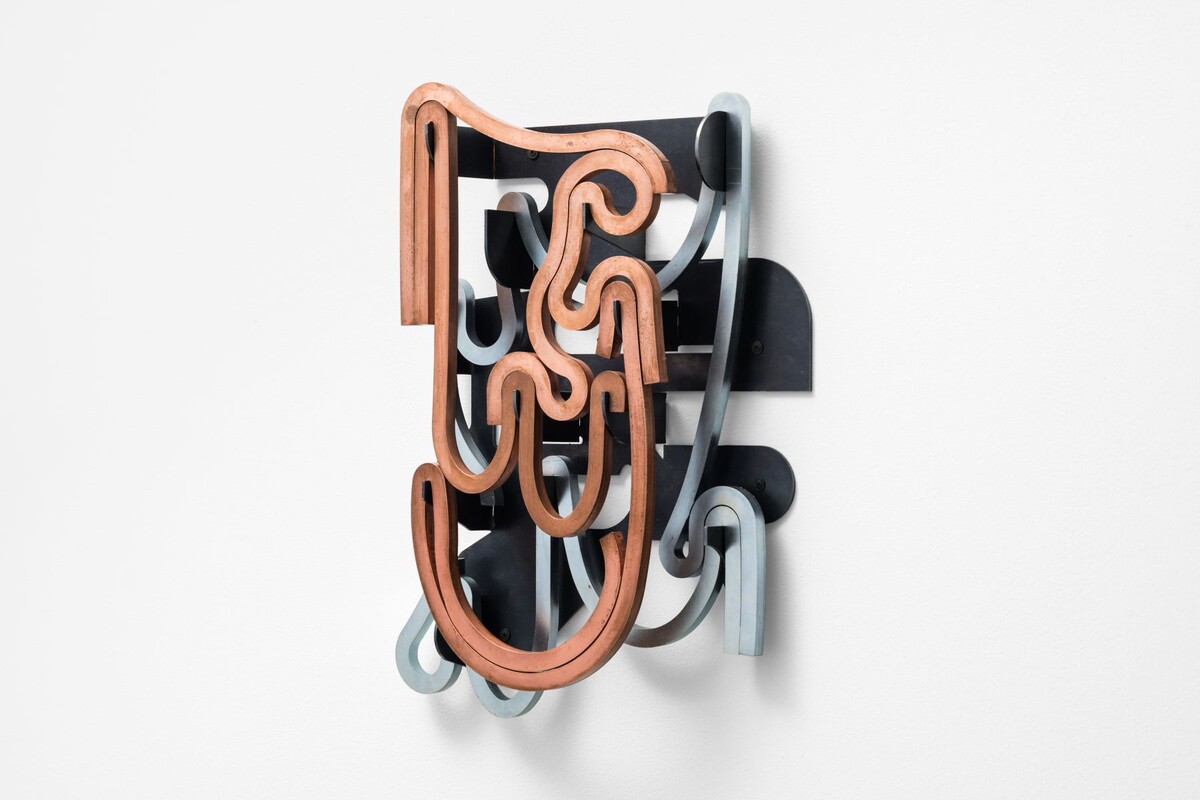
Simões’s works extend this perception of ancient forms and architectures into the present. Engaging modern and post-modern buildings in his home of São Paulo. Acknowledging the constant maintenance (window washers, concrete power-washing) required to uphold the sleek exteriors of post-war construction, Post Modern Sleaze (2025) is constructed of rods of copper and white zinc-plated steel which languidly slip around a scaffolding of dark, raw carbon steel, a scaffold of constant care which protects static structure. Like the offerings adorning and held by the xoanon, the scaffolding in Post Modern Sleaze comes into focus as the central apparatus sustaining an idealized image.
Together, the works suggest that meaning need not be imposed upon a form from the outside; it may emerge through attention, encounter, and the recognition of what a structure makes possible. The works posit that value lies less in what is kept at the center than in what accumulates around it.
Installation Images: