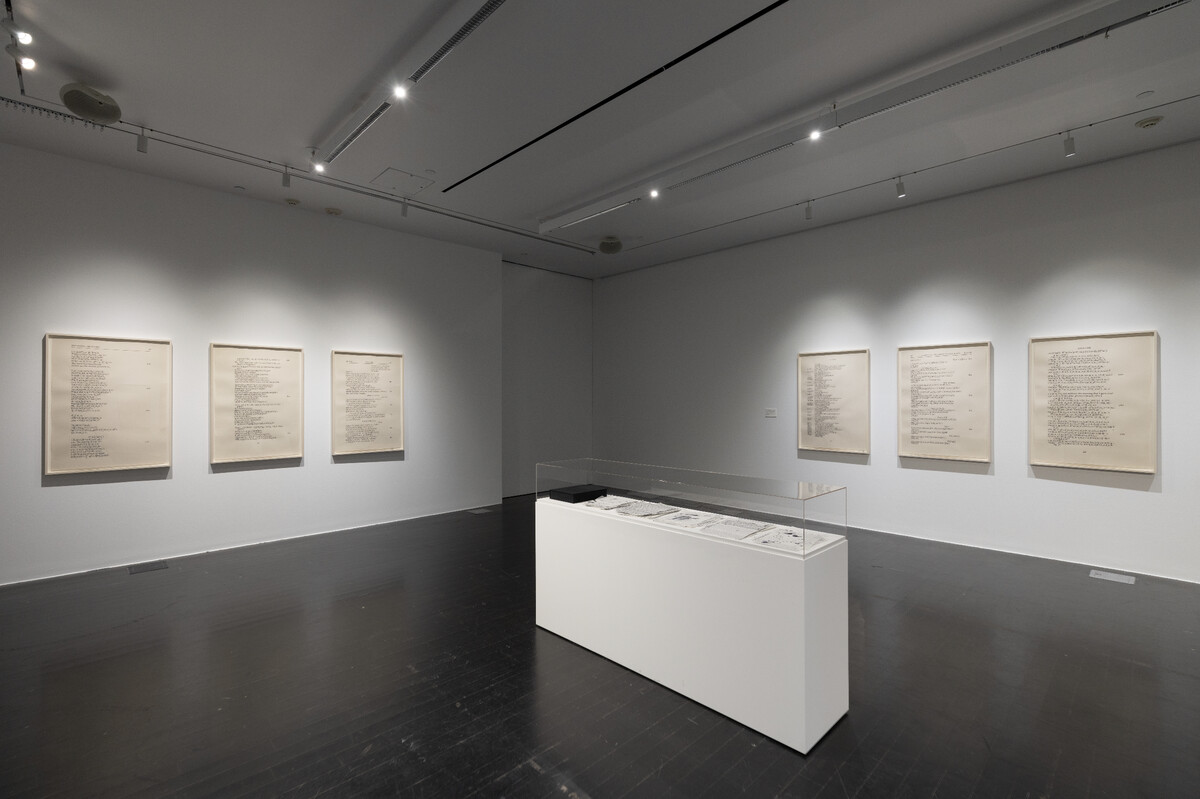
Opening in spring 2026, Chicago-based artist Bethany Collins presents The Deluge, an exhibition comprising multiple bodies of work that each navigate an existential storm. Through sculpture, sound, and works on paper, Collins traces what it means to inhabit a world where words, memory, and history surge and intertwine. Drawing from literary pillars such as Herman Melville’s Moby Dick and Sophocles’s Antigone, as well as songs rooted in Americana, she culls these sources to uncover currents of resistance and perseverance while also exposing the cataclysmic forces — undertows of violence and conflict — that have shaped them. Her works surface from deep historical waters, where language floods its own boundaries, rising, receding, and returning with the weight of memory. In The Deluge, meaning endures not through stability but through movement: a current that carries the remnants of what history cannot let go.
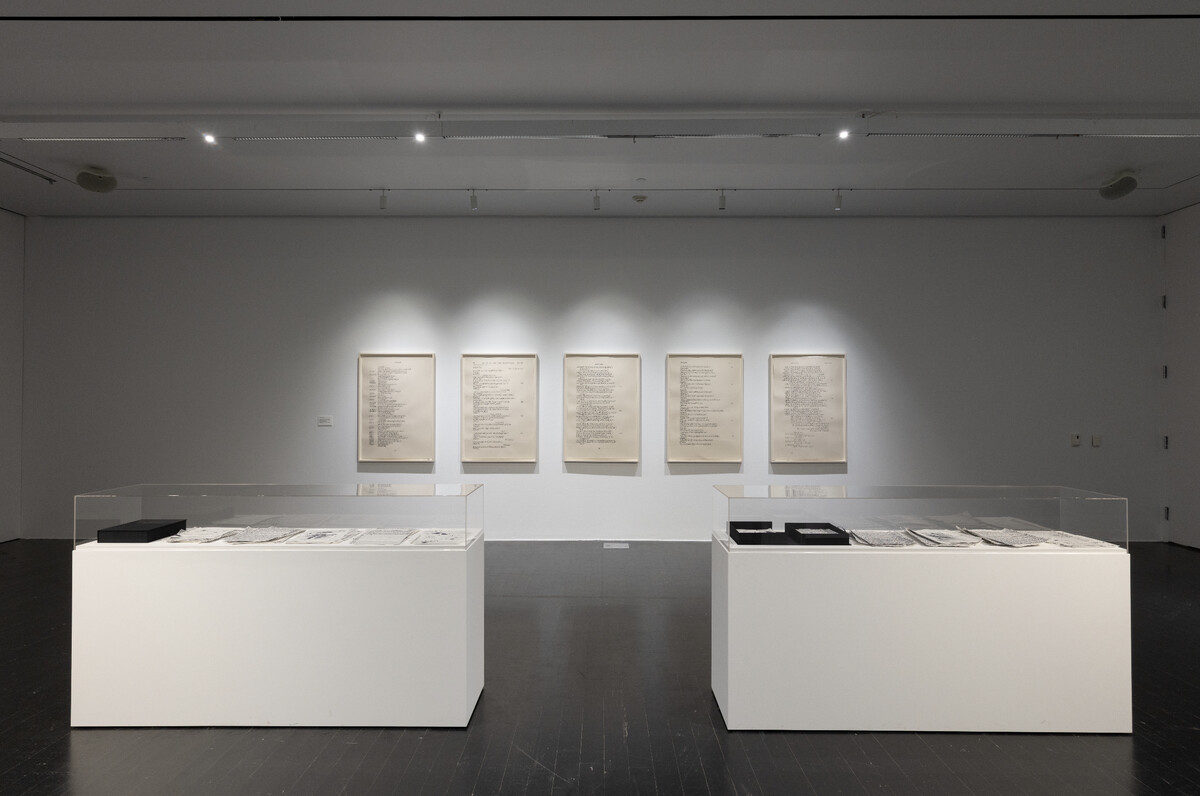
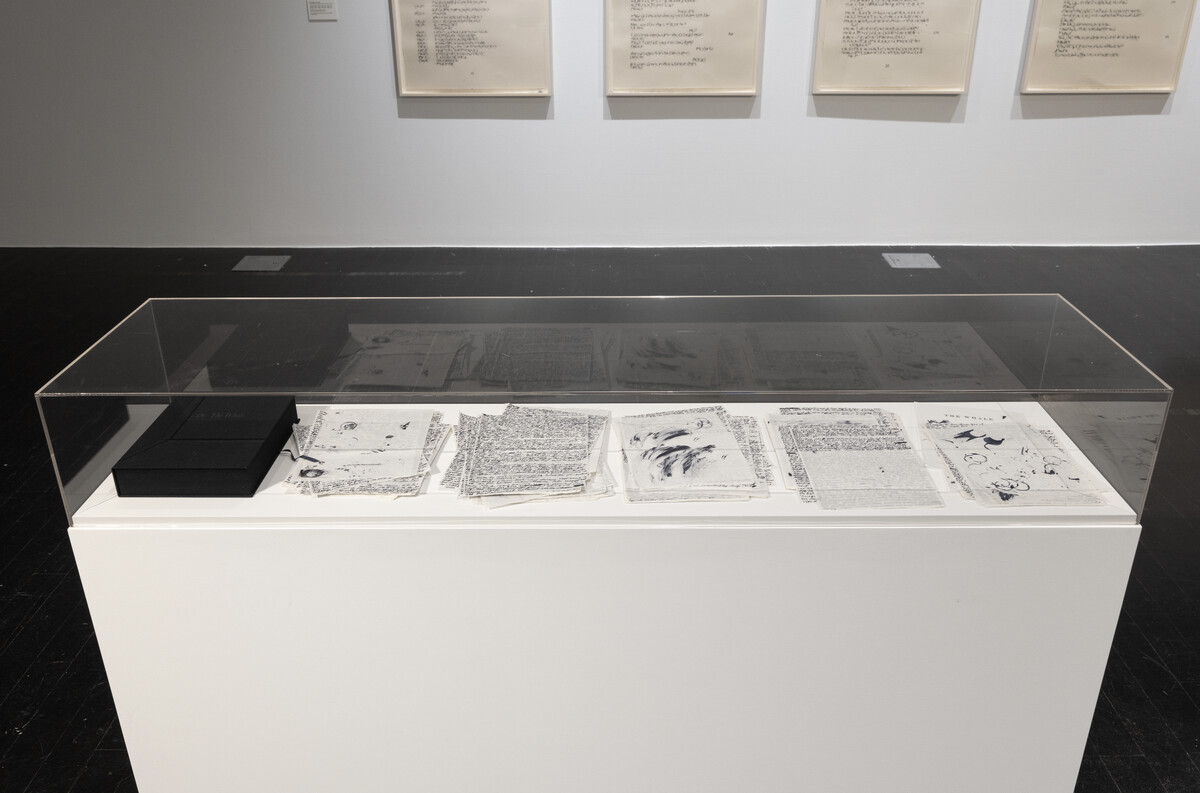
Speaking directly to these prevailing tides, the exhibition centers on Or, The Whale, Vol. 1 and 2, part of Collins’s three-volume series transcribing Herman Melville’s 1851 novel Moby Dick. Historian Nathaniel Philbrick refers to the novel as an “American Bible,” a literary exploration of loss, salvation, and the dark consequences of an unrepentant spirit. Collins has undertaken the meticulous and labor-intensive act of transcription, writing out the pages of the book’s first and second volumes onto nearly translucent onion-skin paper using iron gall ink. Developed in the 4th century, the ink was lauded for its permanence — it cannot be erased through rubbing or washing — yet is inherently corrosive due to its acidity, gradually eating away at the surface it touches. In transcribing Melville’s text this way, Collins infuses one of the nation’s most archetypal works with an “inherent vice” (a conservation term), transforming the act of preservation into one of slow dissolution. The work evokes the dual pull of endurance and decay — an image of faith eroded by its own persistence.
In dialogue with Moby Dick, other works in The Deluge form a constellation of practices for survival amid turbulence. Many of Collins’s Antigone compositions focus on acts of dissent, imagined as treacherous crossings or undertows of defiance. Collins creates these works by meticulously erasing handwritten passages from different translations of Sophocles’s tragedy. Rendered across multiple panels, she obscures every word of the text save for selected phrases. What remains are fractured yet potent fragments of speech — lines that illuminate irresolution and conviction. In Antigone: 1998 / 1962 (2025), only the following text remains legible:
In some people’s eyes, you were right. In others’ wrong.
Some thought you wise; the dead commended me.
These fragments, suspended between absence and assertion, reveal how conviction is carried forward through the shifting currents of interpretation.
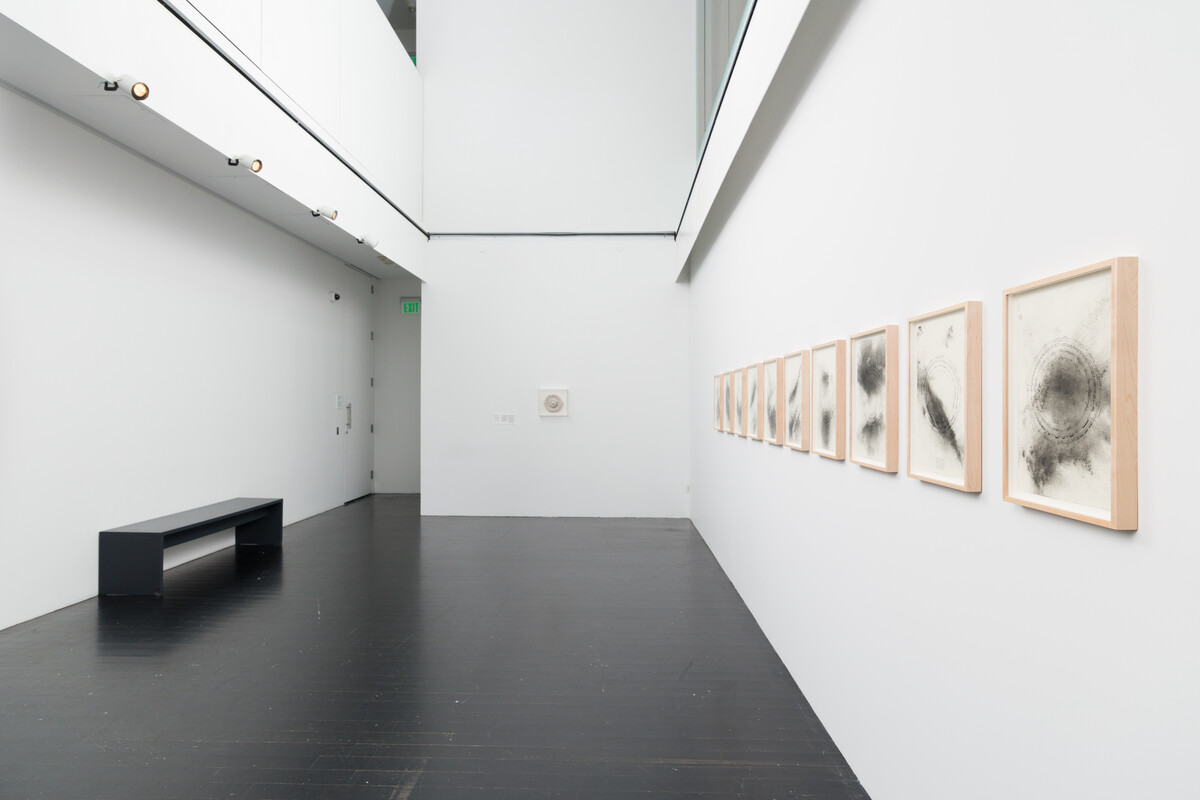
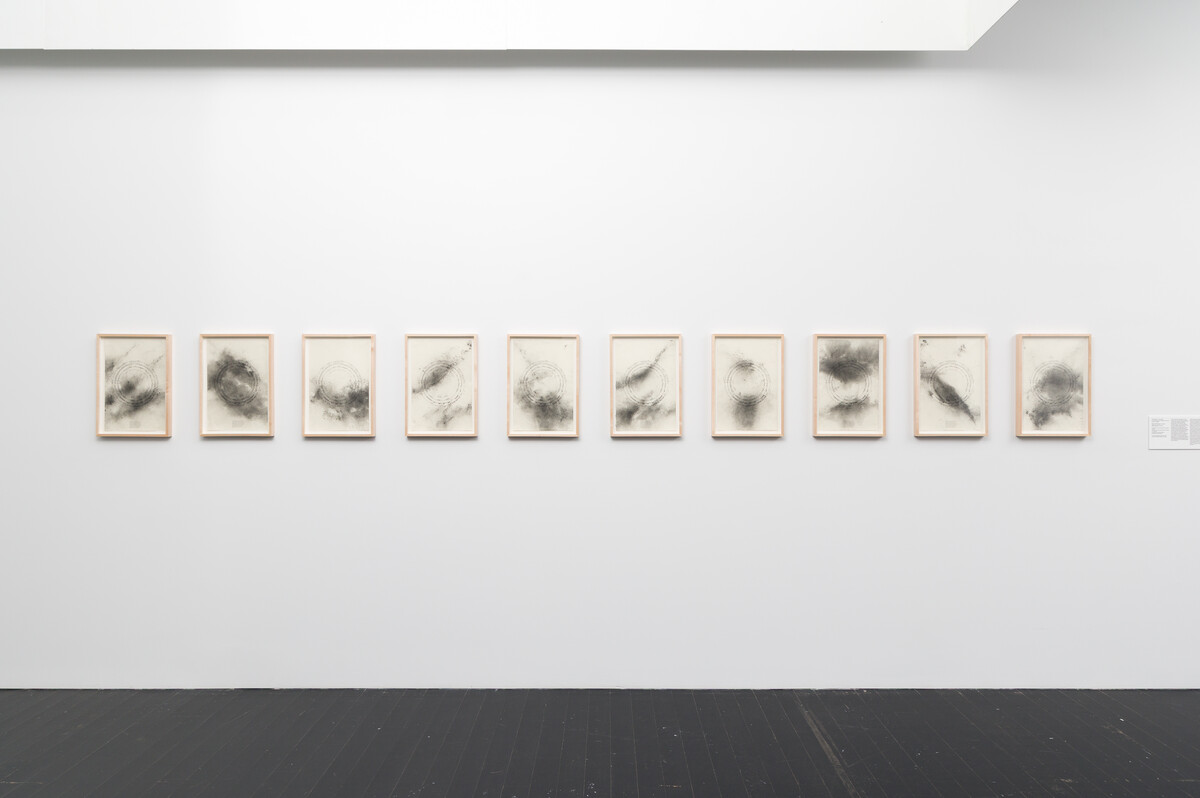
Collins further extends her investigation into the histories of the American South through her song drawings. Composed by Stephen Foster near the end of his life and published posthumously in 1864, Beautiful Dreamer is a lilting serenade to reunion and release. Drawing on the structure of musical notation that loops seamlessly from end to beginning, Beautiful Dreamer I – X (2025) entwines the romantic sentimentality of Foster’s ballad with the solemn gravity of Verdi’s Requiem (Dies irae and Libera me). The resulting circular scores merge one of the nation’s most memorable parlor songs with an inescapable call to judgment. By returning the love song to its apocalyptic origins — written in the midst of a seemingly endless civil war — and embedding it within this recursive, tidal form, Collins situates repentance as both an eternal return and a potential passage toward absolution.
Collins’s sculptural series Old Ship Roses embodies a quiet act of care for the past. Here, she casts rosettes from handmade paper infused with granite dust pulverized from a dismantled Confederate monument. The molds are drawn from architectural details of Old Ship AME Zion Church in Montgomery, Alabama — the oldest Black church in her hometown, and a site that hosted figures such as Frederick Douglass, Senator Blanche K. Bruce, and Booker T. Washington. The rose, historically a symbol of love and remembrance in Victorian floriography, becomes an offering: a delicate memorial shaped from the ruins of a monument to white supremacy, reconstituted into forms of tenderness, beauty, and reverence for resilience.
Finally, the sonic work The Patriot’s Banner (2024) serves as a threshold into the exhibition — its sound rising from the museum stairwell to guide visitors toward the lower level, what Collins calls “the belly of the whale.” The work engages the history of The Star-Spangled Banner as a contrafactum, a melody whose accompanying lyrics were rewritten countless times across U.S. history to voice causes as divergent as suffrage, temperance, abolition, and secession. Collins draws on an abolitionist version of the anthem written in 1858, slowing and layering its voices until words collapse into pure sound. The result is both elegiac and elemental: the anthem’s familiar patriotic cadence dissolves into an oceanic field. At once mournful and transcendent, The Patriot’s Banner embodies both the storm and the possibility of renewal within it.
Through acts of transcription, erasure, and reinterpretation, Collins’s works in The Deluge trace language as a force that moves through time like water — shaping, eroding, and returning. Whether through Melville’s doomed voyage, Sophocles’s steadfast heroine, or the many re-voicings of a national hymn, her practice reveals the persistence of meaning even as it slips beyond control. The Deluge is not an event left behind but a state we inhabit: the slow, unending movement of histories and voices that surge beneath our own.