“In the middle of our life’s journey, I found myself in a dark wood.” (1)
PATRON is proud to announce Tannic Waters, our second solo exhibition with Claire Sherman. Over the past two decades, Sherman’s conceptual approach to landscape painting has drawn upon researching, extensive hiking and photographing, and the development of a painterly language that shifts in and out of representation. Her emotive, intimate renderings of the natural world, of places filtered through her own psyche, shift from traditions of land ‘captured’ to an examination of nature as artifice that informs societal and personal narratives.
In 2023, Sherman began what would be a multi-year project revisiting the writings of American writer William Faulkner, whose rich literary descriptions of both real and fictional locations constructed a vibrantly nuanced depiction of the American South in the mid-20th century. Alluding to the mired political landscape of the 2020s, as well as the artist’s own navigation of personal grief, Sherman’s work abstracts the trees, underbrush, and foliage observed in her voyage through waters of uncertainty, resisting a clear path forward.
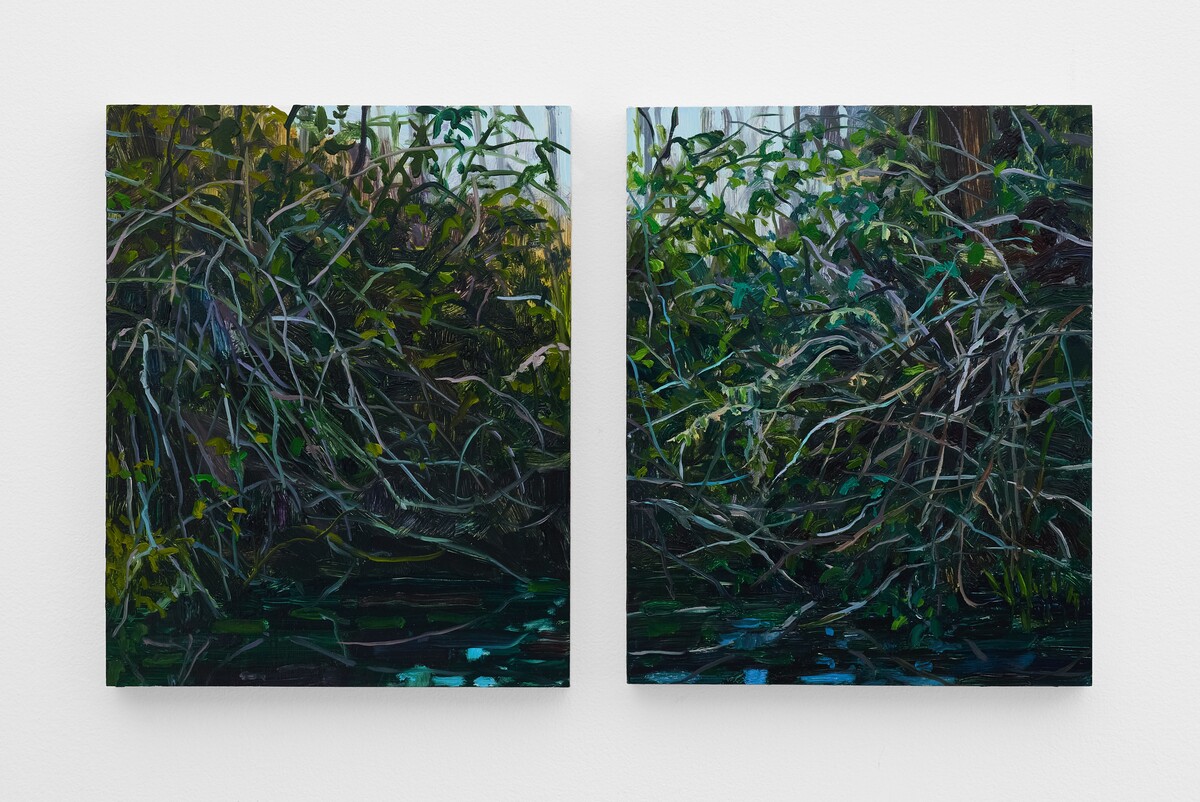
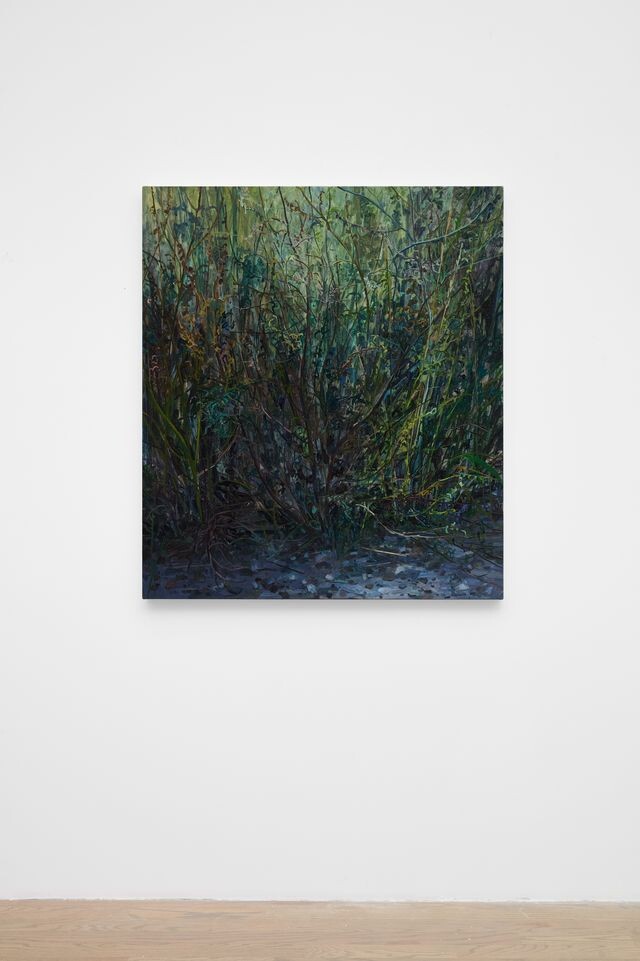
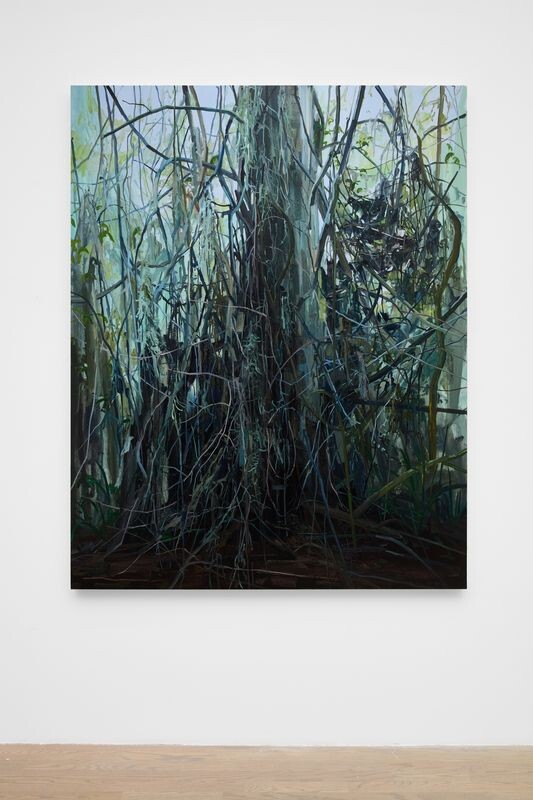
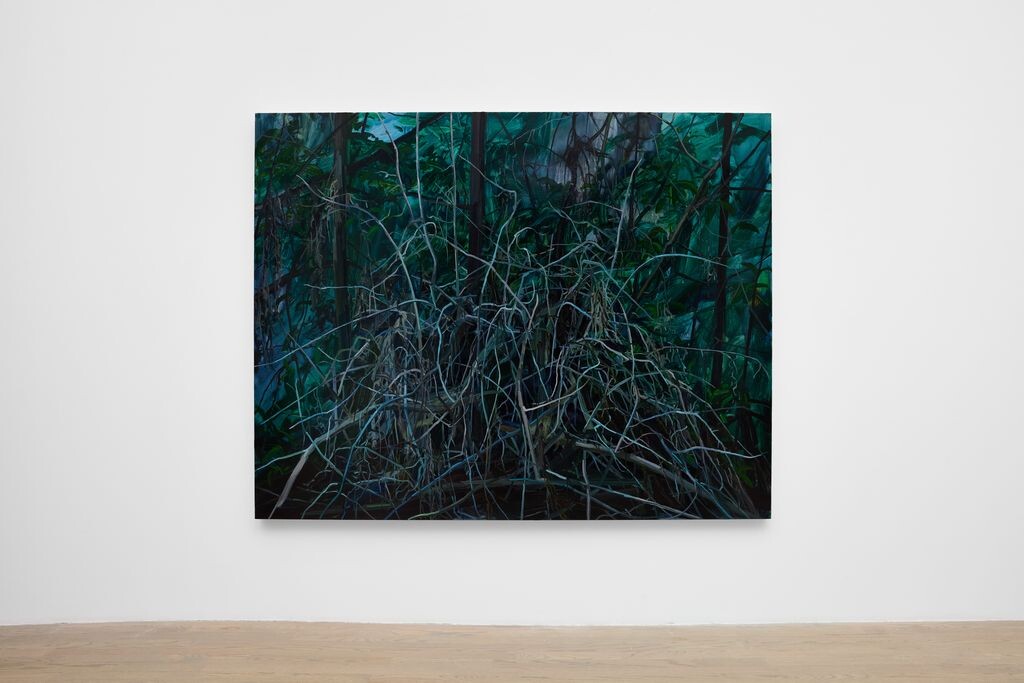
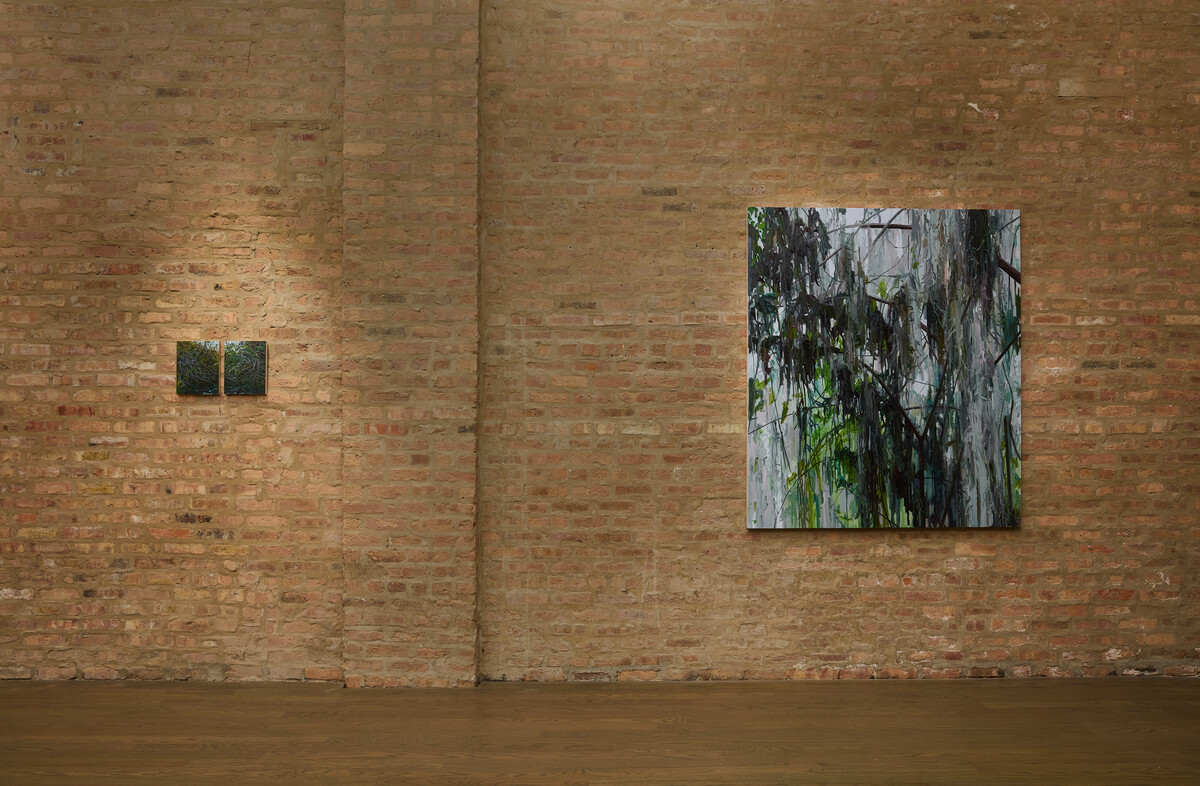
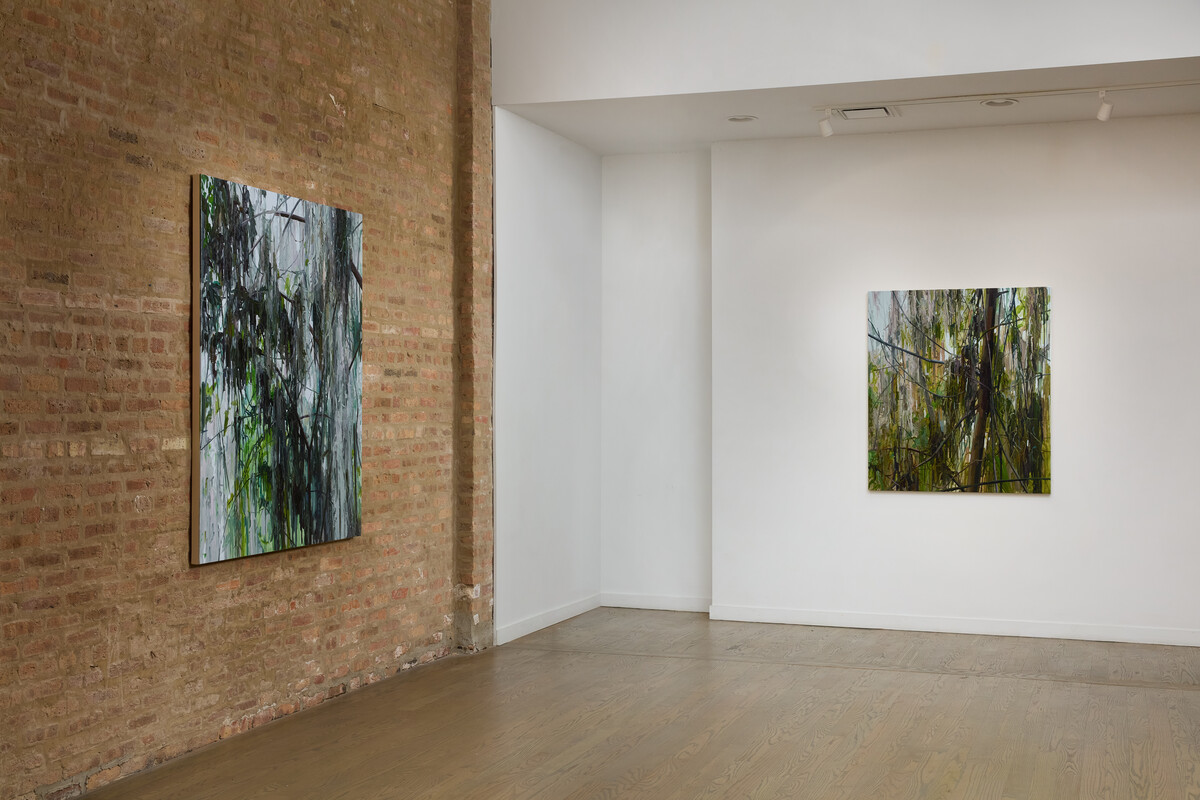
Borrowing its name from the leaves, peat, and minerals that give the region’s languid rivers and swamps a rusty, tea-hue, the exhibition premieres a group of new paintings created following Sherman’s visit to Faulkner’s estate, Rowan Oak, in Oxford, Mississippi and her subsequent visits throughout the swamplands of the South: along the coasts of Northern Florida, the Great Dismal Swamp in North Carolina, and Okefenokee Swamp in Georgia. Applying Faulkner’s construction of a place, through its shared history and present, Sherman’s paintings translate moments of landscape into spaces that slip, shift, or disintegrate. In works such as Vines (2026), the accumulation of branches and foliage appears as almost a natural barricade, alluding to Rebecca Solnit’s perception of landscape as the “battlefield of our time—not a scenery but as the space and systems we inhabit, a system our own lives depend on.” (2)
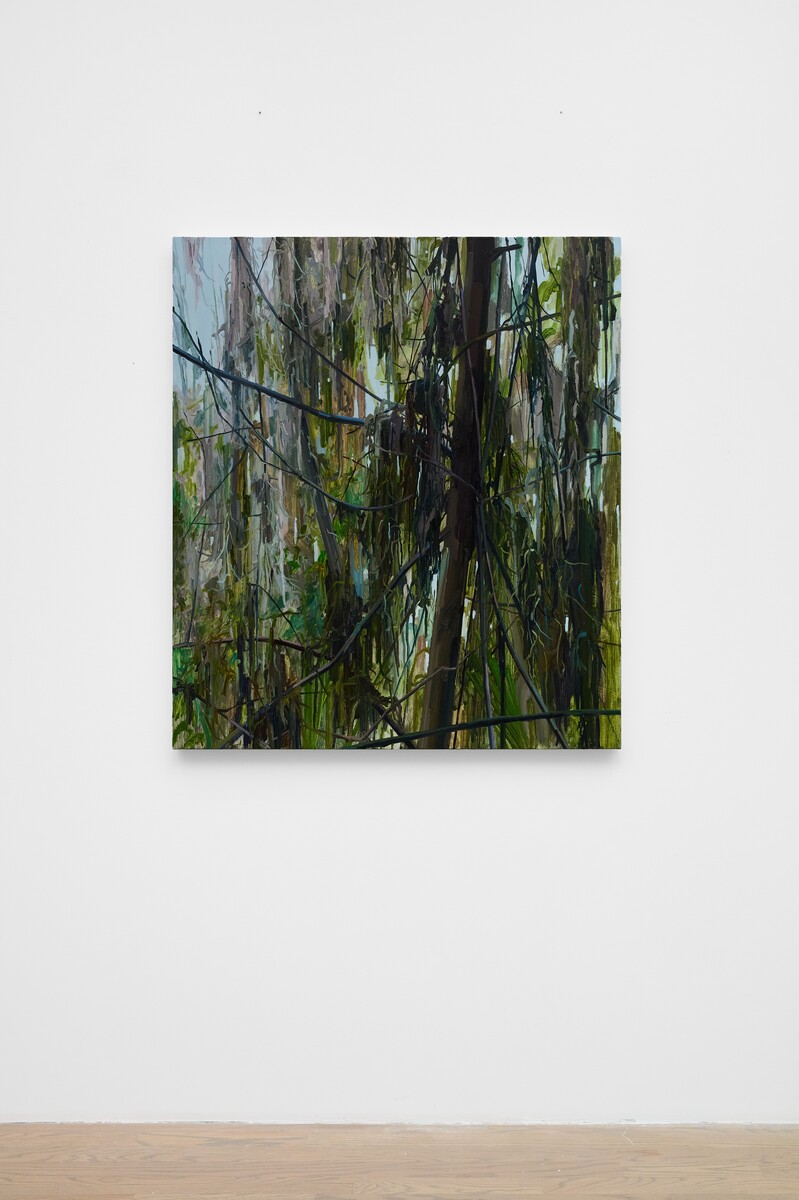
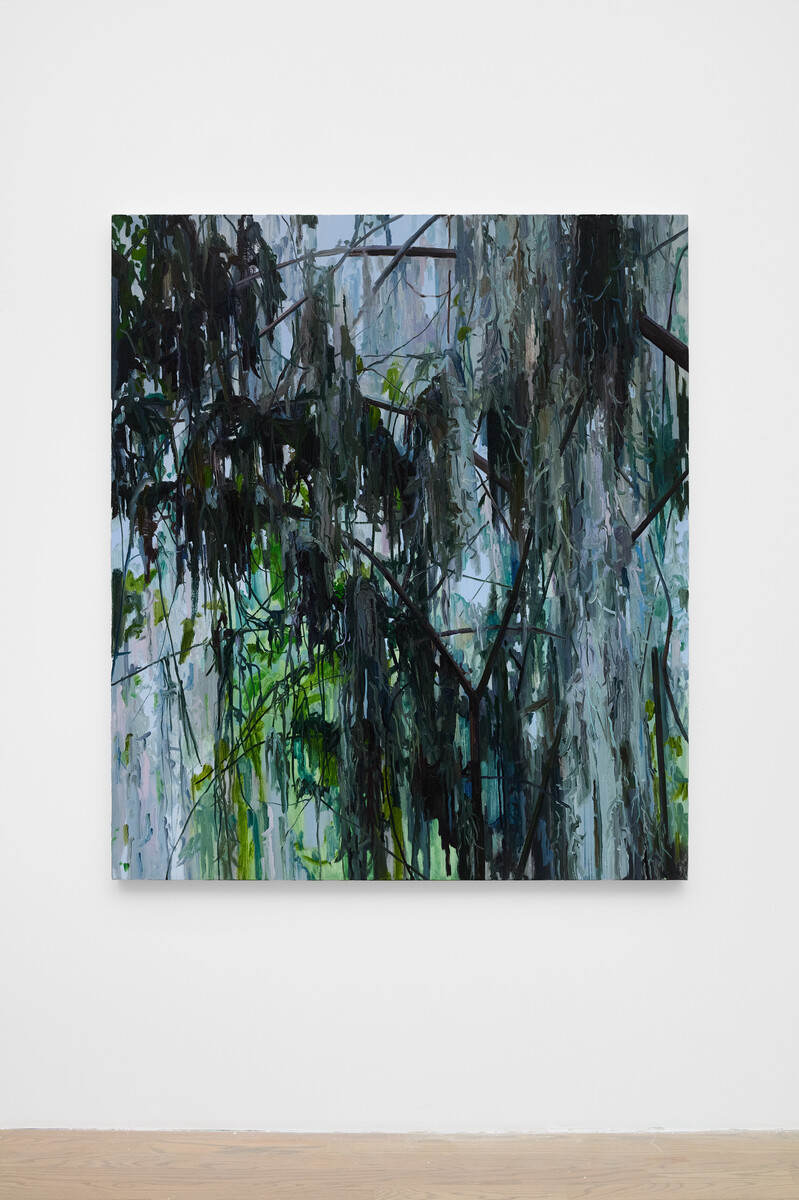
Sherman’s Tree and Moss (2026) and Tree and Vines (2026) act as abstracted memories of her experience within the otherworldly swamps, psychological environments that are at once eerily haunting and spiritually reverent. Vines playfully ensnare tree trucks ascending from brackish waters and Spanish mosses, elegantly draped across tree branches, become veils that fragment their environs. Slipping between representation and ambiguity, Sherman’s paintings become archaeologies themselves, constructed locations that bear the strata of our own complex personal, environmental, and political histories.
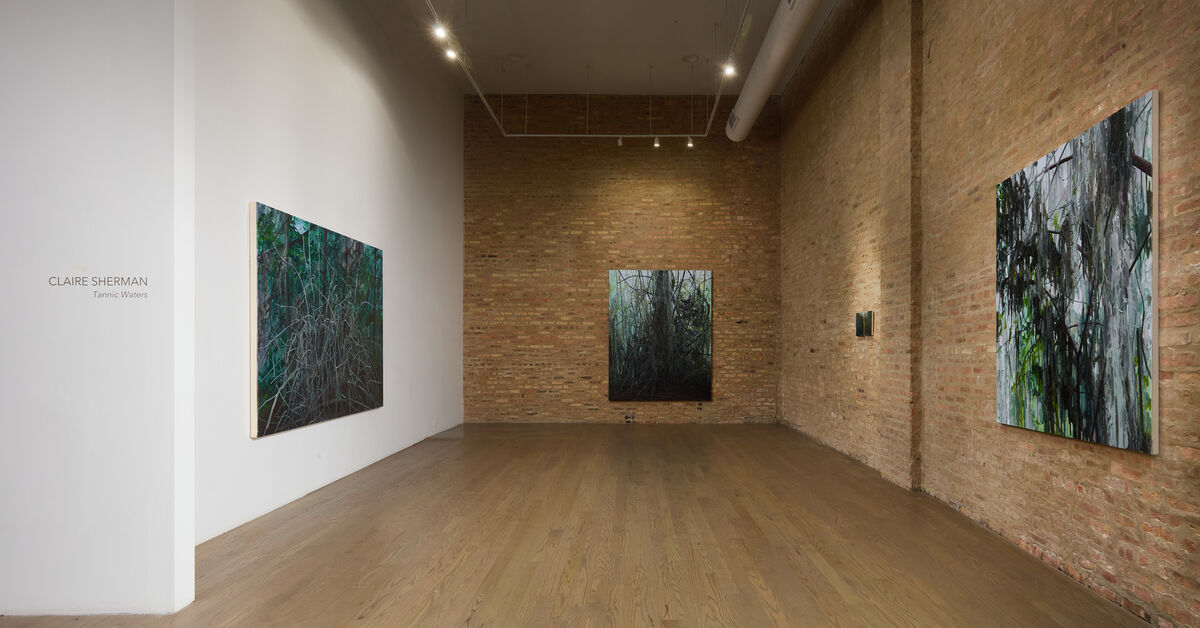
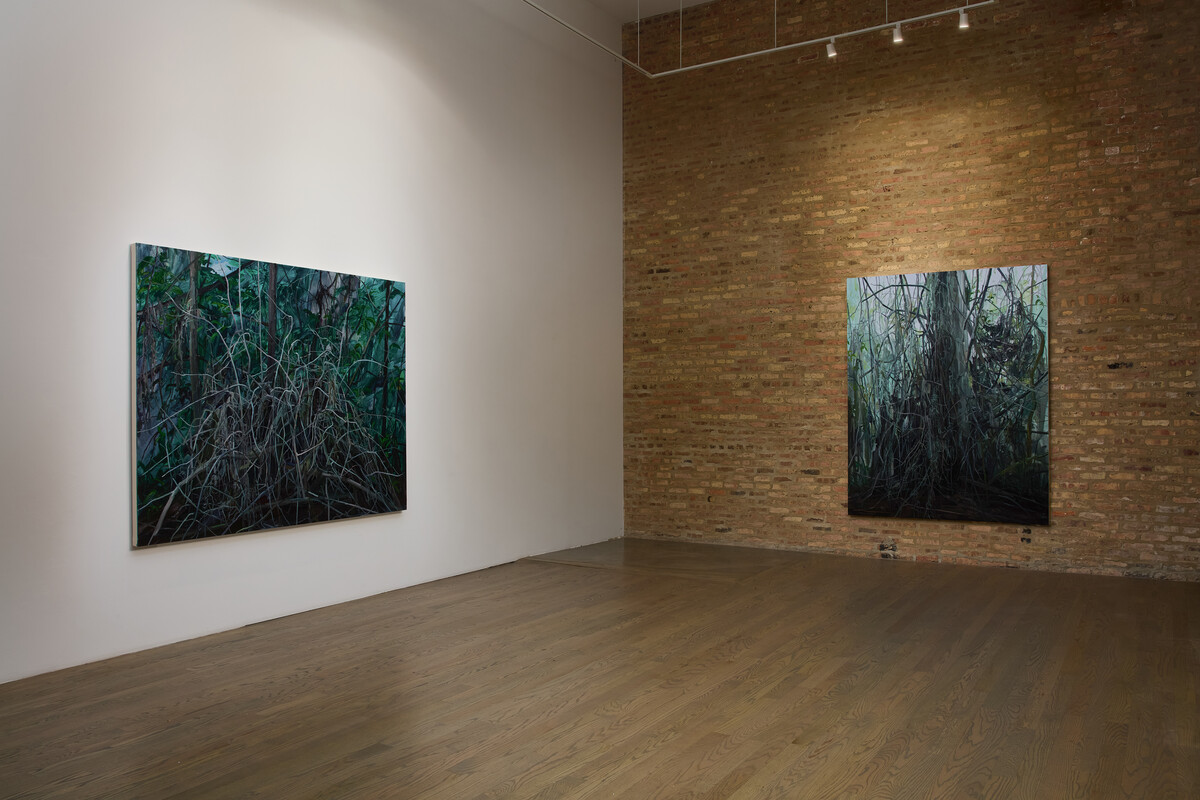
Installation views:
Citations:
(1) Dante Alighieri, The Divine Comedy, (Inferno, Canto I)
(2) Rebecca Solnit, As Eve Said to the Serpent: On Landscape, Gender, and Art, 2001, p. 47.