“I Will Always Be Indebted to Her”: Contemporary Arab Artists Discuss Their Mothers’ Influence
Vogue Arabia / Mar 21, 2026 / by Rawaa Talass / Go to Original
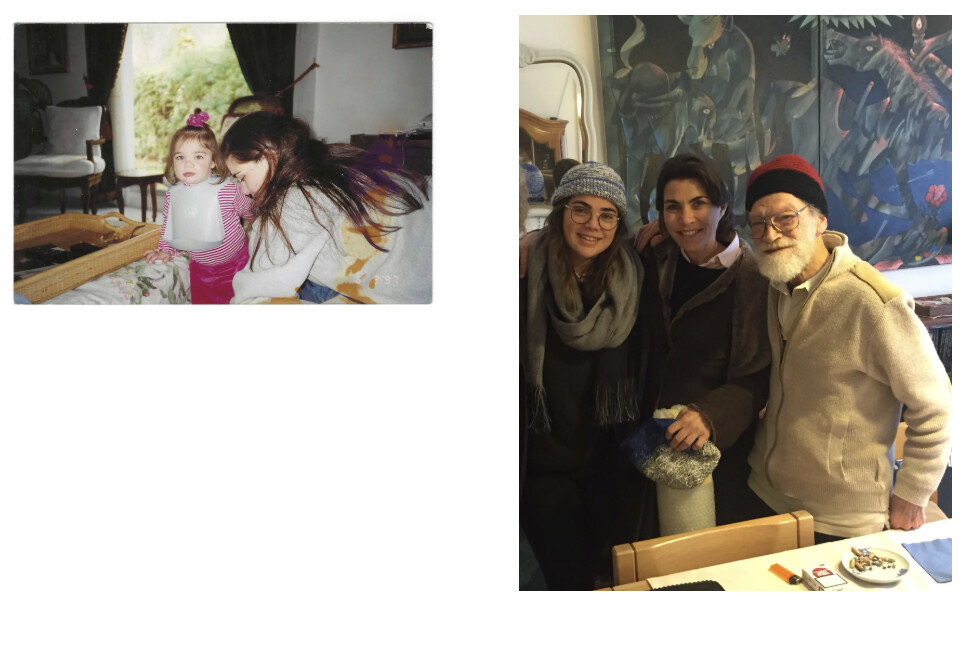
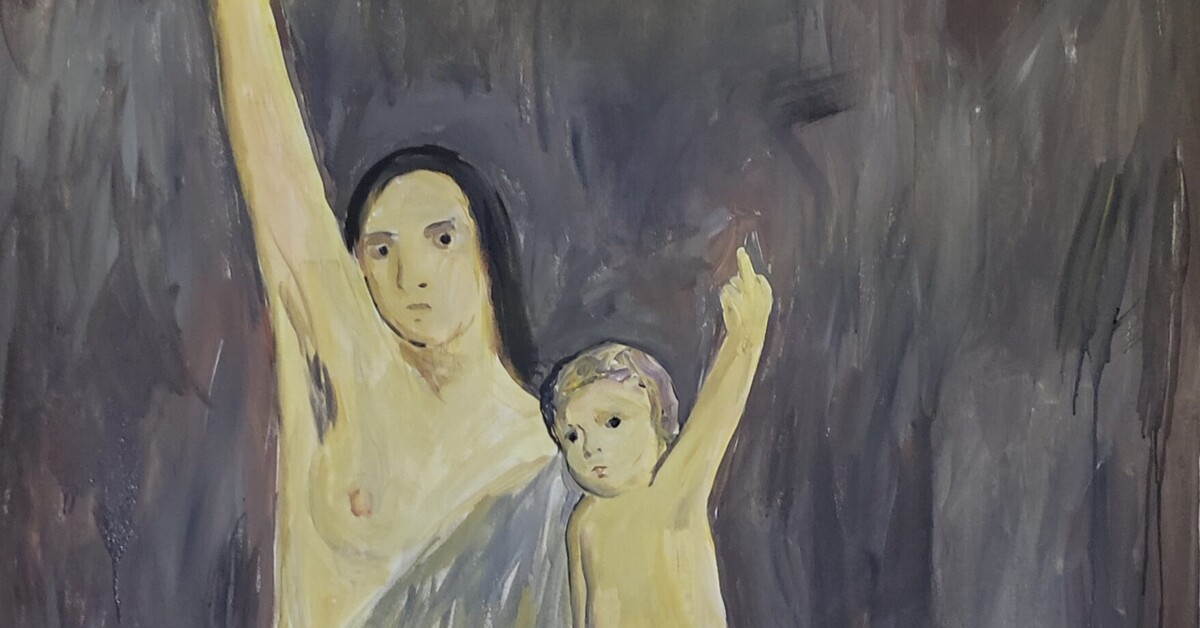
The figure of the mother has long been present in Arab art and culture. Mahmoud Darwish wrote about her, Fayza Ahmed sang about her, and Paul Guiragossian painted her. She has served as a timeless figure of inspiration, hope and guidance. To mark Mother’s Day in the Arab world on March 21, Vogue Arabia reached out to three notable Arab visual artists to share in their own words personal memories of their mothers. By offering their children knowledge and freedom, their lives and careers have forever changed.
Nour Malas
The emerging New York-based abstract painter Nour Malas, who is currently working on a series inspired by her maternal lineage, looks back on how her mother, Syrian art expert Rafia Koudmani, immersed her in the world of art through engaging artist studio visits from an early age.
One of my most memorable early experiences happened when I was about ten years old in Damascus. The painter Marwan Kassab-Bachi came by our house and asked my sister Nadia and I to make a live drawing of our mother. What I remember most vividly is not the drawing itself, but the way he spoke about art and the world. Even at that age I found myself more fascinated by artists’ minds than by making art.
I would often accompany my mother on studio visits, including Ahmad Moualla’s studio in the suburbs of Damascus. Later, when I was studying in London, I visited my mom in Belgium and we spent time at Khuzaima Alwani’s home and studio, where he spoke for hours over beef and potato stew about the conspiracy theories he was fascinated by. In 2018 I travelled with her to Granada, where we visited the painter Assem Al-Bacha in his home and studio.
What struck me most about these encounters was the conviction each artist had in the world they had built for themselves. I was often more fascinated by that sense of belief than by the works themselves. The artworks felt like a natural extension of their everyday lives. My mom showed me that this way of life was possible, and she deeply understood the importance of artists and the role they play in shaping culture and society. It was a privilege to have access to those spaces and to grow up with such supportive parents.
I don’t think becoming an artist was ever really a choice for me. The moment I connected with making art, it was all I wanted to do. At the same time, I don’t think I would have become the same artist without what my mother exposed me to. When she was completing her undergraduate degree in photography there were always photographs laid out around the house. She would talk through her ideas with my sister and I, whether it was about her own work or about opening a gallery. From a young age she showed me that you can create something entirely out of imagination.
More than anything, she taught me the value of dedication. She showed me that working hard on something you truly care about is always worth it. I don’t think she fully realises how much that shaped my siblings and me. She also encouraged us to question the status quo, which influenced not only the way I approach my work but the way I move through the world.
Chair-ish: Alex Chitty | Norman Teague
Cleve Carney Museum of Art
Mar 6, 2026
Mar 6, 2026
Why One Artist Transcribed All 900-Plus Pages of ‘Moby-Dick’ by Hand
The New York Times Style Magazine
Mar 4, 2026
Mar 4, 2026
Can Brands Crack LA Art Week?
Vogue
Mar 2, 2026
Mar 2, 2026
Charisse Pearlina Weston Named 2026 Hermitage Greenfield Prize Recipient
Sarasota Magazine
Jan 22, 2026
Jan 22, 2026
How Alex Chitty and Norman Teague Chair-ish What We Sit On
Newcity Art
Jan 21, 2026
Jan 21, 2026