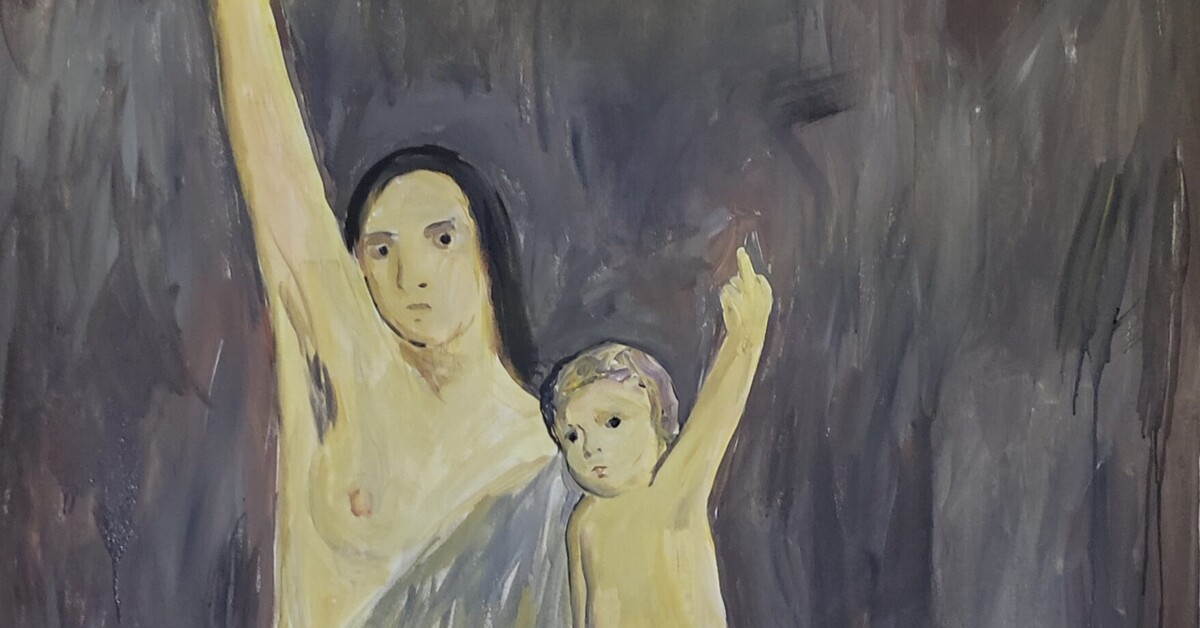
The RojoNegro collective establishes a dialogue between the body and history.
La Jornada / May 27, 2026 / by Merry MacMasters / Go to Original
La Jornada interviewed the artist duo representing the country at the Venice Biennale.
The RojoNegro collective, comprising artists María Sosa (Morelia, 1985) and Noé Martínez (Morelia, 1986), represents Mexico at the 61st Venice Biennale with the “most mature and complete” version of a project they have been working on for a decade.
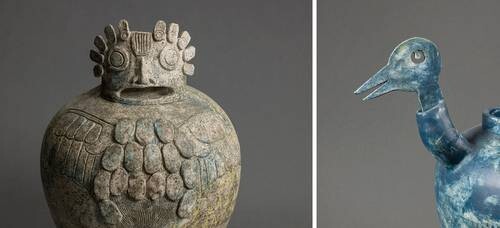
At the heart of Actos invisibles para sostener el universo—the title of the work presented in the Mexican Pavilion—lies a video performance rooted in the duo’s first collaboration, which evolved over time into an experimental “laboratory.” That initial project was originally showcased at the independent Venice International Performance Art Week festival. At the time, the audiovisual piece drew upon the bodily postures of archaeological figures from western Mexico (Michoacán, Jalisco, Colima, and Nayarit).
“This initial work sparked many questions and a desire to find sense and meaning in the bodily experience of adopting this position. We realized that much pre-Hispanic art represented the tension and experience of being in these postures rather than merely mimicking the body. This aligned with much of the significance our indigenous cultures still attribute to the body: leg strength, and the meaning of the hips, shoulders, arms, and belly as vital centers of the spirit,” Martínez tells La Jornada.
Reconnecting with ancestors
They worked with a choreographer for this and earlier versions. According to Sosa and Martínez, the body is “an archive with drawers that one must know how to open. The initial vision we developed stemmed from an intuitive moment—in the sense that our bodies wanted to express something, or to question archaeology or what we knew about the objects up to that point. Later, we took classes to help us conceive a language and tools that the body itself could articulate.”
“It is a deeply profound experience for us that has reconnected us with much of our ancestral heritage, while also helping us make sense of the conversations we have with fellow artists, as well as with those involved in indigenous festivals, ritual specialists, anthropologists, and archaeologists. It serves as a gateway to understanding indigenous knowledge in a way that is both accessible and intellectually engaging,” Martínez notes.
Participating in the Venice Biennale entailed “asking ourselves what we wanted to say to Mexico and the world from this country,” Sosa continues. In addition to the video-performance, Actos invisibles para sostener el universo comprises a salt and mud installation conceived as “an offering and a healing for our dead—the many, the millions of dead we have in our country,” Sosa says. The salt and mud also allude to the body; “not only for our cultures, but as archetypal materials across world cultures that evoke the body.”
The floor installation’s shape is derived from a Teotihuacan seal featuring “two flowered speech scrolls—possibly representing song and poetry. We interpret this as a conversation; thus, we seek to create a dialogue between our bodies and our history, as well as our present, across different planes: that of the living and the dead, and the plane of the invisible entities to whom we owe our lives. The entire pavilion revolves around this: touching upon the most essential elements—life and the human heart,” Sosa notes.
A sound composition commissioned from Alberto Rubí recreates the atmosphere of the ensemble. It consists of a series of ethnographic recordings he made during fieldwork and a collaboration with a friend who raps in Totonac.
“We are also interested in a poetics of the fragment. When observing the salt-and-clay installation, one notices cracks in the clay. For us, it is important to show a living clay—not an archaeological specimen confined to a display case, but a material that reacts to the ambient temperature and humidity,” notes Sosa. “These cracks are its words; it is conversing, reclaiming its form. The cracks, the audio snippets, and the performance elements we incorporate all point to the concept of the fragment. We start from the minimal—from the contact between one person and another. Small details can reveal a whole that is significant to our cultural or archaeological heritage.”
“Fragments don’t always take center stage, even though they reveal an entire way of creating and thinking. They are pieces that are pieced back together, though they never return to their original state. For us, it is essential that they have a foothold in the present—that they speak to current issues. In a way, this installation pays homage to these fragments—these material testimonies of a mindset that isn’t dead, that represents a continuity, or perhaps something we want to see emerge,” maintains Martínez.
Sosa and Martínez have known each other for twenty years. While each maintains an independent practice, they are in constant dialogue. The name RojoNegro refers to the cardinal directions associated with these colors in Mesoamerica: red corresponds to the east, while black corresponds to the west. “We wanted to honor our families’ origins. Noé’s family comes from the Huasteca region of San Luis Potosí, so they are associated with red. My family, hailing from western Mexico—specifically Michoacán and Guanajuato—is associated with black.
“Our collective focuses on the body. Since the body is an archive, a vessel of knowledge, and a form of resistance in itself, we wanted a name that points to the specific territory—the geographic location—to which that body belongs,” states Sosa.
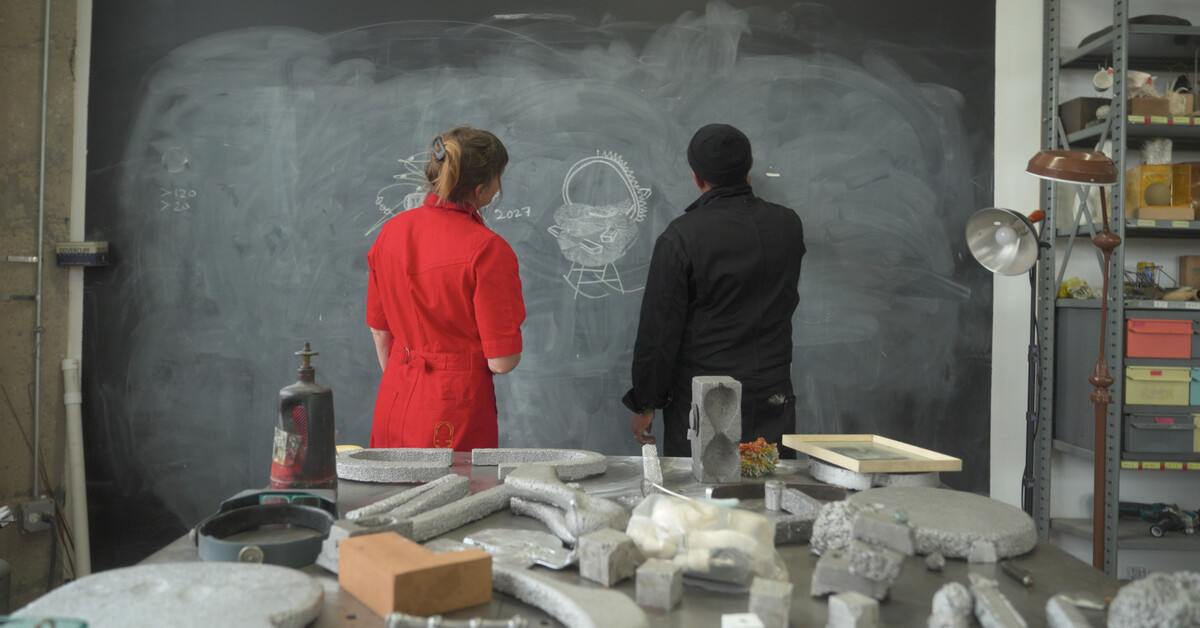
Chair-ish: Alex Chitty | Norman Teague
Cleve Carney Museum of Art
Mar 6, 2026
Mar 6, 2026
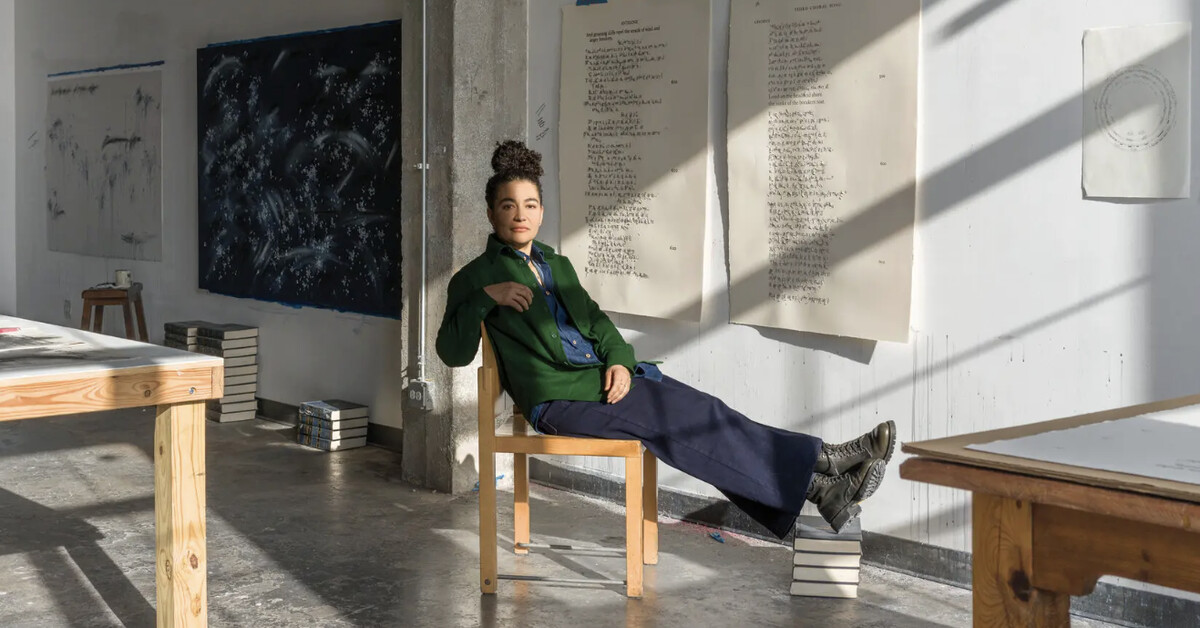
Why One Artist Transcribed All 900-Plus Pages of ‘Moby-Dick’ by Hand
The New York Times Style Magazine
Mar 4, 2026
Mar 4, 2026
Can Brands Crack LA Art Week?
Vogue
Mar 2, 2026
Mar 2, 2026
Charisse Pearlina Weston Named 2026 Hermitage Greenfield Prize Recipient
Sarasota Magazine
Jan 22, 2026
Jan 22, 2026
How Alex Chitty and Norman Teague Chair-ish What We Sit On
Newcity Art
Jan 21, 2026
Jan 21, 2026