Muck Made Form: Liat Yossifor Piles It On At Michael Benevento
ArtForum / Oct 17, 2026 / by Sarah Lehrer-Graiwer / Go to Original
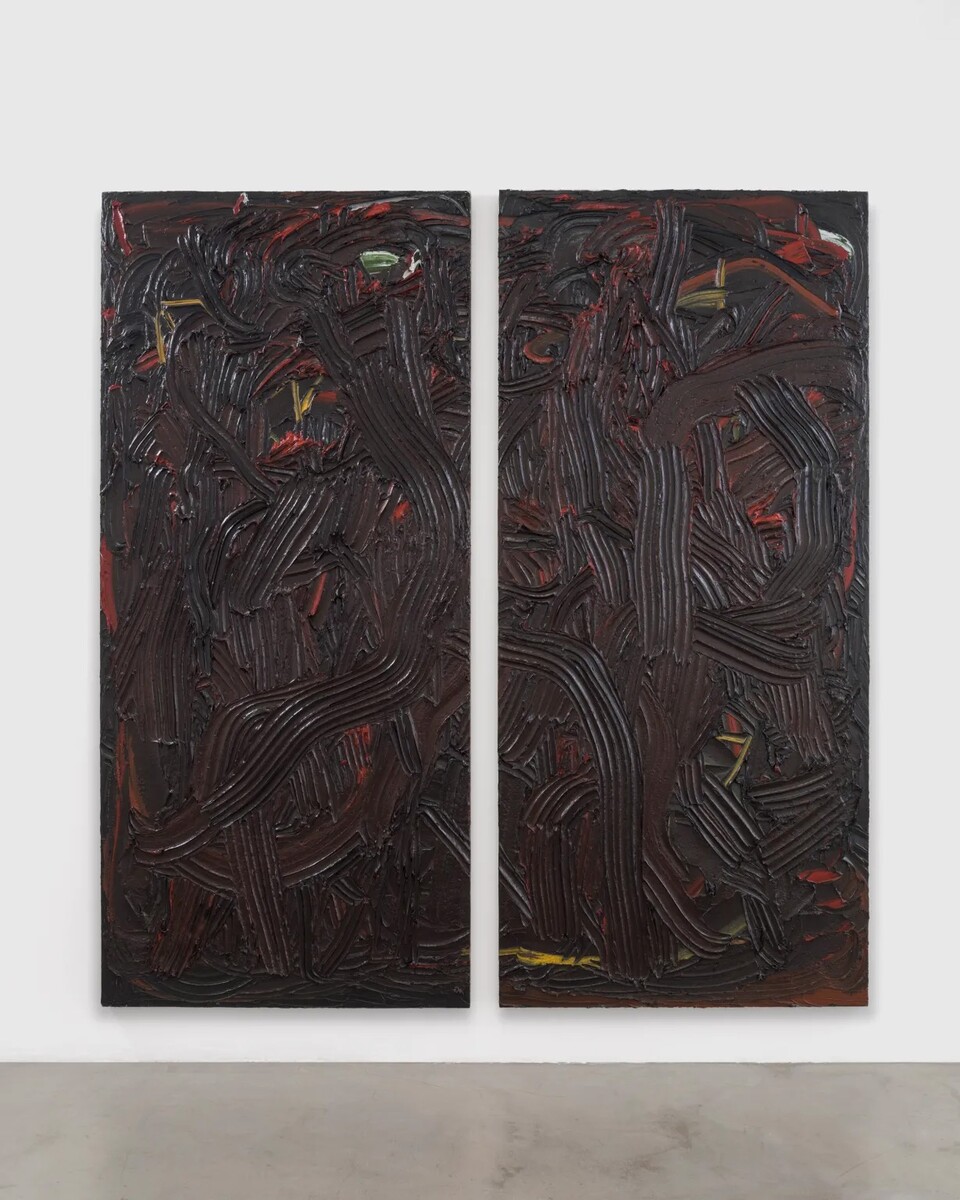
Through October 31, 2026—For Liat Yossifor, paint is wet weight to shape, a sludge to sink into and wrestle one’s way out of. She prefers her medium mixed extra dense with a high concentration of pigment, procured from a Brooklyn, New York–based small-batch producer who is something of an insider’s secret. In Yossifor’s show “accumulation of wait,” surfaces are slathered with gobs of this paint, smeared on with palette knives and gloved hands. Lines are not painted but grooved in long parallel tracks by fingers dragged across the surface. Oil this thick may never dry. With all the streaking and mixing, the painting becomes the palette. To the extent that images emerge out of these abstractions, they do so as sculptural relief through the accumulation and subtraction, smoothing and scraping of paint’s oozing, three-dimensional heft.
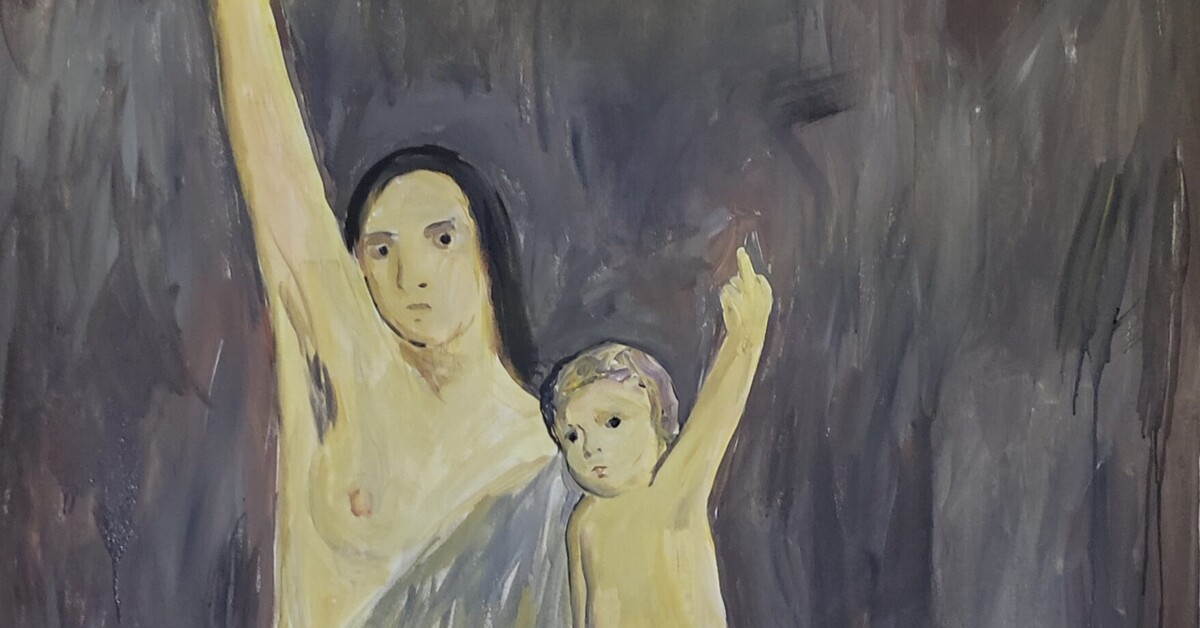
The oily turp smell of so much fresh paint hits when you enter. Compartmentalized into episodes by the gallery’s bento-box floor plan, the show prompts one to intuitively circumambulate the space counterclockwise from the entrance. Each gallery holds one to three paintings, each loosely monochromatic, following an overall tonal passage from gray to black to gray to white, suggesting an allegorical oscillation between uncertainty, darkness, and light. With the exception of four beautiful small works that sketch a more pictorial logic (hinting at figures in a scene), most of the paintings are large and primal, drawing us close with their richly topographical surfaces and extending into our peripheral vision.
Yossifor calls her process “bodywork” and describes what she does as “swimming” in paint, needing a lot to say what she wants to say. These paintings have a brute force, derived from their insistent physicality, and demand embodied viewing. The big paintings are a choreographic index of how she moved to make them; we see the reach and path of her arm pushing paint. Red-black (all works 2026), a diptych of twinned black, brown, and red vertical panels, has the presence of carved wooden doors or heavy gates that open—big objects. A tangle of long parallel indentations in the slabs of paint, like a fancy frosting job, creates a dense forest scene crowded with trunks and branches.
Throughout, the show evokes visceral experiences of landscape. Often, the abstractions appear to coalesce into improvised systems of roads winding around and running into rugged mounds, as if one is looking down on a map from above. Scale shifts; they are scenes of devastation. In this way, three big gray paintings are standouts, simulating soft clay as unctuous and silty as the muck dredged from a river delta. The most heavily worked of these gray paintings, A Painting Pretending to Be a Sculpture, conjures a ravaged terrain or diseased hide pocked with nasty, tumor-like lumps and craggy rough patches. Engrossing textural details abound. Scabs of dried paint the artist ripped from the skin of other failed paintings have been transplanted onto these still-wet surfaces.
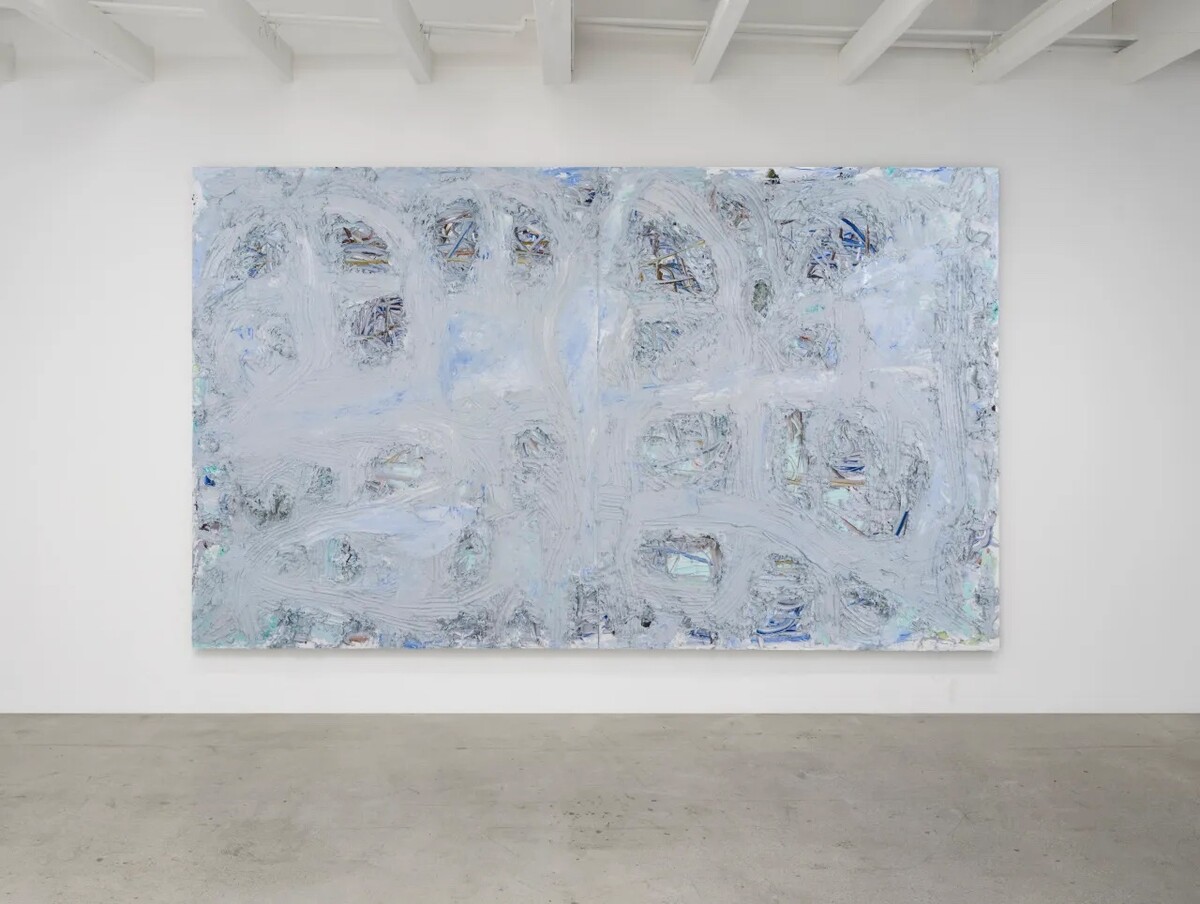
The largest work in the show—two panels fused into an expanse more than eleven feet long and nearly seven feet high—is called Crown Shyness, which first made me think of pushing a baby out in childbirth but is actually an arboreal phenomenon where neighboring trees naturally intertwine their branches but never become structurally entangled. With areas scraped away to expose an underlayer of sky blue and crisscrossed on top by thick gray swaths, the view suggests lying on your back and looking up through trees above, but can quickly flip into the inverse of looking down from above—the gray lines like paths trudged around islands of rubble, a dirt-bike course.
While the dominant palettes are desaturated, there is a lot of bright color embedded in the layers. The longer we look, the more colorful things seem. Under and inside the gray, we find clusters of ultramarine, turquoise, yellow, and burnt-sienna confetti marks. But more than that, we see that underneath, at an earlier stage of creation, there was a whole world of brilliant jewel tones that was subsequently obliterated by entropic forces that turned it gray. Abstraction again dawns allegorically, as what started out colorful gets buried in a morass. The effect is a cautionary tale of loss or a way to highlight the flashes of color that are still insistently present.
Chair-ish: Alex Chitty | Norman Teague
Cleve Carney Museum of Art
Mar 6, 2026
Mar 6, 2026
Why One Artist Transcribed All 900-Plus Pages of ‘Moby-Dick’ by Hand
The New York Times Style Magazine
Mar 4, 2026
Mar 4, 2026
Can Brands Crack LA Art Week?
Vogue
Mar 2, 2026
Mar 2, 2026
Charisse Pearlina Weston Named 2026 Hermitage Greenfield Prize Recipient
Sarasota Magazine
Jan 22, 2026
Jan 22, 2026
How Alex Chitty and Norman Teague Chair-ish What We Sit On
Newcity Art
Jan 21, 2026
Jan 21, 2026