4 Buzzy Emerging Artists to Watch for at Art Basel Miami Beach
artnet / Dec 1, 2025 / by William Van Meter / Go to Original
As Art Basel Miami Beach is poised to open this week, we’re spotlighting four must-know rising talents to keep an eye out for. Their practices run the gamut—from ethereal staged worlds to Brazilian beach bricolage, from memory-soaked abstraction to sculptural experiments in Lycra. Together, they offer a vivid snapshot of new voices.
Nour Malas
Patron, Chicago, presenting in Galleries Sector; Carbon 12, Dubai, presenting in Positions Sector
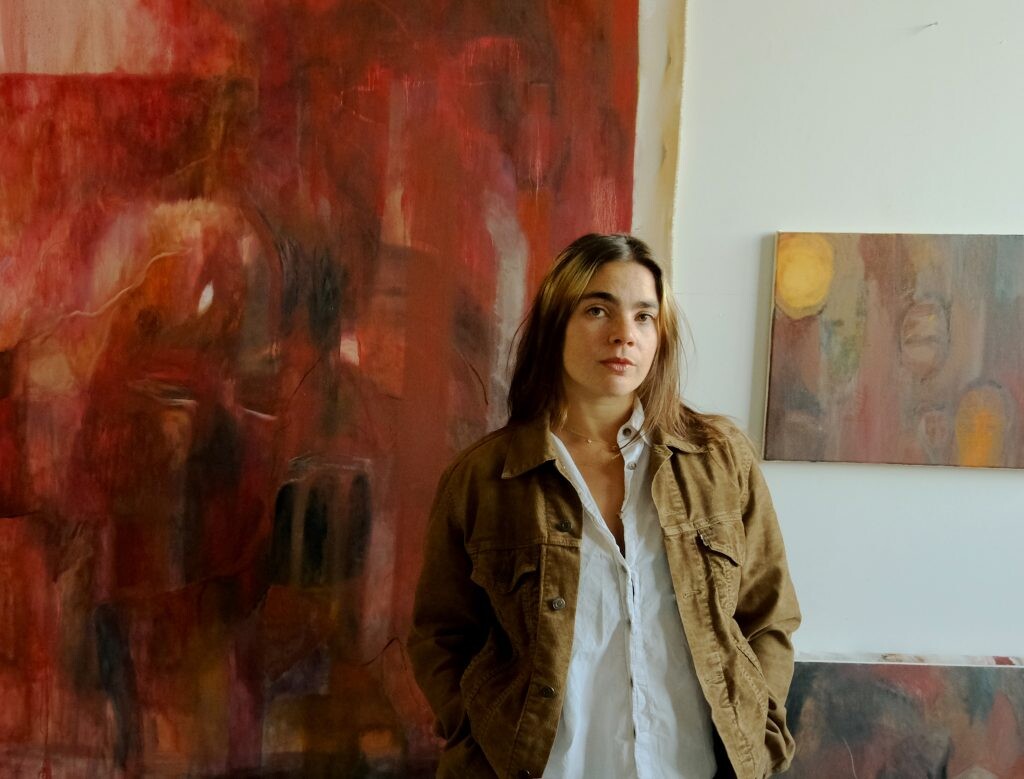
Nour Malas. Photo: Arda Asena. Courtesy of the artist and PATRON, Chicago.
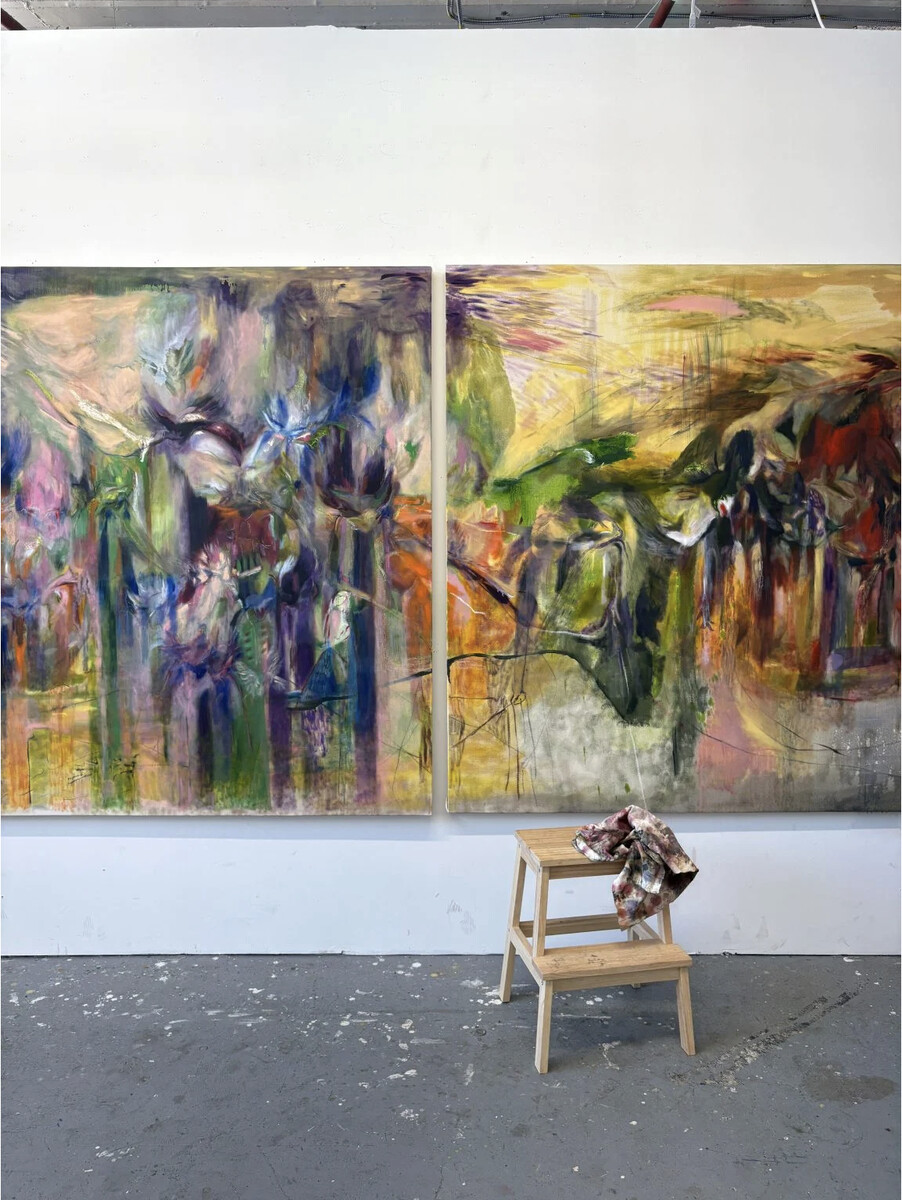
“Usually my work is a lot more intuitive and an expression of my present moment,” said the painter Nour Malas of the four-panel work she made for her Dubai gallery, Carbon 12, for Art Basel Miami Beach. It is the first time that she is working with a specific subject for her vibrantly washed canvases. “It was a more political take,” she said. “I’m Syrian, and the regime fell a year ago. I wanted to make a painting that looked back from just before the beginning of the revolution—my childhood in Syria until the fall of the regime. That’s what the painting is embodying.”
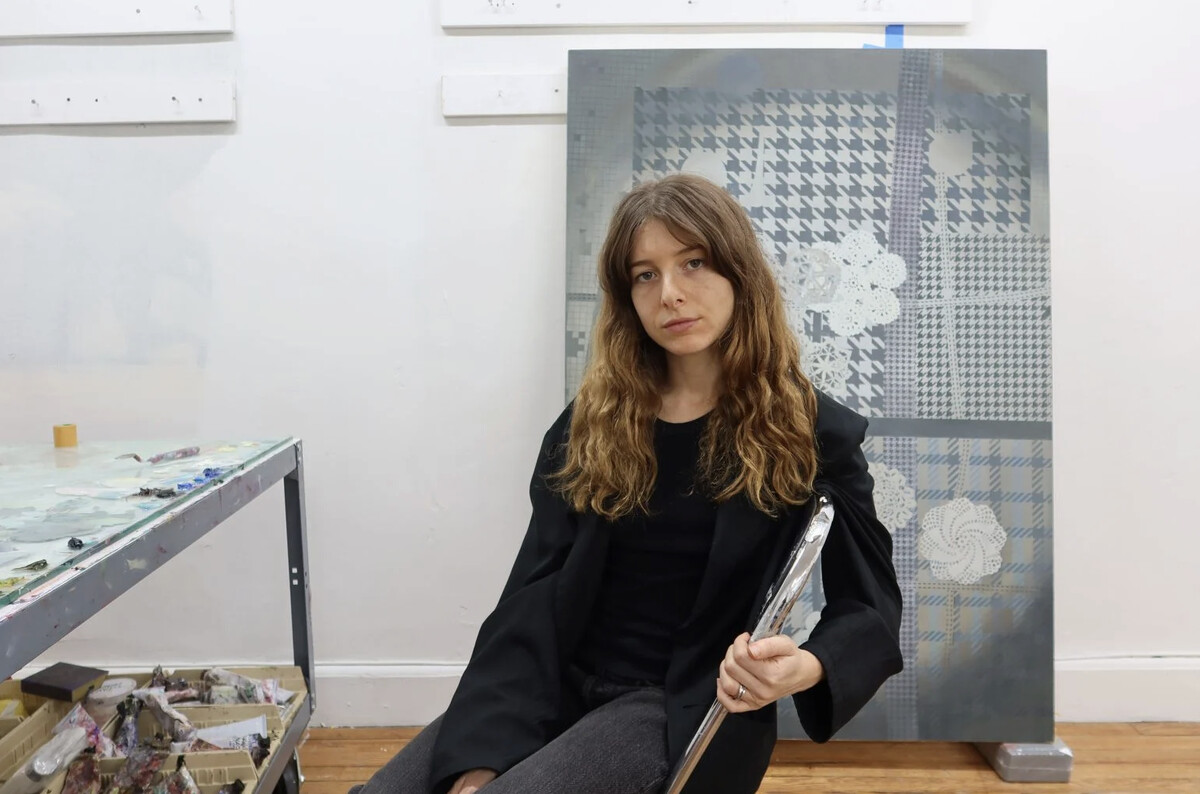
Studio Shot, Nour Malas Studio, NY — Work in progress (WIP) for Art Basel Positions. Courtesy: CARBON 12 and the artist.
One might think, at first glance, that Malas’s works are pure abstraction but, barely perceptible in the currents of color, figures begin to coalesce. “When I’m painting and I’m thinking about certain things or I’m in a specific flow, it’s going to bleed into everything,” she explained. “It’s a way of accessing my subconscious through mark-making and layering different lines and forms and gestures. Forms and figures start to come out.”
Malas’s esoteric, sylphlike world is a far cry from her student work. After getting an MFA at the School of the Art Institute of Chicago, she moved to London to study sculpture at Goldsmiths. “I had a very conceptual, kind of humor-based work,” she said. “Like I would make a tower of waffles and have a pipe through them and maple syrup would be dripping down. It was hyper-conceptual. I was obsessed with Claes Oldenburg and American Minimal sculptors.”
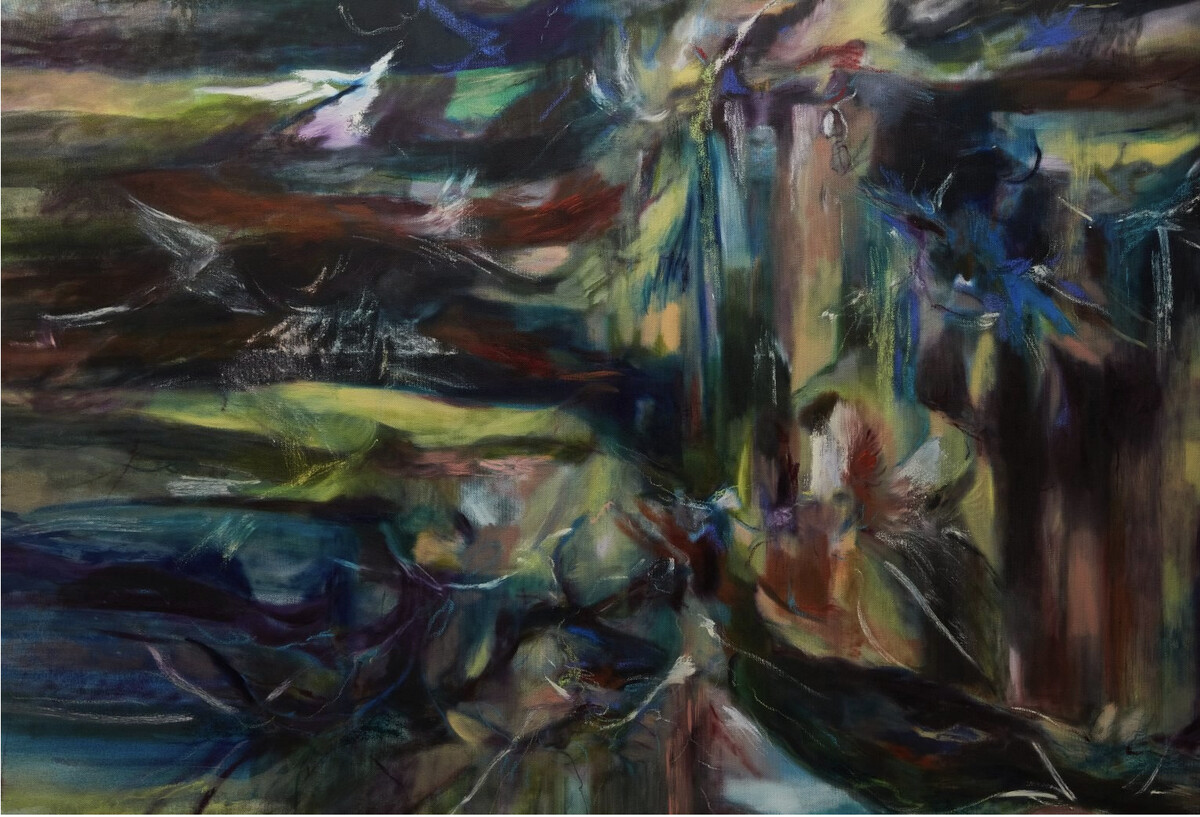
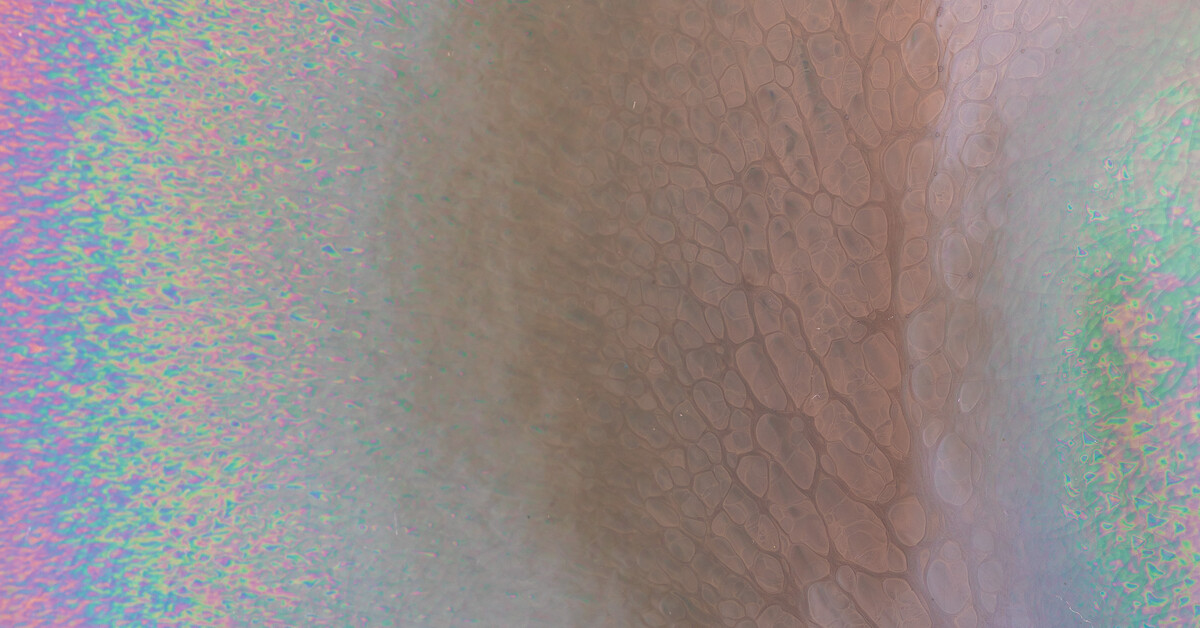
Nour Malas, Blues in Denial (2025). Photo: Ian Vecchiotti. Courtesy of the artist and PATRON.
Don’t expect waffles, but sculpture might make a comeback for her. “I’m slowly starting to introduce sculpture back into my practice,” Malas said, “but in a similar way that I approach painting—more intuitive, tactile.” Also on the horizon is a solo exhibition at Patron in May.
“The works that I’m making—I had to look back at my childhood and reflect on certain traumas,” Malas explains. “It was about extracting memory. That is pushing me to continue in that path: what happens if I paint from a place of memory rather than the present moment? Even if time bleeds into itself. There is a continuation of trying to deal with past occurrences, experiences, feelings through painting.”
Zé Tepedino
Casa Triângulo, São Paulo, Brazil presenting in Galleries Sector
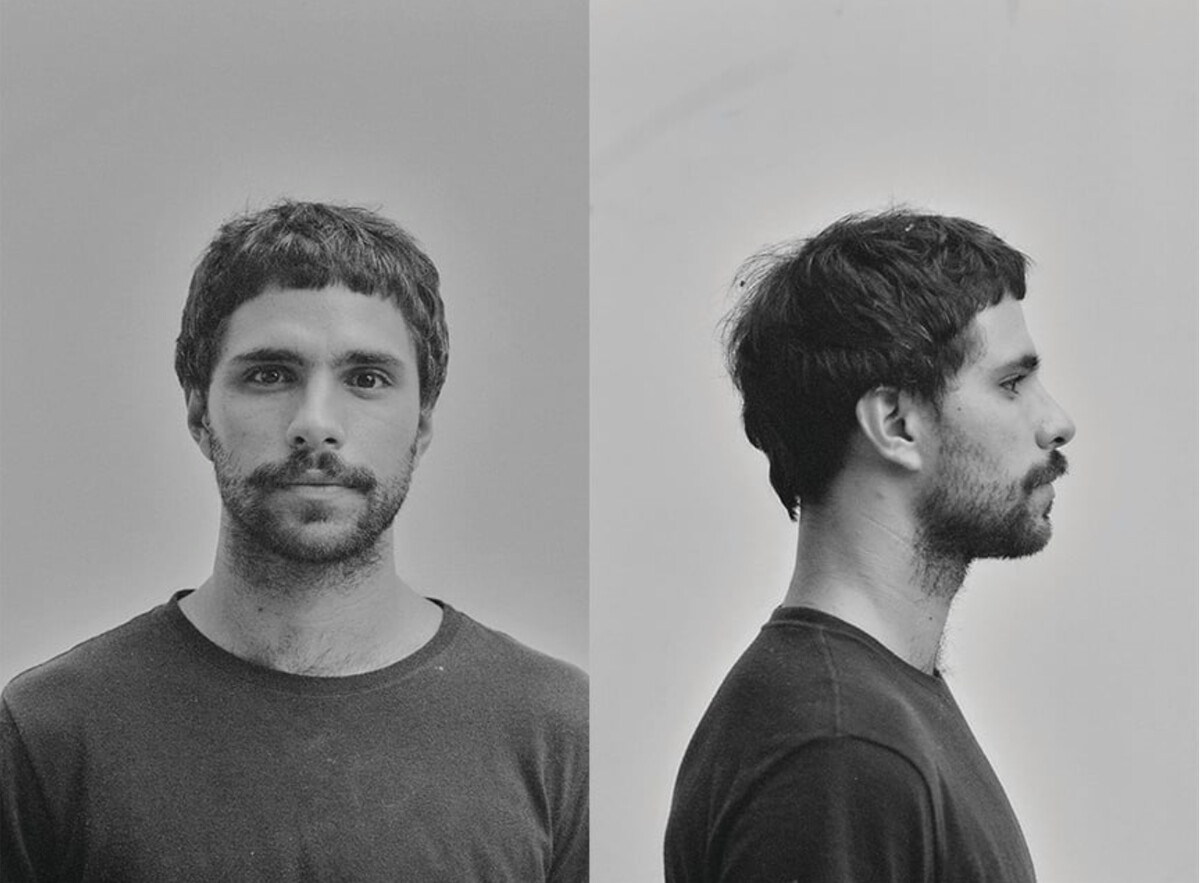
Zé Tepedino. Photo: Bruna Sussekind
“I started when I was a kid, and I just kept playing,” Zé Tepedino told me last week in a video call from his studio in Rio de Janeiro. “I live in such a big city, it pretty much gives me all the resources. I don’t really buy anything. I just go around and grab rich materials like umbrellas and beach chairs.”
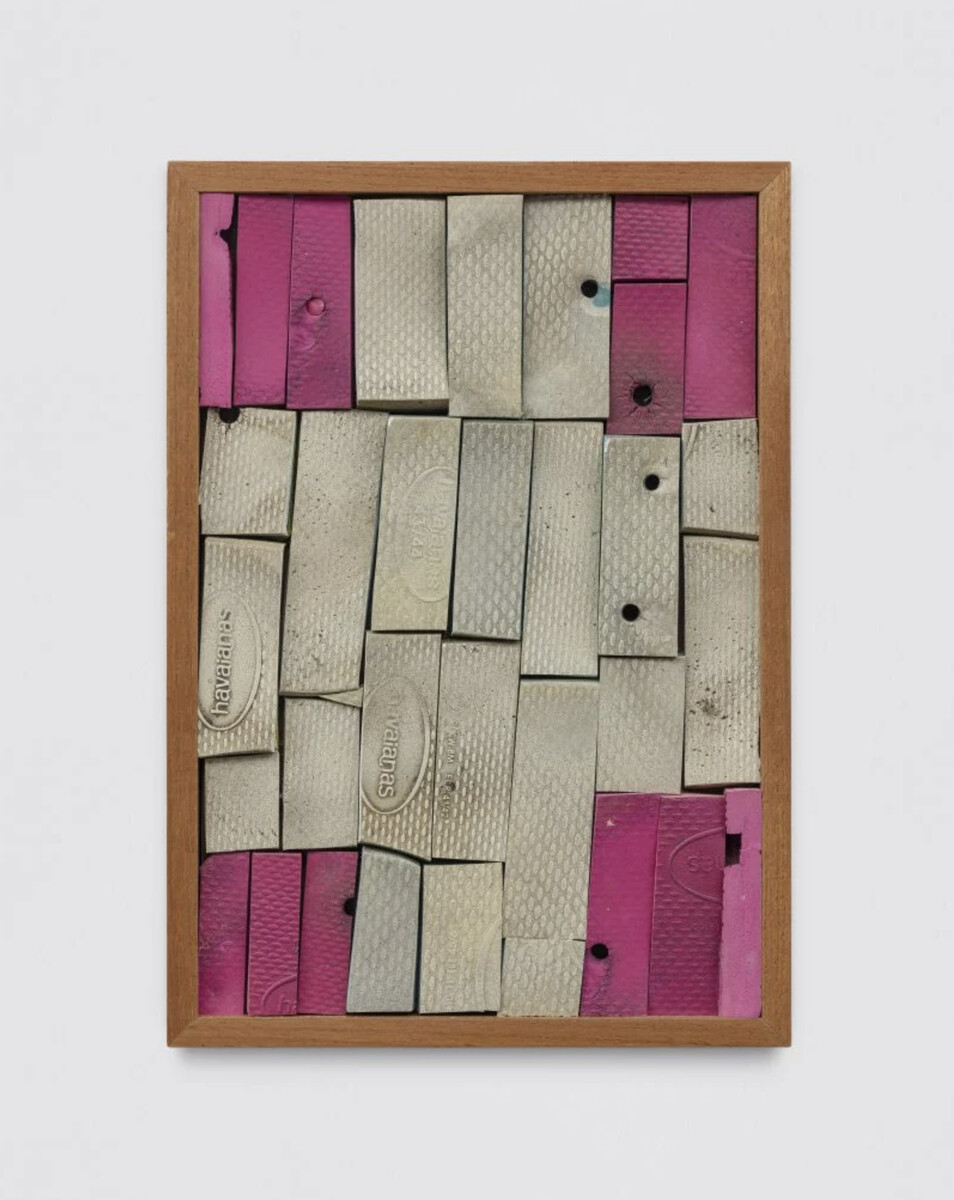
Some pieces are clearly composed of beach detritus; others are more abstracted and quietly beautiful. While a composition made of flip-flops might seem quirky, it’s not just fun in the sun. There is a lot of history that the Brazilian artist is riffing on. “In the 1960s and ’70s, the government used to put them in a chest of resources for poor people who couldn’t afford shoes,” he explained. “Along with rice, beans, sugar, and salt.” This goes to the heart of the 32-year-old’s eco-minded practice: he isn’t making work about consumerism, but rather building an emotive, abstracted portrait of the city, its history and its inhabitants.
“I work with things that once had a practical function,” Tepedino said. “Then they lose it, and they gain a poetic function. Once people aren’t using them, they become things that I can play with, but they are also now talking about the city and about the people, about so many things.”
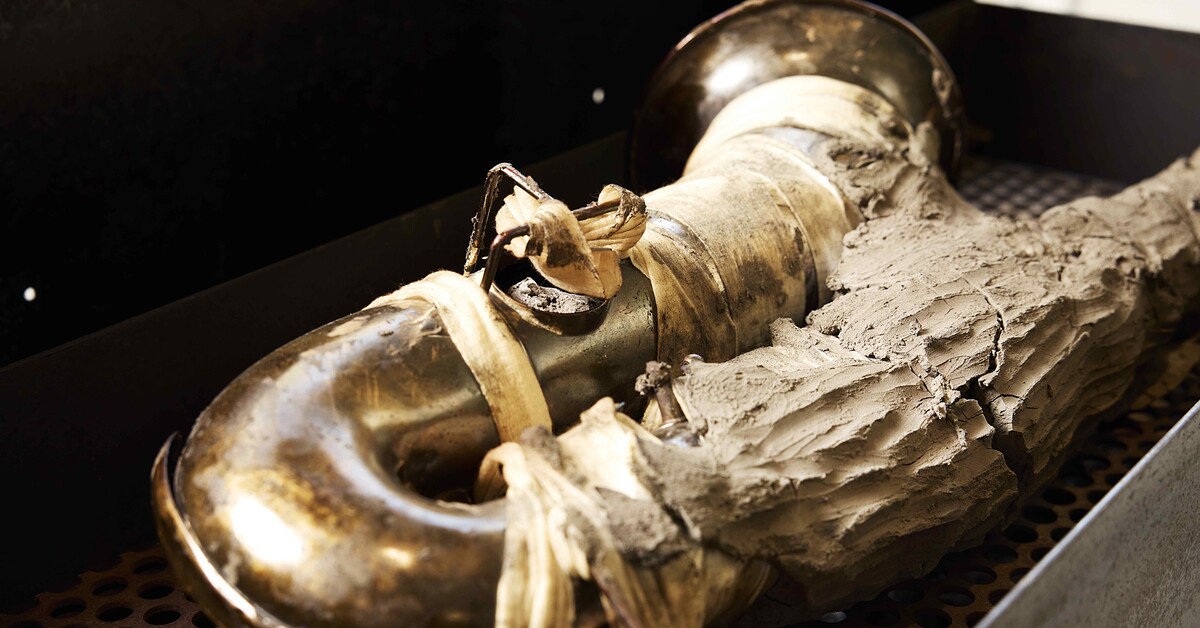
Zé Tepedino, Untitled, from Ascensão series (2023). Photo: Filipe Berndt. Courtesy of Casa Triângulo, São Paulo, Brazil.
Tepedino wrapped solo exhibitions this year at Casa Triângulo and at Gallery Isabelle in Dubai. Next up is his first American show, a solo exhibition at Ysasi in Los Angeles in February 2026.
Casa Triângulo is betting big on Tepedino’s stateside debut in Miami, bringing 13 pieces to the fair. A standout is the large wall work Tia Clarice, made from discarded cloth from beach chairs. It’s the perfect distillation of the carioca wabi-sabi that inspires the 32-year-old artist. “Some people write their names on the chairs,” Tepedino marveled. “Probably thousands of people have sat in them! I really think it’s so beautiful how the material changes—it gains more and more. It’s like the people have painted it with their backs. This quality, it’s almost like a painting, you know?”
Kelsey Isaacs
Theta, New York, presenting in Positions Sector
Kelsey Isaacs. Courtesy of the artist and Theta, New York.
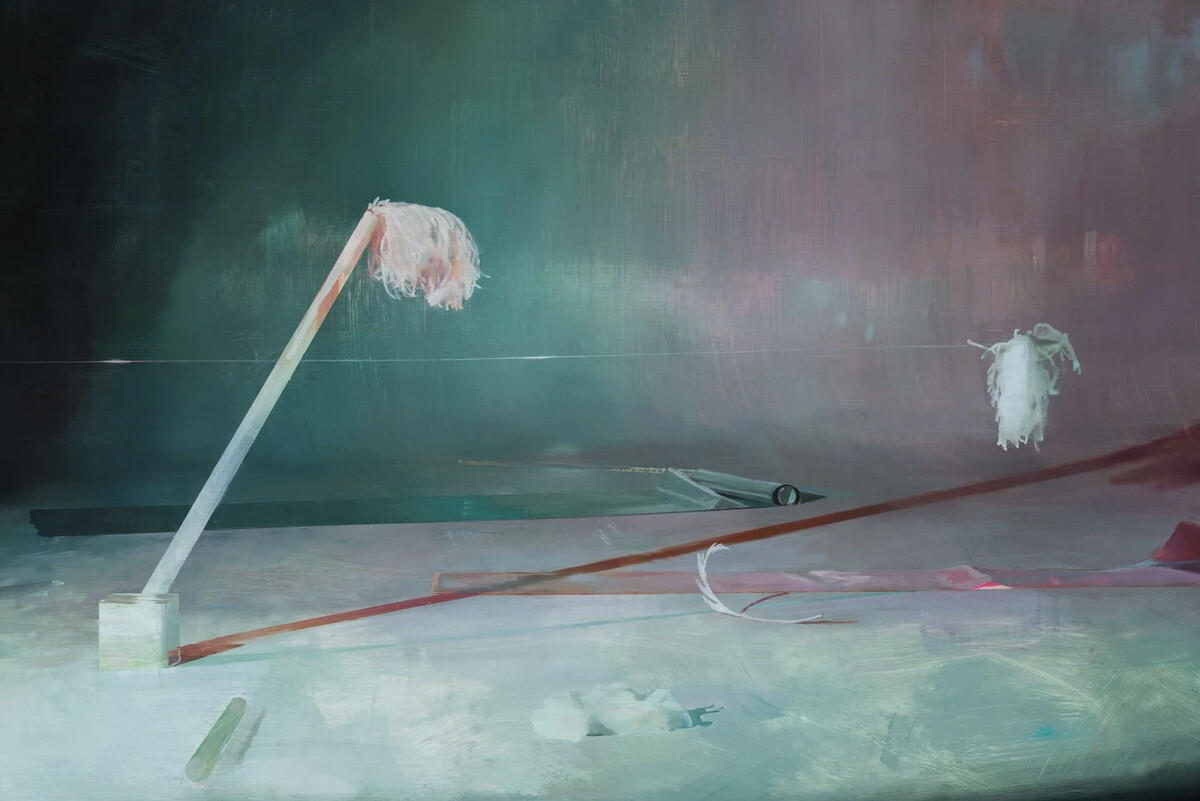
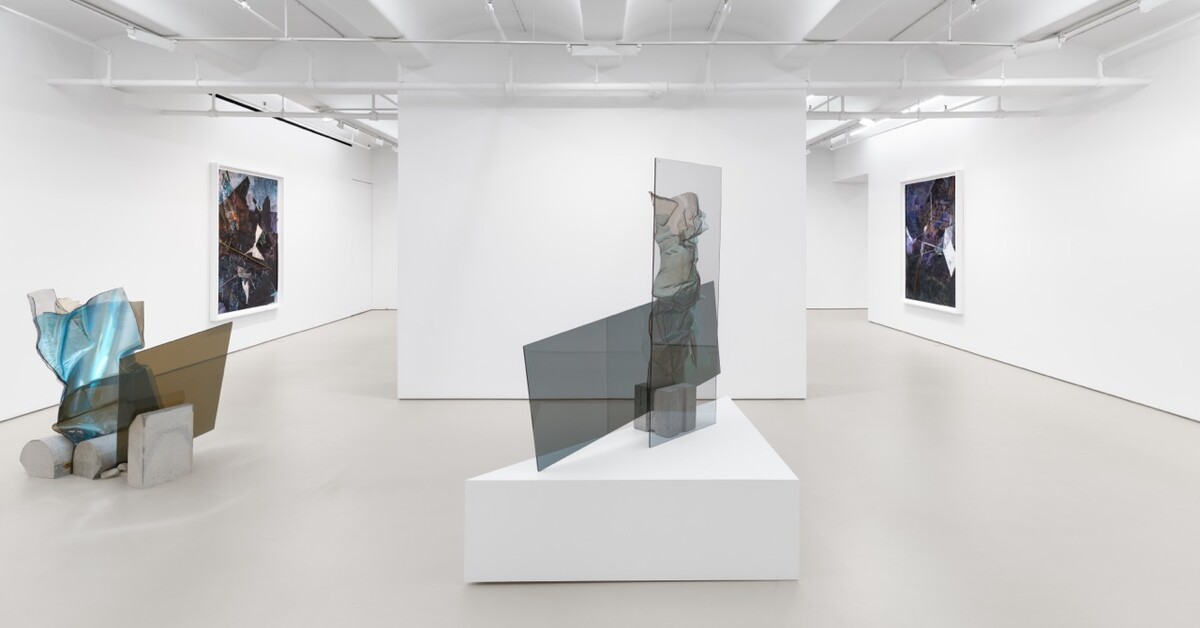
At first glance, the spectral paintings that Kelsey Isaacs is presenting resemble alien landscapes. But they are actually depictions of a carefully orchestrated world she built on a soundstage in Greenpoint, Brooklyn. She brought in plastic sheets and positioned myriad anonymous objects like plastic tubes she’s collected, illuminating them with rented movie lights before photographing them. This is just the beginning of her process.
“I’m interested in the quality of digital light that is embedded in our psyches,” the Los Angeles–born, Manhattan-based artist told me last week. “Basically, I’m thinking about contemporary light.” Isaacs then paints her digital images. “Oil paint has this weight to it,” she said, “this physicality and obviously its historic references. It’s fun to play with that. I was thinking about Caravaggio, so I brought a bunch of feathers. I was using bubble guns as a way to activate the air and refract light. I was also thinking about Fragonard. These paintings get into the Rococo world. There is this fetish aspect to painting, and it made sense to activate this large space.”
Kelsey Isaacs, Love in the French Theater (detail) (2025). Courtesy of the artist and Theta, New York.
This is a different modus operandi for Isaacs, 31, who also made a video component to accompany her Art Basel Miami Beach debut. She took a more macro (and frugal) approach for her previous series, staging her photo shoot portion in a shower and using flashlights for illumination. The paintings zoomed in at fractal-like angles make the objects look abstracted and otherworldly.
Isaacs’s participation in major art fairs has been sparse but noteworthy. The Milan gallery Clima devoted its booth to her at Frieze London in 2024. Isaacs is prepping her second solo exhibition with Theta for September 2026; it will be an extension of the works shown in Miami. “It’s crazy to change my work dramatically in this fair context,” she said. “But I don’t know what else I would’ve done. It was the thing that I needed to do in my practice.”
Dani Cavalier
Galatea Galleries, São Paulo, presenting in Galleries Sector
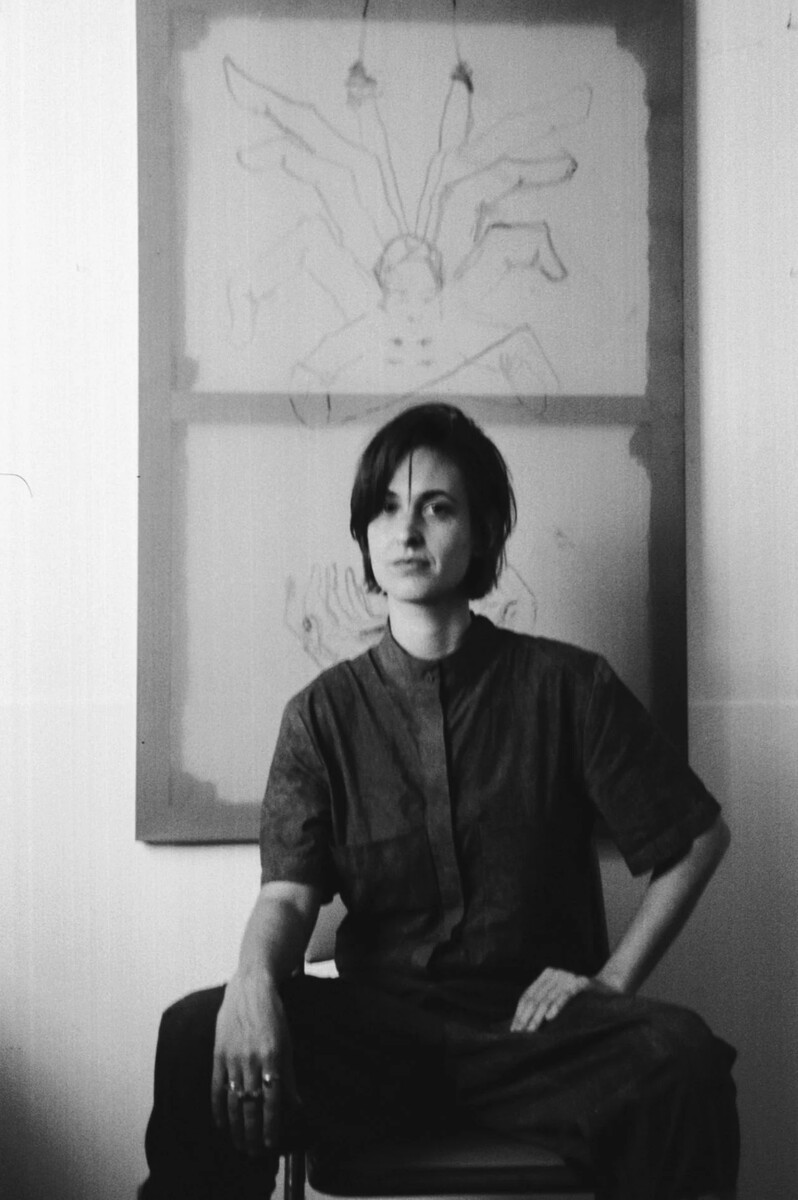
Dani Cavalier in her studio. Courtesy of the artist and Galatea.
Dani Cavalier’s winding journey into the art world began with swimwear. Everything happens for a reason. “I started a brand when I was 21,” she said, “creating bikinis and images with women. I had it for seven years while I was studying art. Then I started to grow an intimacy with the material I was manipulating, because I created not only the drawings, but I was the one creating the patterns—everything about this universe. I discovered that Lycra was my material. It was my gold, you know? It
holds tension, almost like metal.” The brand may be long gone, but its Lycra scraps endure as an eco-minded foundation for her work.
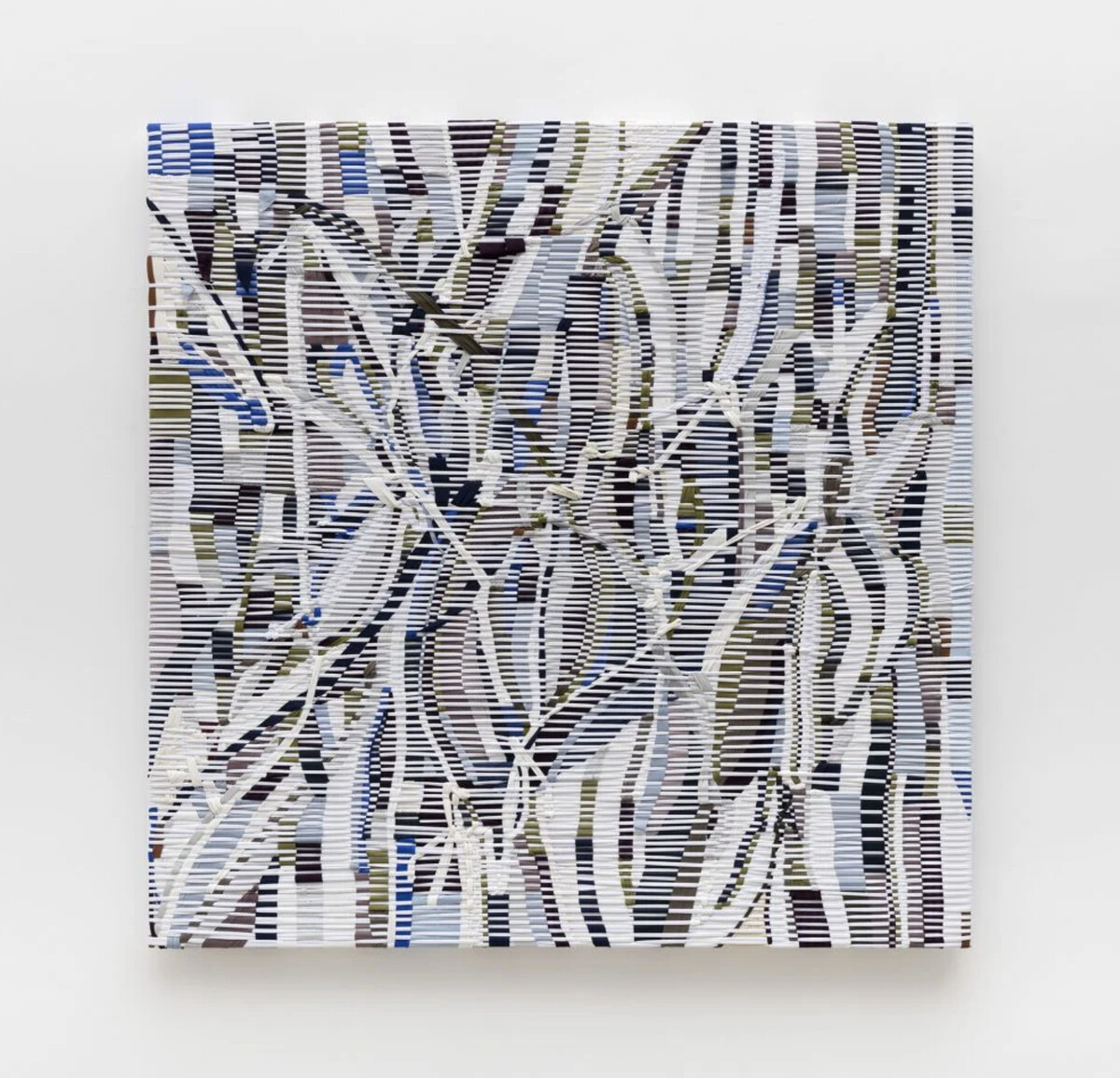
Dani Cavalier, Cumaru (2025). Courtesy of the artist and Galatea.
Cavalier, 32, became affiliated with her gallery because its director was originally a client. Since segueing to art full-time, her abstract fiber works have certainly caught on. In 2024, her work was acquired by the Pérez Art Museum Miami. She is readying her first institutional show at the Centro Cultural Justiça Federal in Rio for next winter.
“My work is like Medusa’s hair,” Cavalier said. “It has a lot of snakes and subjects. So this work is one snake that is about numerology. It’s a subject that I’m very interested in because numbers are the language of nature—these codes, these rhythms. It’s a metalinguistic work.”
Cavalier is talking about her entrancing geometric diptych 999999999, a seemingly minimal work that becomes more complex when you examine the intricacies that go into making the subtle Op art-patterned vortexes that form it. It’s part of a series she calls “solid paintings.” Her other Art Basel Miami Beach offerings show off the range of her personality and artistry: a riot of color, Cumaru looks like pixelated static, and Neo Neo RJ, 08 has tendrils reaching out into our dimension.