
Surveillance Never Looked So Good
The New York Times / Dec 14, 2025 / by Andrew Russeth / Go to Original
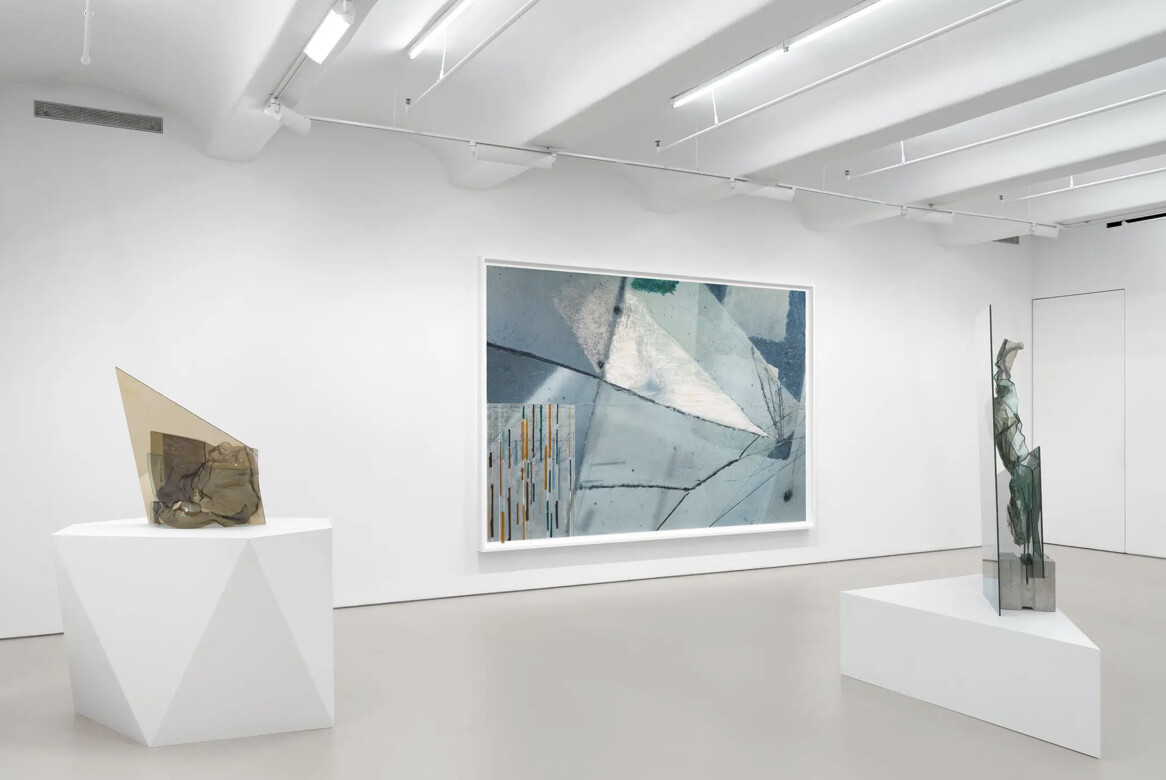
How much should an artwork tell you about itself? What does it owe you? These kinds of questions linger in Charisse Pearlina Weston’s ambitious exhibition at the Jack Shainman Gallery in Chelsea, her first solo show there. But before all that, some advice: Tread carefully. Weston uses materials like concrete, brick and metal, and wedges and balances glass elements to make abstract sculptures that look startlingly precarious. The wrong step could be disastrous.
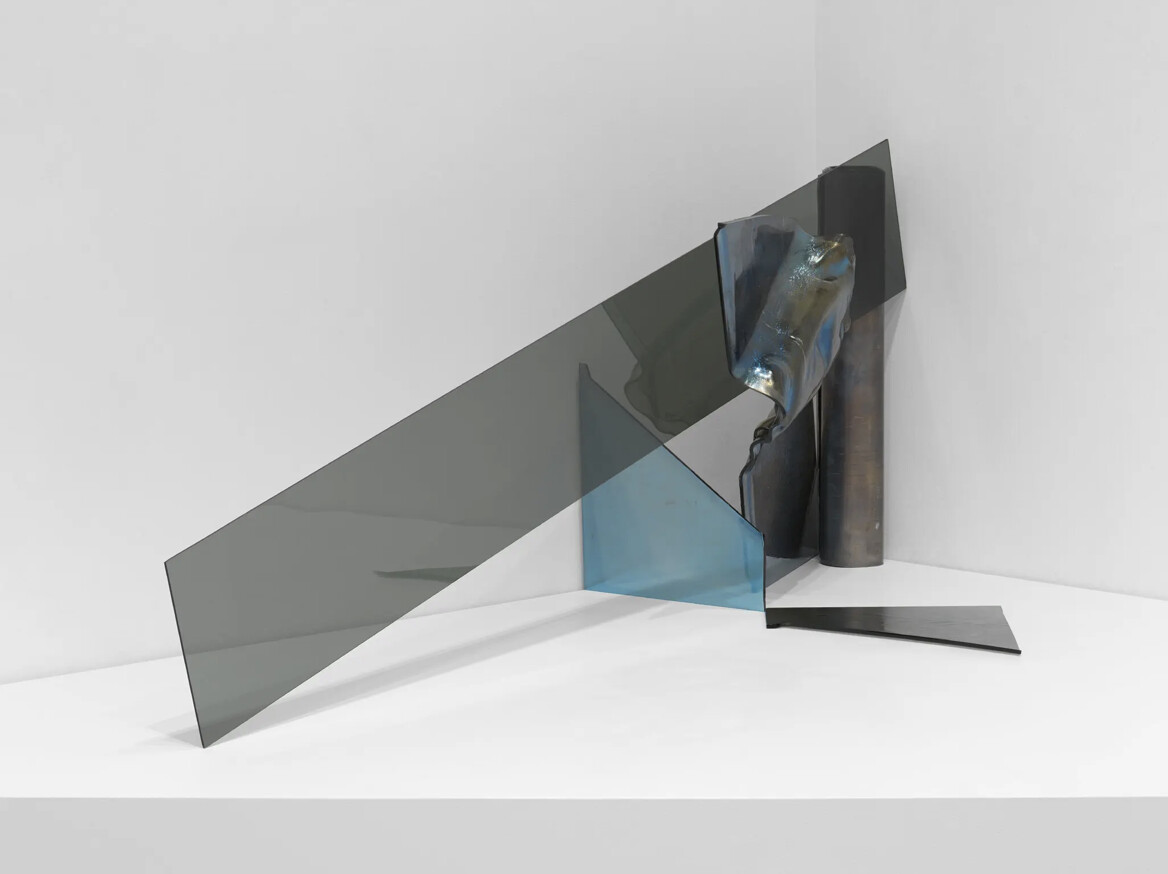
One rippled piece of glass — about four feet tall and lustrous, like mother-of-pearl — leans nimbly against a wall. Nearby, wrinkled layers of somewhat-translucent glass are pressed against another wall, perched on a plinth’s edge, its crevices seeming to hug a vertical plane of glass that has a smoky reflectiveness. A lead scroll threatens to glide off a low pedestal in another room, as a dense mass of glasses hovers over it, like a protector or pursuer.
Some additional advice: Closely study the show’s checklist, which unspools a bit more about what Weston is up to. The listed materials include glass with brand names like Solarcool and Mirropane, which can facilitate privacy and surveillance. (Mirropane is “the ideal choice” for places that “need to be kept under observation or hidden from public scrutiny,” its maker says on its website.) Aided by a kiln, Weston fuses and warps this stuff of security checkpoints, corporate offices and interrogation rooms into shapes that suggest moving water or traces of bodies.
For Weston, 37, there is rich metaphorical potential in glass. Before adopting it as her signature material, she was looking for something “to represent both the environment of violence and risk that Black folks live in, but also the ways in which we shape-shift, move beyond that and escape it,” she has said. Its “malleability in relationship to Blackness and its ability to maneuver around this environment of violence” is part of its appeal for her. In Weston’s best works, the folds and bends in her industrial ingredients seem to be concealing or safeguarding information, holding things back as they beguile. Different slices of glass act as windows, block sightlines and reflect parts of sculptures, engineering illusions.
It takes time to make sense of these creations, which feel personal and unpredictable, like people. Their often unwieldy titles underscore that: “words beneath the surface misprint the dream i no longer remember” (2025), for one. These names come from poems by Weston, who is both a sculptor and a poet — putting her in the company of Michelangelo and Carl Andre. (Her work also vaguely recalls Christopher Wilmarth, who made glass sculptures inspired by Stéphane Mallarmé.)
Weston minted some pieces in collaboration with her father, Robert Weston Sr., an approach that links her to a number of Black artists who have made remarkable art with a parent, like Faith Ringgold and the great Jacolby Satterwhite. (Ringgold, who died in 2024, is the subject of a heartening survey at the downtown location of Jack Shainman, the gallery showing Weston.)
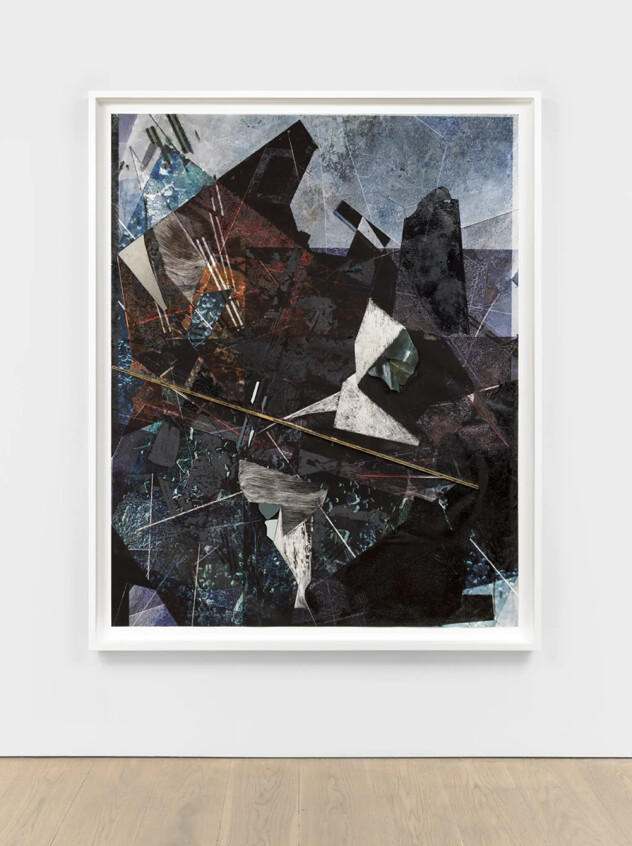
There is a lot here, including inkjet prints on canvas that depict collaged segments of glass works. Weston has ornamented them with patches of frit, crumbly ceramic bits used to make glass, and she has cut into their surfaces in places. These wall-hung compositions are intricate and eye-catching, and they share some of the inventive opacity of her sculptures, but they are less resolved, not as memorable.
With half as many pieces, this would be a more effective exhibition, but who can blame Weston for taking an everything-and-the-kitchen-and-sink approach? Clearly she has talent to burn, and she is on a tear, after hanging sheets of smoked glass in last year’s Whitney Biennial and offering a strong suite of works (understated standing glass, an alluring wall work) at this year’s excellent Site Santa Fe International in New Mexico.
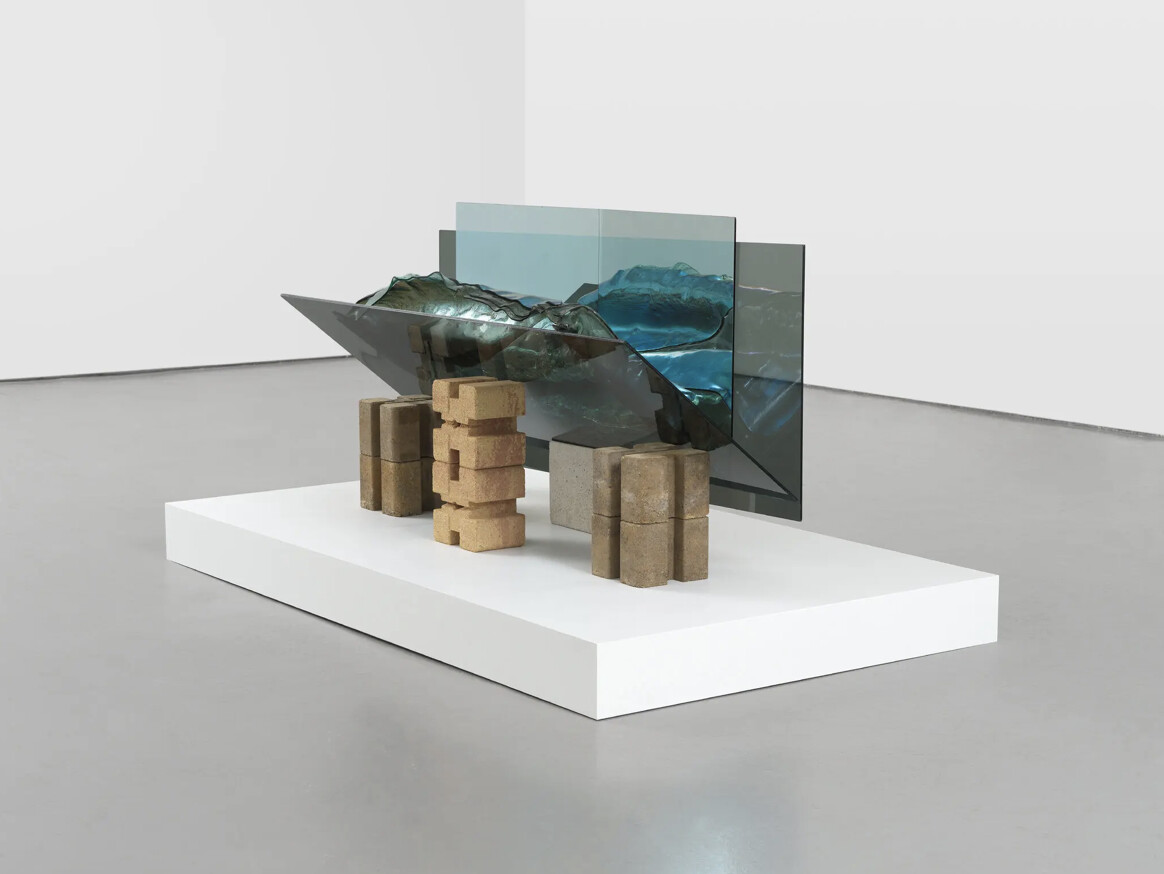
One sculpture here is alone worth a trip: “i belong to the long past that lends color to the vain” (2025). Long, dark glass panels form a V atop bricks and cement, cradling a hunk of shimmering glass that could be lumps beneath bedsheets or, from another vantage point, a crashing wave, its image multiplying against nearby surfaces. It has a futuristic sleekness and the undeniable potency of an ancient ruin. Is it a coffin? Maybe a manger? It’s smoldering with life.
4 Buzzy Emerging Artists to Watch for at Art Basel Miami Beach
artnet
Dec 1, 2025
Dec 1, 2025
Editorsʼ picks: 6 projects not to miss at Art Basel Miami Beach 2025
Art Basel
Nov 28, 2025
Nov 28, 2025
Five Emerging Artists to Watch at Frieze Los Angeles 2026
Frieze
Nov 20, 2025
Nov 20, 2025
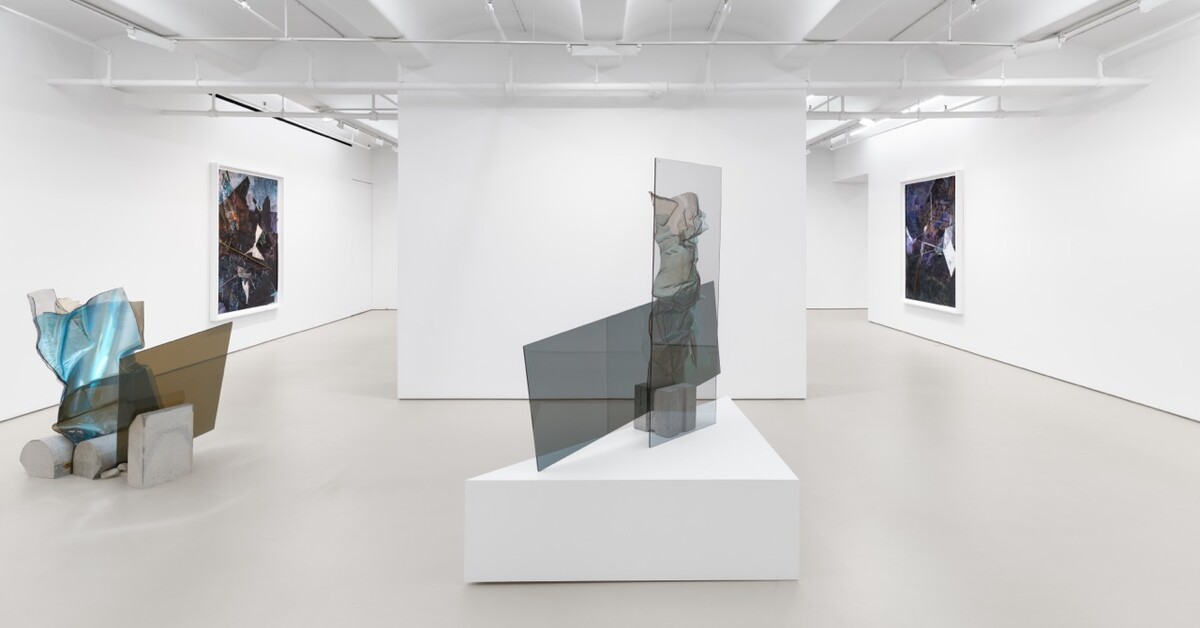
Charisse Pearlina Weston: mis-/mé- (squeeze)
The Brooklyn Rail
Nov 3, 2025
Nov 3, 2025
How to Make Art Out of Confederate Monuments
The New York Times Magazine
Oct 28, 2025
Oct 28, 2025
14 Photographers on Youth as a State of Mind
aperture
Oct 20, 2025
Oct 20, 2025